United Nations, April 7 Russia and China on Tuesday vetoed a UN Security Council resolution on reopening the Strait of Hormuz, a vital maritime chokepoint through which a fifth of the global oil passes, which has been blockaded by Iran.
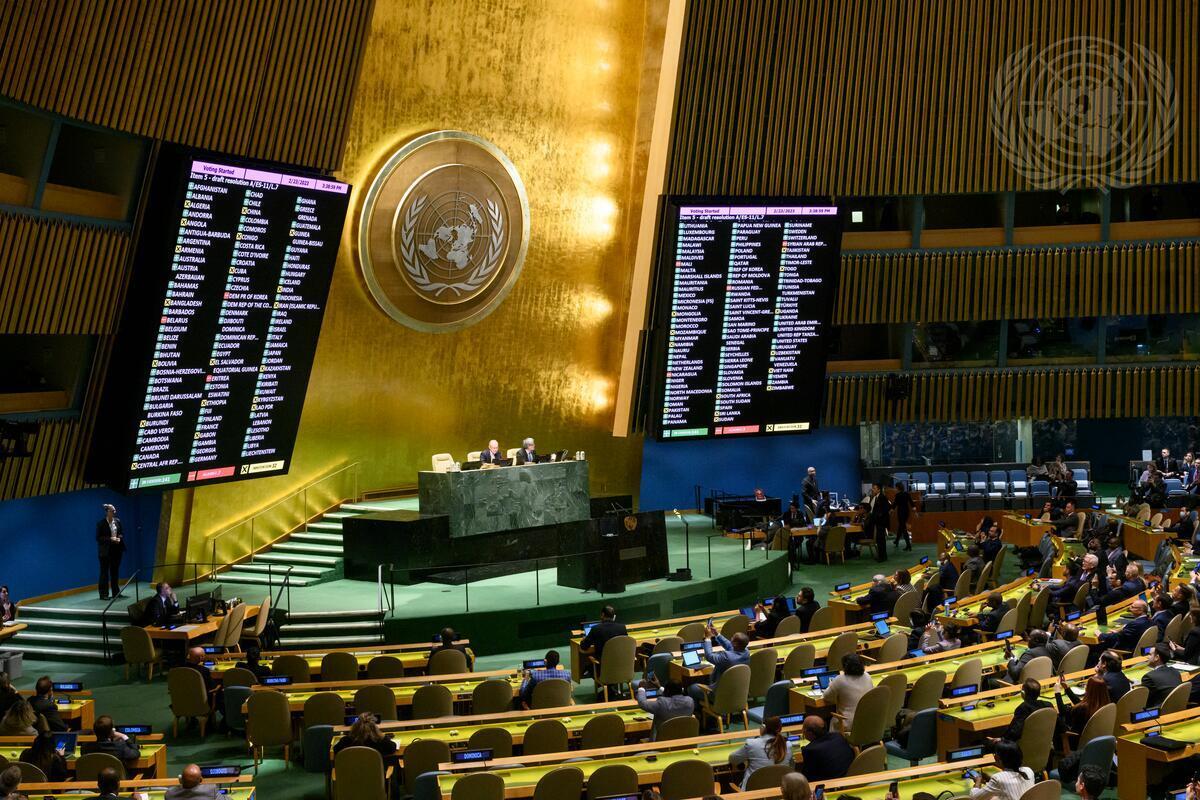
The 15-nation UN Security Council voted on the resolution proposed by Bahrain, which received 11 votes in favor, two against, and two abstentions.
The resolution could not be adopted because the veto-wielding permanent members, Russia and China, voted against it.
Before the vote, the UAE Mission to the UN said on X, “Soaring food prices and fuel costs. Blocked raw materials and essential supplies. Billions of people around the world are paying more for basic commodities due to Iran’s illegal actions. Now is the time for international action to protect freedom of navigation in the Strait of Hormuz.”
The UAE urged the UNSC to adopt the "Open the Strait" resolution and end Iran's attacks and threats to the global economy, it said. Bahrain, supported by the Gulf Cooperation Council (GCC) and Jordan, proposed the Security Council resolution on the Strait of Hormuz.
Bahrain is currently the president of the Council for the month of April.
It is learned that an initial version of the draft resolution had language that would have allowed countries "to use all necessary means" in the Strait of Hormuz, the Gulf, and the Gulf of Oman to ensure passage in the crucial chokepoint.
However, it is understood that the veto-wielding permanent members, Russia, China, and France, opposed the approval of the use of force.
The final draft now has language that states are authorized to take "exclusively defensive measures" to secure transit passage.
The Council was originally scheduled to vote on the resolution on Friday, but the UN headquarters was closed on the occasion of Good Friday.
The vote was then scheduled for 11 am (local time) on Saturday but was postponed again.
Last month, India co-sponsored a resolution in the UN Security Council that condemned in the strongest terms the "egregious" attacks by Iran against GCC countries and Jordan and demanded immediate cessation of all attacks by Tehran while denouncing its threats of closure of the maritime chokehold the Strait of Hormuz.
The Security Council, under the presidency of the US in March, had adopted the resolution with 13 votes in favor, none against, and abstentions by veto-wielding permanent members China and Russia.
India co-sponsored the Bahrain-led resolution along with over 130 nations, including Australia, Austria, Bangladesh, Bhutan, Canada, Egypt, France, Germany, Greece, Italy, Japan, Kuwait, Malaysia, Maldives, Myanmar, New Zealand, Norway, Oman, Pakistan, Qatar, Saudi Arabia, Singapore, Spain, Ukraine, United Arab Emirates, United Kingdom, United States, Yemen, and Zambia.
The resolution, which had a total of 135 co-sponsors, reiterated its strong support for the territorial integrity, sovereignty, and political independence of Bahrain, Kuwait, Oman, Qatar, Saudi Arabia, the United Arab Emirates, and Jordan.
It condemned in the "strongest terms" the "egregious attacks" by Iran against the territories of Bahrain, Kuwait, Oman, Qatar, Saudi Arabia, the United Arab Emirates, and Jordan and determined that such acts constitute a breach of international law and a serious threat to international peace and security.
The resolution demanded immediate cessation of all attacks by Iran against the GCC countries and Jordan and that Tehran "immediately and unconditionally" cease from any provocation or threats to neighboring states, including the use of proxies.
It reaffirmed the exercise of navigational rights and freedoms by merchant and commercial vessels, in accordance with international law, must be respected, particularly around critical maritime routes, and takes note of the right of Member States, in accordance with international law, to "defend their vessels from attacks and provocations, including those that undermine navigational rights and freedoms".