Lucknow, April 5 – In a significant move towards women's empowerment, the Uttar Pradesh government has launched a unique scheme called the "Safe Mobility Program," which focuses on creating employment opportunities for women in Self-Help Groups (SHGs).
Under this program, a large number of female e-rickshaw drivers are being trained across the state to ensure safe, accessible, and dignified transportation for girls and women traveling to schools, workplaces, and other important destinations.
Initially, around 1,000 e-rickshaws are being provided to women belonging to Self-Help Groups (SHGs). The service has already been launched in the districts of Ayodhya, Gorakhpur, Varanasi, Kaushambi, and Jhansi, and will soon be introduced in other districts, including Lucknow, Prayagraj, Mirzapur, Bhadohi, Sonbhadra, Deoria, Lakhimpur Kheri, and Sitapur.
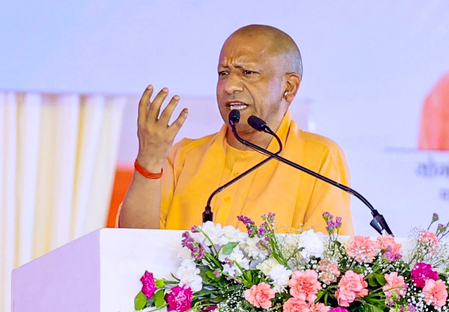
This initiative by the Yogi government is particularly significant because it directly addresses women's safety and security. In rural areas, the e-rickshaw service—operated exclusively by female drivers—is proving to be an effective solution for ensuring the safety and mobility of women and girls.
The program, being implemented under the Uttar Pradesh State Rural Livelihoods Mission with technical assistance from "Development Alternatives," has yielded impressive results so far.
Across the five districts, 119 women have been empowered as entrepreneurs through the provision of e-rickshaws. Furthermore, 629 women have received operational training, and 244 women have been issued driving licenses.
Through this initiative, the participating women are not only driving vehicles, but they are also becoming the economic pillars of their families. The fact that the average annual income of women associated with this scheme has exceeded INR 3 lakh further reinforces the success of this model.
The impact of "Safe Mobility" extends beyond just roads. It is set to facilitate easier access to schools for girls, ensure safer commutes for working women, generate new employment opportunities in villages, and enable women belonging to Self-Help Groups to set new benchmarks in self-reliance.