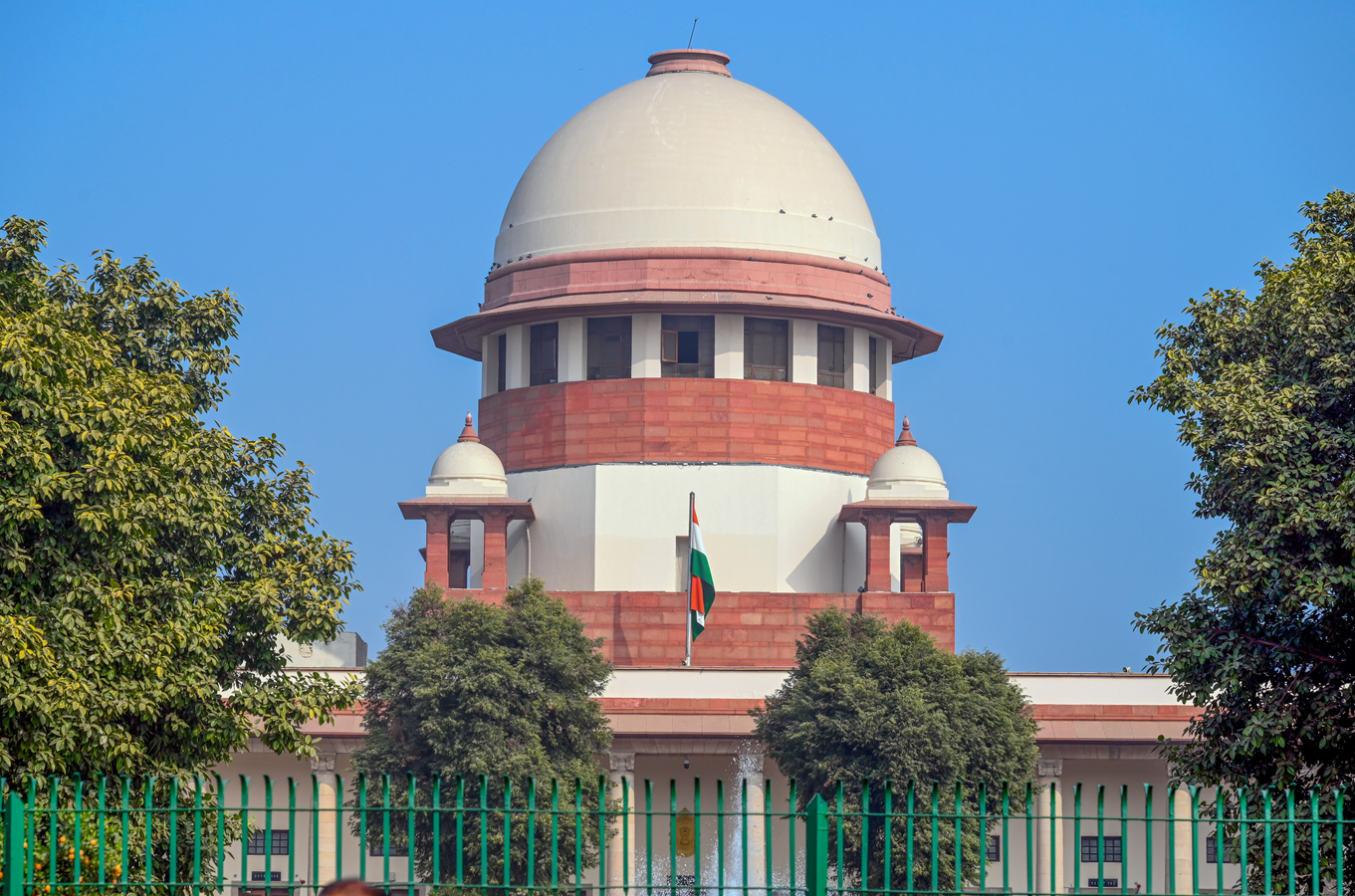
New Delhi, March 10 – The Supreme Court on Tuesday directed the constitution of Appellate Tribunals, comprising former High Court Chief Justices and judges, to hear appeals against exclusions from the electoral rolls during the ongoing Special Intensive Revision (SIR) exercise in poll-bound West Bengal.
A Bench headed by Chief Justice of India (CJI) Surya Kant clarified that decisions taken by judicial officers during the SIR process cannot be challenged before any executive or administrative authority. Instead, the Chief Justice of the Calcutta High Court has been authorized to recommend the constitution of an appellate mechanism consisting of a former Chief Justice and two or three former or sitting High Court judges, preferably from the Calcutta High Court or neighbouring states. Once the names are recommended, the Election Commission of India (ECI) will issue a formal notification appointing them as Appellate Tribunals to hear appeals arising from the revision exercise.
The apex court further directed that the ECI will bear the entire expenditure for the functioning of the appellate body, including the honorarium payable to the former judges and judicial officers involved in the SIR exercise. “We leave it to the Chief Justice of the High Court to decide how many judges shall be there in the appellate bench,” the CJI Kant-led Bench observed.
The direction came after concerns were raised about the absence of an independent appellate mechanism for persons whose claims for inclusion in the voter list were rejected by judicial officers.
Senior advocate Gopal Sankaranarayanan, appearing for the petitioners, submitted that nearly 4 lakh claims had been rejected out of around 10 lakh cases already decided, and cautioned that allowing all such appeals to be filed before the Calcutta High Court could overburden it.
Addressing the issue, the CJI Kant-led Bench observed that a specialised appellate forum comprising former judges could be created to provide an effective remedy without burdening the Calcutta High Court.
The apex court was informed through a communication from the Chief Justice of the Calcutta High Court that as of March 9 evening, more than 10.16 lakh objections had already been disposed of by the deployed judicial officers.
According to the communication, more than 500 judicial officers from West Bengal, along with around 200 officers requisitioned from Odisha and Jharkhand, have been deployed for the SIR exercise and are working continuously, including on weekends and holidays.
The CJI Kant-led Bench noted that repeated video conferences were being conducted with District Judges to sensitise them about the importance of the revision exercise, and that leaves of several officers had been cancelled to ensure the timely completion of the process.
“What more sacrifice could we expect from our officers? They are working with such dedication,” the apex court observed. It also flagged certain logistical and technical issues faced by the judicial officers, particularly relating to login credentials required to access the voter verification portal.
However, senior advocate Dama Seshadri Naidu, appearing for the ECI, assured the top court that the issue relating to the login credentials would be rectified immediately.
Directing the ECI to extend full logistical support to the Calcutta High Court and the deployed officers, the CJI Kant-led Bench said that no new mandatory procedural requirement should be introduced in the SIR process without the approval of the Chief Justice of the Calcutta High Court.
It also ordered that all technical disruptions on the portal be addressed promptly and that new login IDs be generated without delay whenever required by the judicial officers.
The Supreme Court also directed the West Bengal government to provide security, accommodation and other logistical facilities to all judicial officers deployed for the SIR exercise.
It granted liberty to the state government and the petitioners to approach the Chief Justice of the Calcutta High Court regarding the publication of supplementary electoral rolls for those whose claims have already been adjudicated.
Earlier, on February 24, the Supreme Court had invoked its powers under Article 142 of the Constitution to permit the Chief Justice of the Calcutta High Court to requisition additional judicial officers, including from the High Courts of Jharkhand and Odisha, to expedite the adjudication of nearly 50 lakh claims and objections arising from the revision process.
The apex court had also clarified that voters included through subsequent supplementary lists would be deemed to have been part of the final electoral roll published on February 28.