New Delhi, February 22 – The Supreme Court is scheduled to hear a public interest litigation (PIL) on Monday challenging the decision to drastically reduce the qualifying cut-off percentages for the NEET-PG 2025–26 examination.
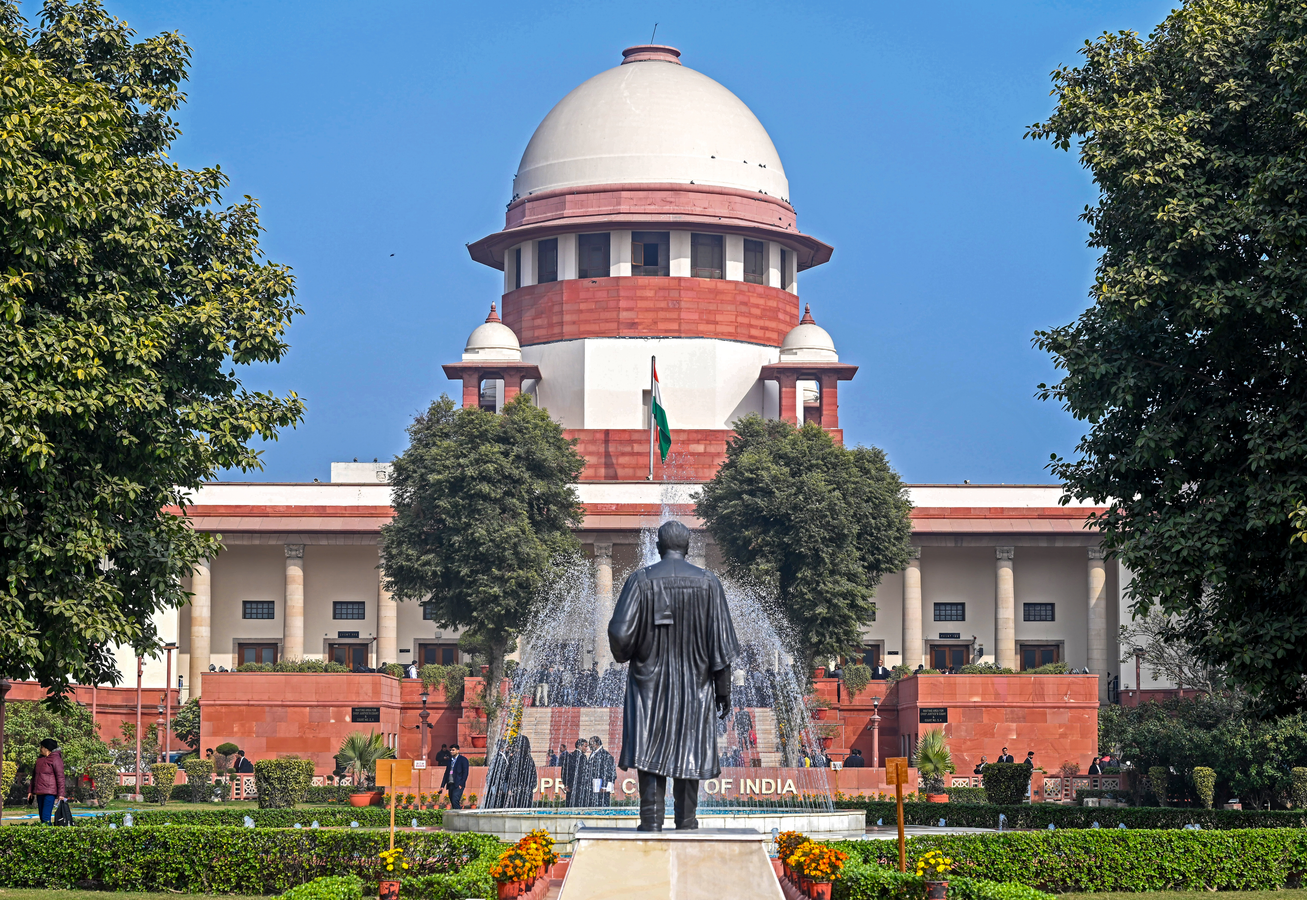
According to the daily cause list published on the website of the apex court, a bench of Justices P.S. Narasimha and Alok Aradhe will take up the matter for hearing on February 23.
Earlier, the apex court had issued notice on the PIL questioning the decision of the National Board of Examinations in Medical Sciences (NBEMS) to reduce the qualifying cut-off percentages for postgraduate medical admissions to abnormally low, zero, and even negative levels after the declaration of results and completion of two rounds of counselling.
The Justice Narasimha-led bench had sought responses from the Union of India, NBEMS, the National Medical Commission (NMC), and the Medical Counselling Committee (MCC).
In its reply filed before the top court, NBEMS said it had no role whatsoever in the decision to lower the qualifying percentile for NEET-PG 2025–26, adding that its function is strictly limited to conducting the examination and publishing results as per directions issued by the competent authorities.
"The respondent respectfully submits that the role of NBEMS is strictly limited to conducting the NEET PG examination in a fair and transparent manner, evaluating answers, and handing over the final results to the concerned Counselling Authority, namely the Medical Counselling Committee (MCC)," the affidavit said.
It clarified that it had “no role whatsoever in the decision regarding reduction of the qualifying percentile for NEET PG 2025” and that the decision “falls exclusively within the domain” of the Directorate General of Health Services (DGHS), the Ministry of Health and Family Welfare, and the NMC. According to the affidavit, the Union Ministry of Health and Family Welfare, through a communication dated January 9, informed it that the qualifying percentile cut-off for the third round of NEET-PG 2025–26 counselling had been reduced and directed it to publish revised results accordingly.
"In compliance with the aforesaid direction, the respondent published the impugned notice dated January 13 notifying the revised cut-off scores for NEET PG 2025," the reply said, adding that the revised results were forwarded to the MCC the same day.
According to the revised criteria, the minimum qualifying percentile for Unreserved candidates was reduced to the 7th percentile (cut-off score 103 out of 800), for UR-PwD candidates to the 5th percentile (90 marks), and for SC/ST/OBC candidates to the 0th percentile, corresponding to a cut-off score of minus 40. Placing data on record, NBEMS informed the court that 95,913 additional candidates became eligible to participate in counselling following the lowering of the cut-off.
It further contended that any order passed in the present writ petition would directly affect these candidates, who are not before the Supreme Court, and “on this ground alone, the present petition is liable to be dismissed”.
The NBEMS also drew attention to the dismissal of a similar challenge by the Delhi High Court in the Sanchit Seth vs National Board of Examinations in Medical Sciences & Ors case.
In its January 21 decision, the Delhi High Court found no arbitrariness in the reduction of the eligibility percentile and held that the apprehensions regarding patient safety and dilution of merit were “unfounded and not based on any empirical study”.
The PIL, filed before the Supreme Court by advocate Satyam Singh Rajput, contended that the reduction of qualifying standards is arbitrary, unconstitutional, and violative of Articles 14 and 21 of the Constitution, besides posing a serious threat to patient safety, public health, and the integrity of postgraduate medical education.
It argued that permitting candidates with zero or negative scores to enter specialist training dilutes merit at the apex level of medical education and undermines minimum standards of professional competence. Terming the move “unprecedented and extreme”, the petition stated that the NEET-PG, which is meant to function as a national screening mechanism, has been converted into “an instrument certifying failure as eligibility”, and further challenged the reduction on the ground that the “rules of the game” cannot be altered after the selection process has commenced and results have been declared.