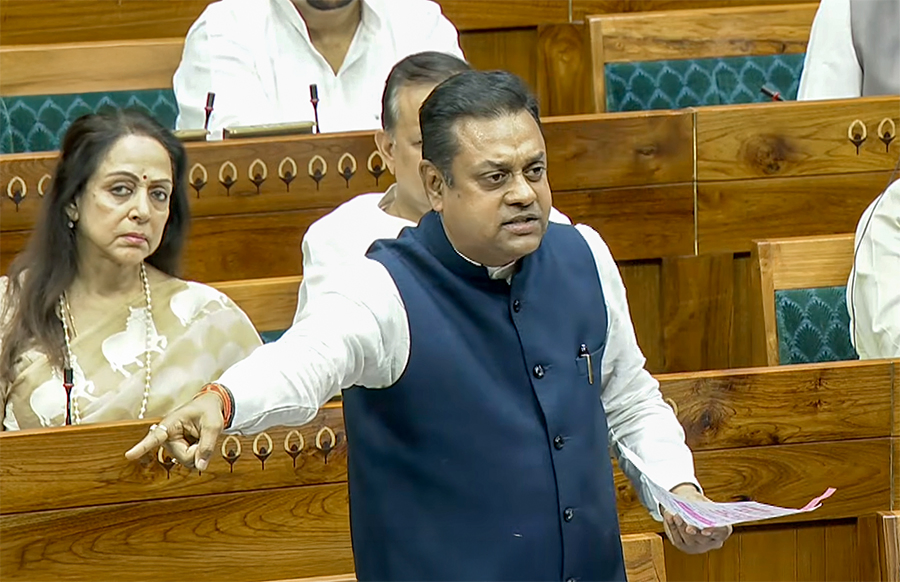
New Delhi, March 30 – During the ongoing Budget Session, the issue of Naxal/Maoist violence became a major point of contention between the ruling and opposition benches in the Lok Sabha.
BJP MP Sambit Patra quoted former Prime Minister Manmohan Singh, calling Maoism the "deadliest evil" facing India. Patra accused the Congress party of romanticizing the movement, citing writer Arundhati Roy's description of Maoists as "Gandhians with guns."
He argued that such views reflect a distorted understanding of the threat, recalling the April 2, 2010, massacre in Chhattisgarh, where 76 CRPF personnel were killed – the highest single-day casualty for Indian security forces.
"The Congress has erred," Patra declared, framing the party's legacy as complicit in undermining national security.
Trinamool Congress MP Mahua Moitra highlighted government data showing the number of fortified police stations in Maoist-affected areas rising from 66 in 2014 to 586 by December 2025.
She questioned the government's claims of declining Maoist influence and restoring normalcy in Bastar, asking why militarization continues if peace has indeed been restored.
"If normalcy has been restored, why has security been increased?" she pressed, suggesting a contradiction between official rhetoric and ground realities.
Adding to the chorus of criticism, AAP MP Sanjay Singh accused the Modi government of injustice towards soldiers.
While discussing the Central Armed Police Forces (General Administration) Bill, Singh lamented that troops safeguarding borders are driven to despair, unable to visit their families when needed.
He cited reports by Murli Manohar Joshi and P. Chidambaram recommending parity in promotions between CRPF and IPS officers, arguing that the government has failed to implement reforms that would boost morale.
While the BJP sought to pin responsibility on Congress-era policies and intellectual sympathies, opposition MPs turned the spotlight on the current government's militarized approach and neglect of personnel welfare.
The debate revealed not only the enduring shadow of Maoist violence but also the political fault lines over accountability, reform, and the balance between security and normalcy.