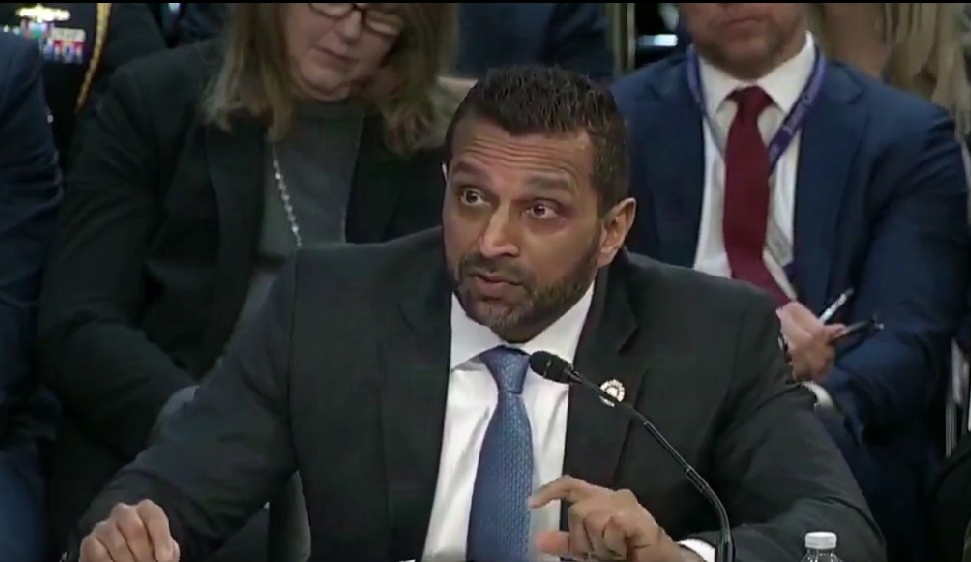
Washington, March 19 – FBI Director Kash Patel defended the bureau’s aggressive counterterrorism and law enforcement efforts during a hearing before the Senate, as lawmakers questioned him about surveillance, resources, and evolving threats.
The Indian-American FBI chief adopted a combative and confident tone during Wednesday’s (local time) hearing of the Senate Intelligence Committee, repeatedly highlighting operational successes and rejecting criticism of the bureau’s approach.
Patel cited recent disruptions of terrorist plots as evidence that the FBI’s strategy is working.
“We at the FBI have stopped four terrorist attacks… three of which were inspired by ISIS,” he said, citing coordinated operations across multiple states.
He argued that the threat environment has rapidly changed, requiring a more proactive and technologically driven response.
“They have transferred their capabilities… to online recruitment, which makes any terrorist organization… all the more powerful,” Patel said, referring to the growing role of digital platforms in extremist networks.
When pressed by Senator Ron Wyden on surveillance practices, Patel firmly defended the FBI’s use of commercially available data.
“The FBI uses all tools… consistent with the Constitution and the laws,” he said, pushing back against suggestions that the bureau was overstepping legal boundaries.
He emphasised that intelligence gathering and enforcement actions are conducted within established legal frameworks, even as threats become more complex and dispersed.
Patel also highlighted the bureau’s expanded coordination with other agencies, describing a nationwide operational scale-up.
“We have established 59 Homeland Security taskforces across the country,” he said, underscoring joint efforts with federal and local partners.
Responding to questions, Patel cited a “double-digit increase” in intelligence production and a similar rise in biometric data collection, enabling authorities to identify and track threats more effectively.
Patel also drew attention to the growing threat from transnational crime and cyber-enabled fraud, particularly large-scale scam networks operating overseas.
“There are literal compounds… that are fleecing Americans,” he said, describing operations based in Southeast Asia.
He said the FBI is working with foreign governments to dismantle these networks, including efforts to shut down infrastructure supporting such scams.
Throughout the hearing, Patel repeatedly framed the bureau’s actions as necessary to stay ahead of fast-evolving threats, particularly in the digital domain.
He also defended deeper collaboration with the Department of Homeland Security and other agencies, arguing that expanded manpower and shared intelligence are essential.
“What we’re doing… is enabling their massive workforce to supplement ours,” he said.