New Delhi, March 8. Social media platforms are increasingly being used by terrorist organizations to radicalize individuals and orchestrate attacks across the Indian subcontinent and beyond, according to a report by Eurasia Review.
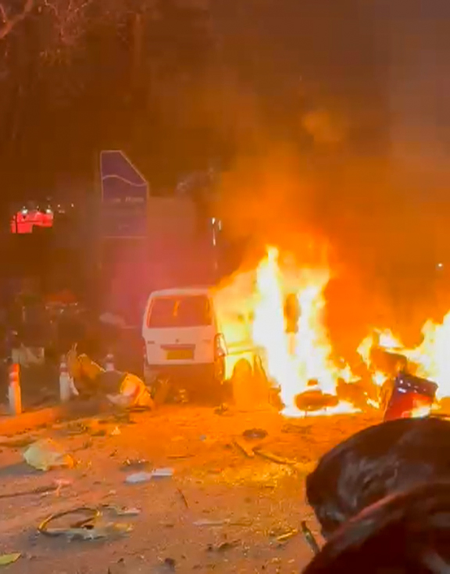
The report, titled "Weaponization of Social Media Platforms for Radicalization: A Looming Threat in the Indian Subcontinent," states that recent incidents such as the attack on the Red Fort on November 10, 2025, and the Bondi Beach attack on December 14, 2025, demonstrate how extremist networks are systematically using social media to incite violence and highlights how digital propaganda, encrypted messaging platforms, and online psychological manipulation are being used to recruit and mobilize vulnerable individuals.
According to the report, "The attack on the Red Fort in India on November 10, 2025, and the attack on Bondi Beach in Australia on December 14, demonstrate how social media platforms are being systematically weaponized to radicalize individuals to launch terrorist attacks." It adds that while such incidents are often portrayed as lone-wolf attacks, "far from reality, such attacks are concealed as individual efforts but are systematically designed and organized."
The report explains that terrorist organizations are using fake news, propaganda, and narrative warfare to manipulate individuals online. "Fake news, narrative wars, and propaganda serve as powerful tools that lure vulnerable, deranged, and antisocial individuals in the name of religion, state, or a dystopian agenda," it states.
It further notes that modern terror groups are increasingly combining ideology with technology. "Modern terrorist organizations are not only exploiting ideological divides or logistical networks; they are also leveraging advanced digital technologies and weaponizing them."
According to the study, social media's characteristics—being low-cost, decentralized, fast, and globally connected—make it an effective tool for extremist groups to conduct propaganda campaigns, recruit followers, and mobilize attacks. "Although social media can be characterized as an enabler rather than a primary driver of terrorism, its role in the modern-day terror cycle cannot be overstated," the report said.
The report highlights the role of the Islamic State and its affiliates in spearheading these online campaigns. It notes that despite territorial losses in Iraq and Syria, IS has strengthened its digital operations and shifted towards expanding ideological influence through online propaganda networks.
The report also states that extremist networks are increasingly active in South Asia. "By 2024, IS's online networks expanded to include countries like India and Bangladesh to influence the vulnerable population through secure communication channels. India has been gravely affected by the expansion of IS's radicalization in the subcontinent," it said.
It also named Pakistan-based terror groups such as The Resistance Front and People's Anti-Fascist Front as among those using social media platforms for propaganda. The report further claimed that extremist organizations such as Jamaat-e-Islami have deep roots in Bangladesh and alleged support networks linked to Pakistan's Inter-Services Intelligence.
Investigators cited in the report also found that the attackers involved in the Red Fort incident were radicalized online and described the phenomenon as "white collar terrorism" because many perpetrators were well-educated individuals. Terrorists reportedly used encrypted communication platforms such as Threema, which offers end-to-end encryption, no metadata storage, and message deletion features, making forensic tracking difficult.
The report also highlights the rise of cyber-enabled terrorism in regions such as Jammu and Kashmir, where online recruitment drives and encrypted messaging platforms have helped connect youths to extremist networks.
It added that governments across the region are beginning to respond with stronger regulations. Countries including Australia, Malaysia, Singapore, and Indonesia have introduced laws to counter online extremism, while India reportedly blocked 9,845 URLs promoting radicalization and terrorist propaganda in 2025 alone.
The report concludes that regional and global cooperation will be essential to tackle the growing threat. It emphasizes the need for stronger cybersecurity frameworks and closer intelligence collaboration to address cross-border digital radicalization and online terror networks.