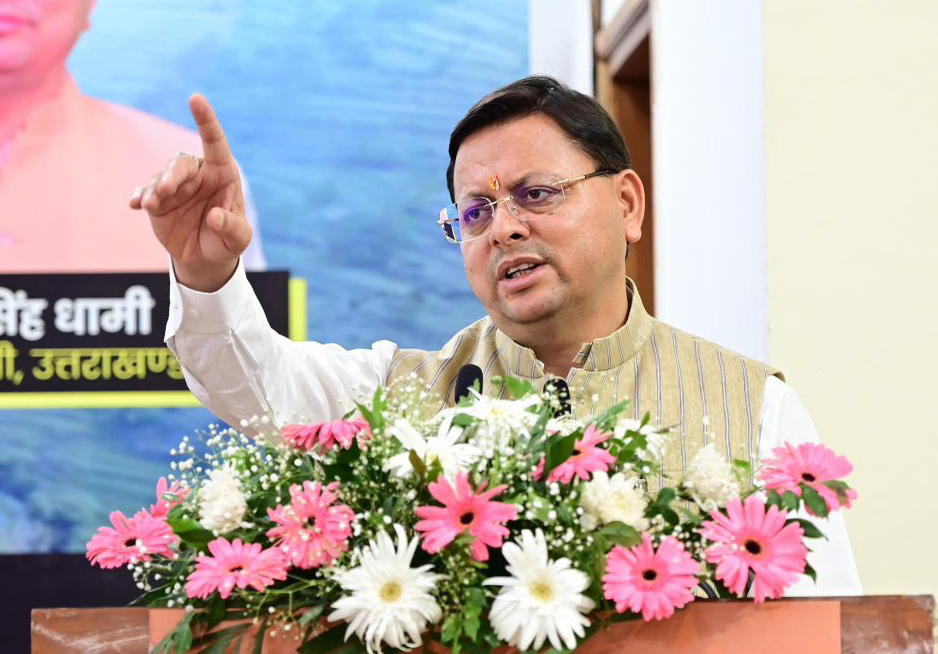
Shillong, February 27 Indian Air Force Group Captain Shubhanshu Shukla said that sustainable practices adopted in space offer lessons for northeastern states like Meghalaya, enabling the expansion of renewable energy in remote areas.
Speaking at the 23rd National Space Science Symposium hosted by the North East Space Application Centre (NESAC) at Umiam near here on Thursday, Shukla, the second Indian astronaut, emphasized that life aboard the International Space Station almost entirely depends on solar power.
"Astronauts reuse critical resources in an extremely limited environment. This discipline demonstrates that sustainable practices are attainable and practical for us as well," Shukla, the first Indian to visit the International Space Station in 2025, told students and researchers during an interaction session on Thursday.
He commended Meghalaya's efforts to promote clean energy in rural and remote regions where conventional electricity supply remains a challenge.
At the symposium, the Meghalaya New and Renewable Energy Development Agency (MNREDA) showcased the state's solar initiatives under the Chief Minister's Solar Mission.
MNREDA officials said that the Chief Minister's Solar Mission focuses on improving last-mile connectivity in remote and hilly areas.
Lower Primary Schools across the state are being equipped with off-grid solar photovoltaic systems at full government subsidy.
Under the scheme, households and institutions are offered graded financial support, a 90 per cent subsidy for PMAY beneficiaries and small systems, and a 50 per cent subsidy for larger installations, officials said.
As part of the event, solar inverters were distributed to 20 Lower Primary Schools to ensure a stable electricity supply for classrooms.
"These systems aim to provide reliable power for better learning and to support digital education," a senior MNREDA official told