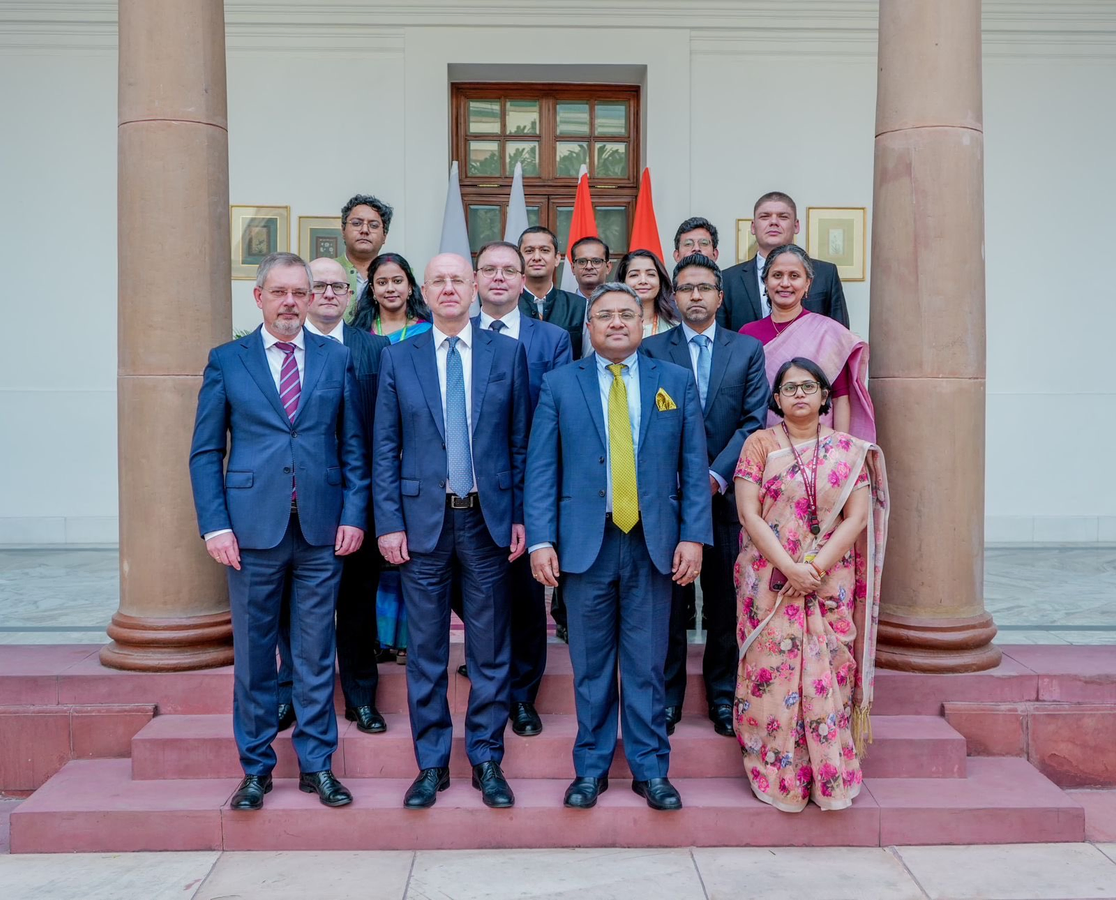
New Delhi, March 17 – India and Russia held the 7th UN Consultations in New Delhi on Tuesday, with discussions focusing on issues related to the United Nations Security Council (UNSC) agenda, particularly counter-terrorism, peacekeeping, UNSC reforms, and others.
Secretary (West) at the Ministry of External Affairs (MEA) Sibi George and Russia's Deputy Foreign Minister Alexander Alimov co-chaired the meeting. Russia's Ambassador to India, Denis Alipov, and other officials were present during the meeting.
"Both sides exchanged their priorities within the United Nations. The discussions focused on issues related to the United Nations Security Council (UNSC) agenda, in particular counterterrorism, peacekeeping, UNSC reforms, among others," MEA spokesperson Randhir Jaiswal posted on X.
Russia has repeatedly stated that India, Brazil, and African countries should have permanent representation on the UNSC to ensure the representation of the global majority.
Last month, George met Russia's Deputy Foreign Minister Alexander Alimov in New Delhi as the latter visited India to attend the AI Impact Summit.
In December, Prime Minister Narendra Modi and Russian President Vladimir Putin held talks during the 23rd India-Russia Annual Summit in New Delhi. The two leaders called for comprehensive reform of the UNSC to reflect contemporary global realities and to make it more representative, effective, and efficient in dealing with issues of international peace and security, according to the joint statement. Russia reiterated its steadfast support for India’s permanent membership in a reformed and expanded UN Security Council.
The two leaders also called for a zero-tolerance policy on terrorism and the expeditious finalization and adoption of the Comprehensive Convention on International Terrorism within the UN framework, as well as the implementation of UN General Assembly and UNSC resolutions on countering terrorism and violent extremism conducive to terrorism.
"The sides called for an uncompromising fight against international terrorism and extremism in all their forms and manifestations, noting the importance of increasing cooperation in this area, without hidden agendas and double standards, on the solid basis of international law and the UN Charter. Besides, they stressed the need for firm implementation of relevant resolutions of the UN Security Council, the UN General Assembly, as well as the balanced implementation of the UN Global Counter-Terrorism Strategy," the Joint Statement added.