The Government of Odisha has intensified its efforts to strengthen the livelihoods, safety, and dignity of sanitation workers and waste pickers through the implementation of the National Action for Mechanised Sanitation Ecosystem (NAMASTE), alongside the State's flagship GARIMA initiative.
Launched in July 2023 by the Ministry of Social Justice and Empowerment in association with the Ministry of Housing and Urban Affairs, Government of India, NAMASTE aims to eliminate hazardous sanitation practices and promote safe, mechanized, and dignified sanitation work across the country. In Odisha, the scheme is being aligned with GARIMA, which recognizes sanitation workers and waste pickers as essential service providers and ensures their social security and livelihood protection.
The core objective of NAMASTE is to formalize and rehabilitate individuals engaged in hazardous cleaning of sewers and septic tanks while ensuring zero fatalities in sanitation work. The program emphasizes the prevention of direct contact with human waste, mandatory use of safety devices, professional skill training, and the strengthening of Emergency Response Sanitation Units (ERSUs) for safe service delivery. It also promotes the formation of Self-Help Groups and entrepreneurship opportunities to economically empower sanitation workers.
Key components of the scheme include profiling of Sewer and Septic Tank Workers (SSWs), occupational safety training, provision of Personal Protective Equipment (PPE) kits, health insurance coverage under Ayushman Bharat–PMJAY, upfront capital subsidies for sanitation vehicles and mechanized equipment, and awareness campaigns to reinforce safety and dignity in sanitation services.
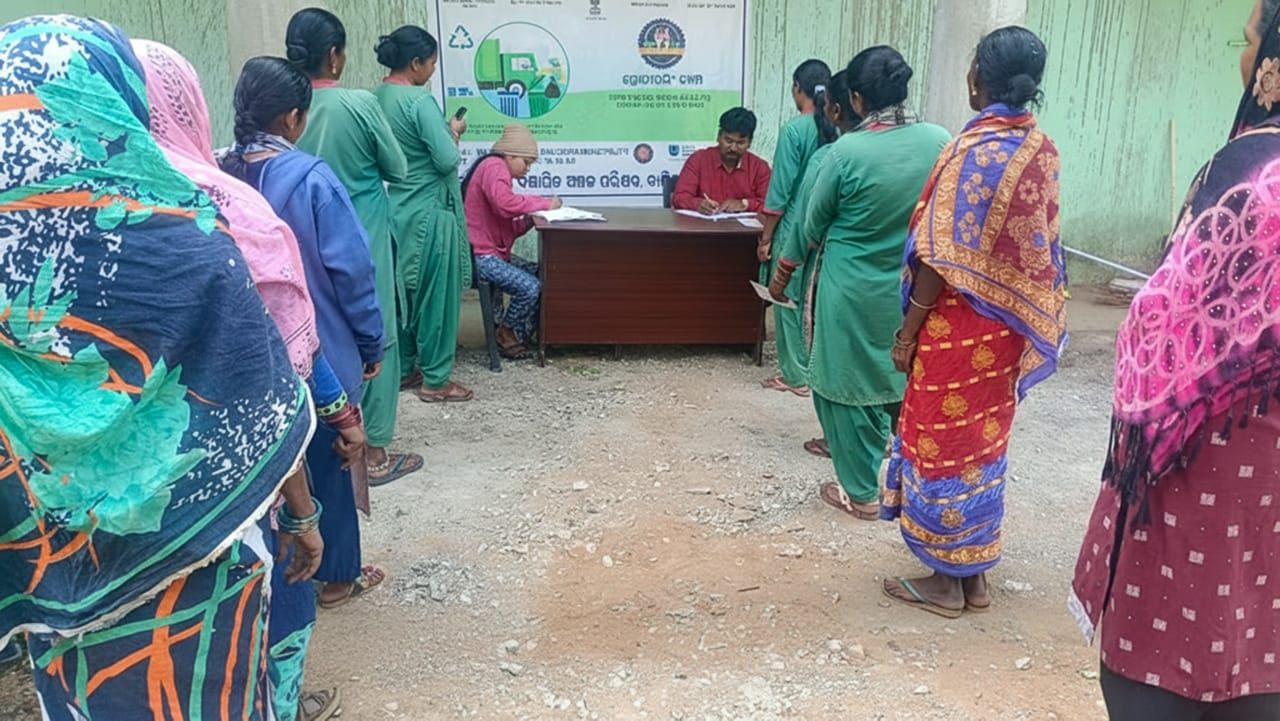
Additional Chief Secretary, Housing & Urban Development Department, Usha Padhee, emphasized that the alignment of NAMASTE with GARIMA reflects the Government's sustained focus on ensuring dignity of labour, social protection, and long-term livelihood security for sanitation workers and waste pickers who form the backbone of urban cleanliness and public health. She informed that the enrolment drive is currently underway across Urban Local Bodies through the Housing and Urban Development Department, Government of Odisha.
The inclusion of waste pickers engaged in solid waste management aims to provide safe, dignified, and sustainable livelihoods through structured enumeration drives, occupational safety training, skill upgradation programs, need-based PPE kits, health insurance coverage, and financial support for waste collection vehicles and self-employment initiatives.
Several components of the erstwhile Self-Employment Scheme for Rehabilitation of Manual Scavengers (SRMS) — including skill development training, health insurance, and capital subsidy support — have now been subsumed into NAMASTE to ensure a unified and stronger rehabilitation framework.
Through NAMASTE and GARIMA, Odisha continues to reinforce its commitment to mechanised sanitation, social justice, and inclusive urban development — placing dignity, safety, and empowerment at the centre of sanitation governance.