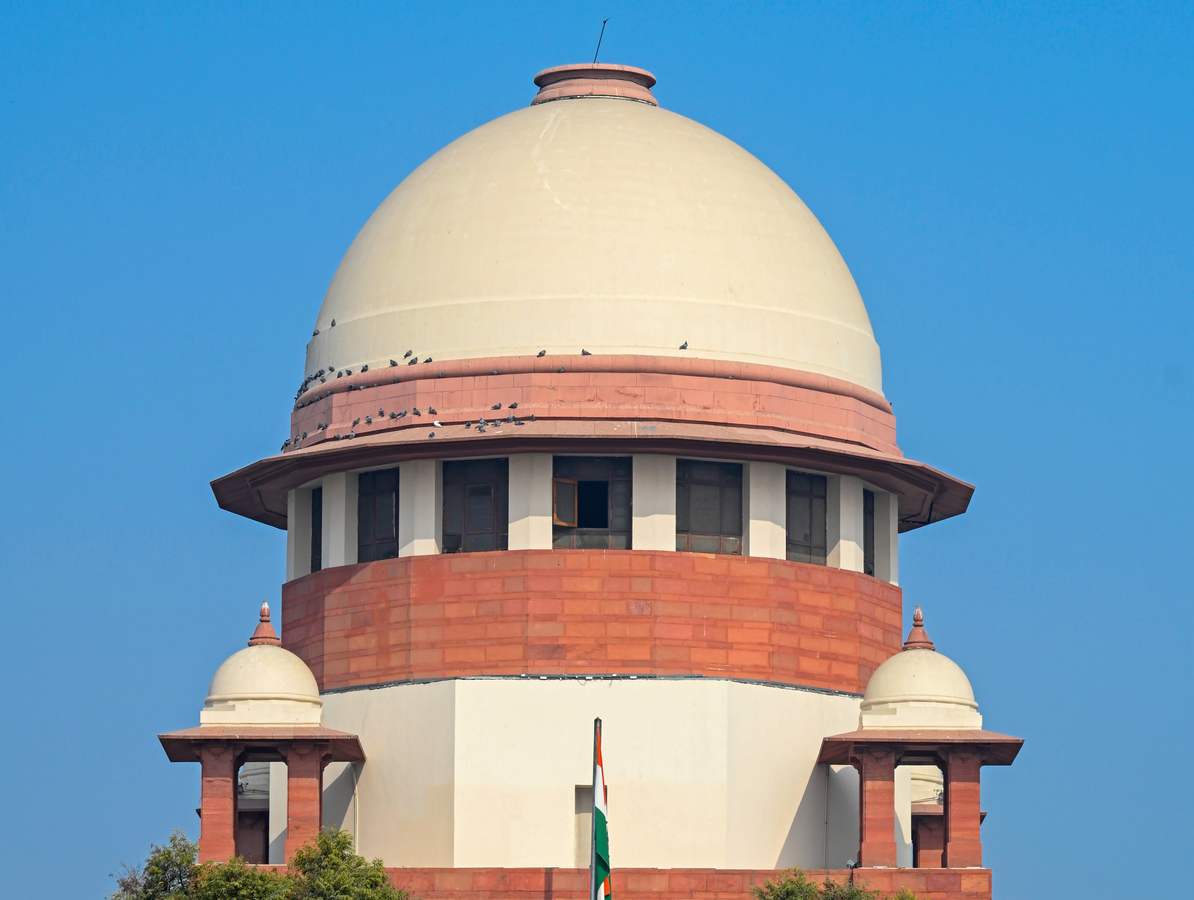
New Delhi, March 17 – The Supreme Court on Tuesday issued notices in response to a plea filed by two convicts in the Bilkis Bano gang rape case, which is linked to the 2002 post-Godhra riots, challenging a 2017 Bombay High Court verdict that upheld their conviction and sentence.
A bench of Justices Rajesh Bindal and Vijay Bishnoi sought responses from the Gujarat and Maharashtra governments on the special leave petitions (SLP) filed by Bipinchandra Kanaiyalal Joshi @ Lala Doctor and Pradip Ramanlal Modhiya.
The matter has been posted for further hearing on May 5.
The petitioners have challenged the May 4, 2017, judgment of the Bombay High Court, which had confirmed the conviction and life sentence awarded by the trial court to 11 accused in connection with the gang rape of Bilkis Bano and the murder of her family members.
In its detailed verdict, the Bombay High Court had not only upheld the conviction of the main accused but had also strongly criticized certain police officials and medical officers. "Therefore, it is clear that they were not only negligent in conducting the post-mortem but also suppressed relevant information," it observed.
The Bombay High Court further stated that the actions of the police and medical officers constituted "a chain of suppressing facts, leading to the disappearance of evidence with the intent to shield the offenders and prevent their punishment."
Setting aside the acquittal of several officials, the Bombay High Court held them guilty under Sections 201 and 218 of the Indian Penal Code, while stating that the elements of Section 217 of the IPC had not been established.
"At the same time, we hereby confirm the conviction and sentence imposed on accused nos. 1, 2 and 4 to 12 as imposed by the trial Court," the Bombay High Court had said, dismissing the appeals filed by the convicts against their conviction.
The criminal case pertains to the violence that erupted in Gujarat following the Godhra train burning incident in February 2002.
Bilkis Bano, who was five months pregnant at the time, was gang-raped, and several members of her family, including her three-year-old daughter, were killed.
The Supreme Court had earlier, in January 2024, overturned the remission granted to 11 convicts by the Gujarat government, terming the orders "stereotyped and cyclostyled" and legally unsustainable.
It had directed the convicts to surrender to the jail authorities within two weeks.
The top court had held that the Gujarat government lacked jurisdiction to grant remission and that the earlier order of the apex court permitting consideration of remission was obtained through the suppression of relevant facts.
The case was transferred by the Supreme Court from Gujarat to Mumbai in 2004 to ensure a fair trial.
In 2008, a Special CBI court in Mumbai convicted the 11 accused and sentenced them to life imprisonment for offences including gang rape and murder during the communal riots.