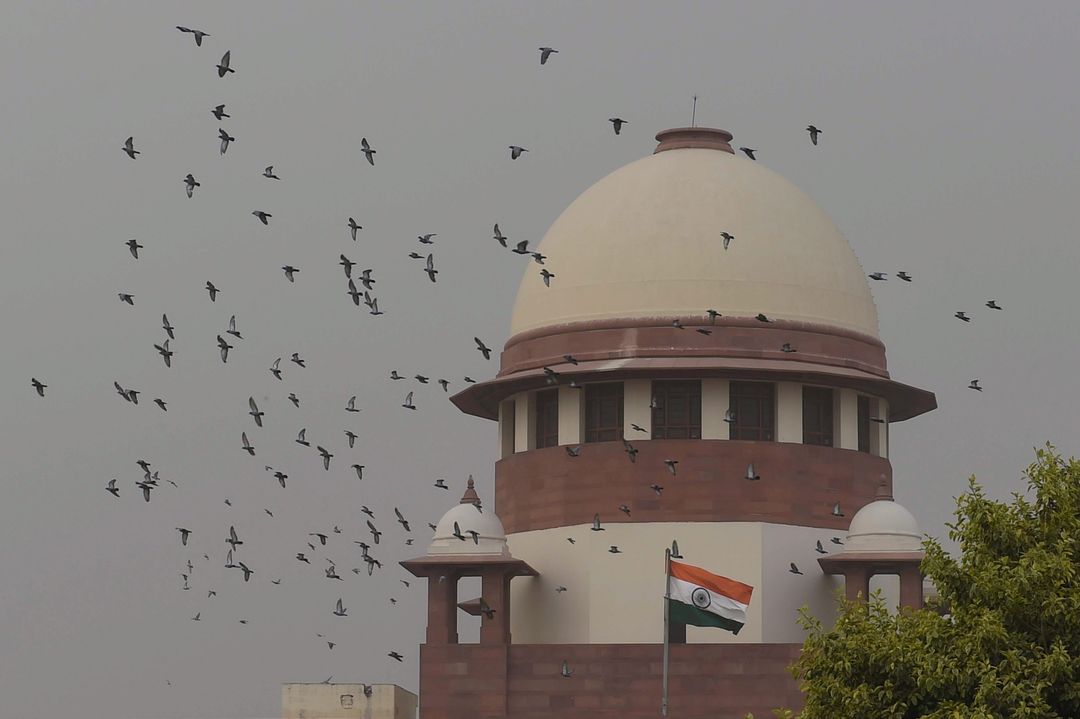
New Delhi, March 4: The Supreme Court of India, in a significant ruling, has clarified that using phrases like "miyan-tiyan" and "Pakistani," although in poor taste, does not constitute an offence of hurting religious sentiments under Indian law. A bench comprising Justices B V Nagarathna and Satish Chandra Sharma discharged a man previously charged under Section 298 of the Indian Penal Code (IPC) for allegedly making such remarks.
Background of the Case
The case emerged from Jharkhand's Bokaro district, where Hari Nandan Singh, the accused, had initially sought information under the Right to Information (RTI) Act from the additional collector-cum-first appellate authority in Bokaro. After receiving the requested documents, Singh allegedly manipulated the records sent via registered post, subsequently filing a complaint alleging manipulation by authorities.The appellate authority then instructed an Urdu translator and acting RTI clerk at the sub-divisional office in Chas to personally deliver the correct documents to Singh. On November 18, 2020, the translator, accompanied by an official messenger, went to Singh's residence to deliver the documents.
Allegations and Charges
During this interaction, Singh allegedly used abusive language, referring to the translator by his faith using terms like "miyan-tiyan" and "Pakistani," and also reportedly used criminal force against the public servant. This incident led the translator to file a First Information Report (FIR) against Singh.Following an investigation, Singh faced charges under multiple IPC sections, notably:
- Section 298 (uttering words or making gestures deliberately intended to wound religious feelings),
- Section 353 (assault or criminal force against a public servant), and
- Section 504 (intentional insult aimed at provoking a breach of peace).
Supreme Court’s Observations and Decision
In its order dated February 11, the Supreme Court clearly stated, "The appellant is accused of hurting the religious feelings of the informant by calling him 'miyan-tiyan' and 'Pakistani.' Undoubtedly, the statements made are in poor taste. However, it does not amount to hurting the religious sentiments of the informant. Hence, we are of the opinion that the appellant shall also be discharged under Section 298 IPC."The court further clarified that Singh’s actions did not provoke any breach of peace, thereby dismissing charges under Section 504 as well. Additionally, the Supreme Court found no merit in charges under Section 353, concluding there was insufficient evidence to substantiate the claims of assault or criminal force against the public servant.
As a result, the Supreme Court set aside the Jharkhand High Court’s ruling, discharging Singh from all allegations.