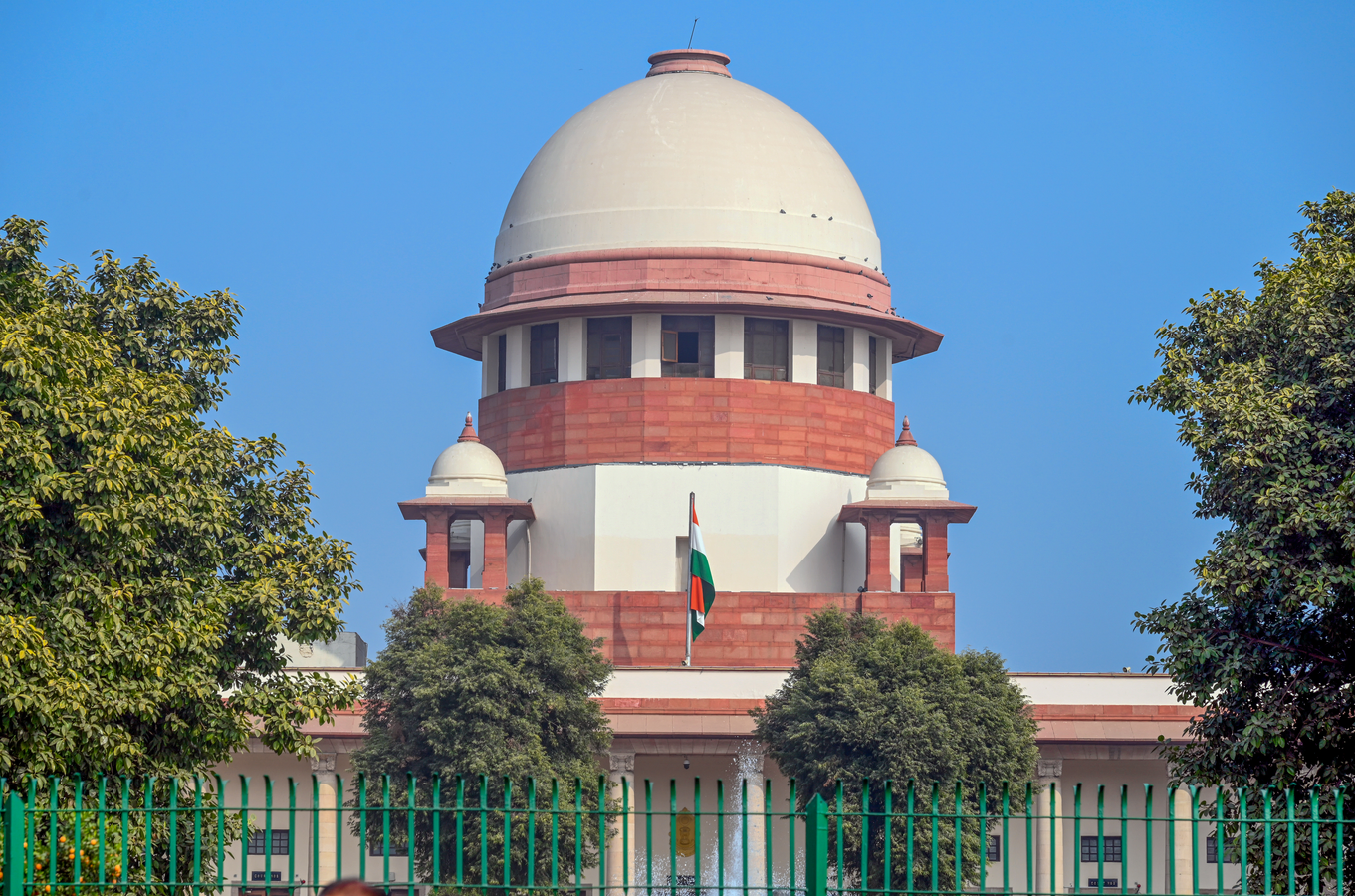
New Delhi, February 27 The Supreme Court on Friday said that the Insolvency and Bankruptcy Code (IBC), 2016, represents a conscious legislative choice to prioritize speed, certainty, and creditor-driven decision-making over "exhaustive" judicial scrutiny.
The court said that experience shows that unsuccessful bidders would always try to "spin" the commercial decisions of the Committee of Creditors (CoC) as procedurally flawed in order to gain a second chance through litigation by filing applications or making representations.
"However, courts need to remain vigilant against any temptation to expand the scope of review beyond the narrow boundaries prescribed by the IBC," a bench of Justices B V Nagarathna and R Mahadevan said.
These observations were made in a verdict delivered on appeals filed against an order of the National Company Law Appellate Tribunal (NCLAT) in a matter concerning the approval of a resolution plan submitted by a firm.
"Before parting, we wish to add a few words of caution. The IBC represents a conscious legislative choice to prioritize speed, certainty, and creditor-driven decision-making over exhaustive judicial scrutiny," the bench said.
It said that the IBC is based on the recognition that delays and uncertainty are detrimental in distressed situations.
"When commercial decisions taken by the CoC are subjected to extensive judicial scrutiny, resolution timelines lengthen, transaction costs rise, and the value of the corporate debtor erodes. The consequence, therefore, is not merely delay, but a tangible loss of economic value for all stakeholders," the court said.
It added that excessive review also encourages strategic litigation.
The bench observed that stakeholders with little to no economic interest in the corporate debtor may resort to litigation as a bargaining tool to delay the implementation of the resolution plan or extract concessions, thereby turning the insolvency process into an adversarial contest.
"From an institutional design point of view, the law must secure three interdependent economic freedoms, namely, entry into the market, continuation of business operations under conditions of competitive neutrality, and exit from the market," it said.
The court said that an efficient insolvency-resolution system performs an important allocative function—it preserves viable firms through timely reorganization, while ensuring swift liquidation and exit of non-viable businesses.
"Where insolvency laws are poorly enforced, viable firms are driven into failure, and non-viable firms are permitted to persist," the bench said.
It said that for a long time under Indian law, the freedom of exit remained under-institutionalized, and the enactment of the IBC was a decisive correction of this imbalance by introducing a predictable and time-bound mechanism for insolvency resolution.
The bench said that predictability and finality are essential to maintaining a robust insolvency regime.
"Judicial intervention beyond the narrow statutory confines undermines both predictability and finality," it said.
The bench said recognizing this, the IBC deliberately confined judicial review to strict statutory compliance under sections 30(2) and 61(3).
It said that respecting these limits would preserve the economic sense of the IBC and ensure that insolvency remains a predictable, time-bound, and market-driven process.
The court said that the IBC marks a fundamental shift in India's insolvency regime from a court-centric model to a creditor-driven process.
It said that at its core lies the doctrine of commercial wisdom, a conscious legislative choice to vest decisive authority in the CoC, comprising financial creditors who bear the economic consequences of failure.
"The IBC recognizes that decisions on viability, valuation, and acceptable haircuts are inherently commercial, not judicial. Courts, therefore, do not substitute their assessment for that of the CoC," the bench said.
Dismissing the appeals, the bench noted that the resolution plan has been approved by both the National Company Law Tribunal, Mumbai bench, and the NCLAT, and has since been implemented, leaving absolutely no scope for intervention by the apex court.