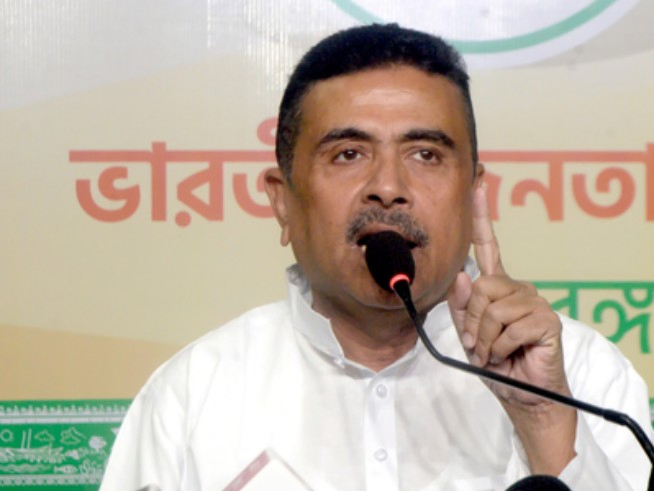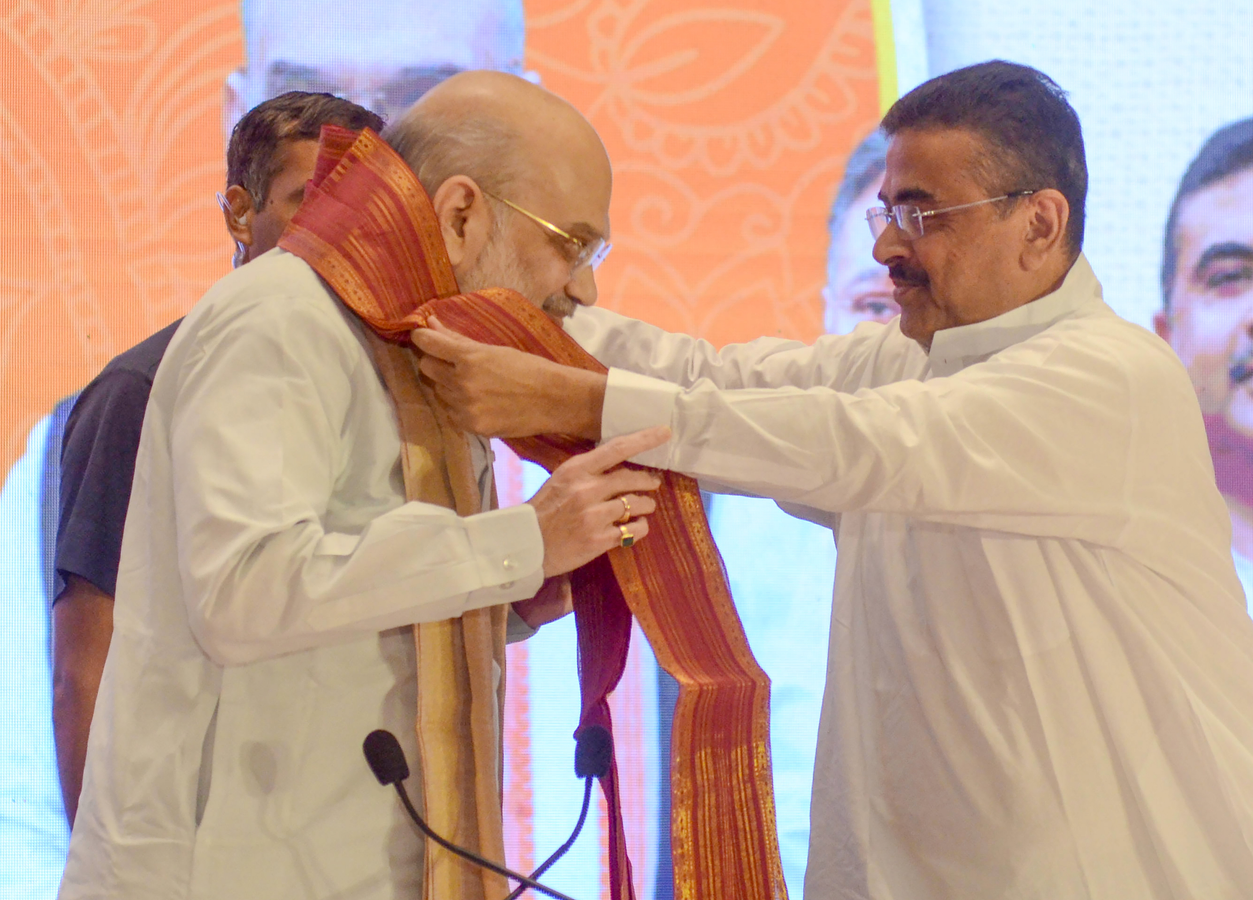
Kolkata, April 2 BJP leader Suvendu Adhikari filed his nomination for Bhabanipur in West Bengal on Thursday in the presence of Union Home Minister Amit Shah, turning the contest in Chief Minister Mamata Banerjee's political stronghold into the centerpiece of the assembly elections.
For the BJP, Bhabanipur is no ordinary constituency.
Represented by Banerjee since 2011, the constituency has long been seen as her stronghold and a symbol of the TMC's dominance in Kolkata.
It is the constituency from which Banerjee returned to the Assembly in the 2021 by-election after losing Nandigram to Adhikari, and it symbolizes both her personal authority and the Trinamool Congress's control over Kolkata.
The move also carries a deeper political message. If Nandigram in 2021 was projected by the BJP as the battlefield where Banerjee's authority could be challenged, Bhabanipur in 2026 is being presented as the arena where her political stronghold can be breached.
For the BJP, even a close fight here would allow it to claim that the chief minister is vulnerable in the heart of Kolkata.
Accompanied by Shah and other senior BJP leaders, Adhikari reached the Survey Building office after a roadshow through Bhabanipur and adjoining areas, amid chants of "Jai Shri Ram" and "BJP zindabad".
The procession, which began near Hazra More and passed through several south Kolkata localities, saw BJP supporters waving saffron flags and raising slogans for "parivartan" (change) in the state.
Adhikari, the leader of the opposition in the West Bengal assembly, is also contesting from Nandigram, from where he is a two-time MLA.
The BJP has sought to portray the Bhabanipur contest as a prestige battle, with Adhikari set to take on Banerjee on her home turf.
Unlike large parts of Bengal where the BJP relies on anti-incumbency, polarization, and local dissatisfaction, Bhabanipur is a constituency layered with memory and symbolism.
It has long been seen as part of the urban Bengali middle-class heartland that stood by Banerjee even when the BJP made deep inroads elsewhere in the state.
"That is precisely why Shah's presence during Adhikari's nomination was politically significant. The BJP leadership wanted to send a signal that Bhabanipur is not being treated as a token contest, but as a high-voltage battle capable of reshaping the narrative of the election," a senior state BJP leader said.
The optics were carefully choreographed: Shah beside Adhikari, saffron flags lining the route, and the BJP invoking themes of corruption, women's safety, and political violence in a constituency the party hopes to turn into a referendum on 15 years of TMC rule.
Soon after filing his papers, Adhikari said the BJP would fight the election to end what he described as "15 years of misrule, corruption, terror, atrocities on women, and appeasement politics" under the Trinamool Congress.
In a post on X, he said the BJP was making a "solemn pledge" to "free Bhabanipur and the entire state of West Bengal from the failed, corrupt, and oppressive regime of the last 15 years".
Adhikari said his party would "restore the fundamental rights, security, and dignity of every citizen" and build "a Bhabanipur of good governance, peace, and all-round development".
Claiming that "the people of Bhabanipur want change", he said residents were looking for "a corruption-free administration, safety and security for women, jobs for the youth, progress in education and industry, the rule of law, and a terror-free environment".
He ended the post with an appeal to voters to unite to create "a new West Bengal where quality education, industrial growth, employment, good governance, security, and holistic development are achievable," before signing off with "Jai Bhabanipur".
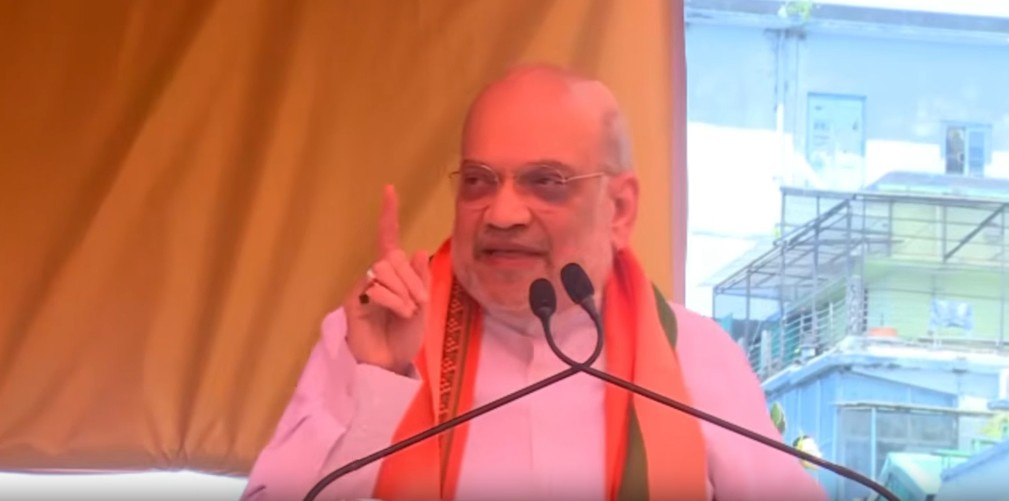
Shah, who led the roadshow, alleged that the state had witnessed corruption, lack of security for women, and political violence under the Trinamool Congress regime, and appealed to people to vote for change.
Assembly elections will be held in two phases on April 23 and April 29. Votes will be counted on May 4.