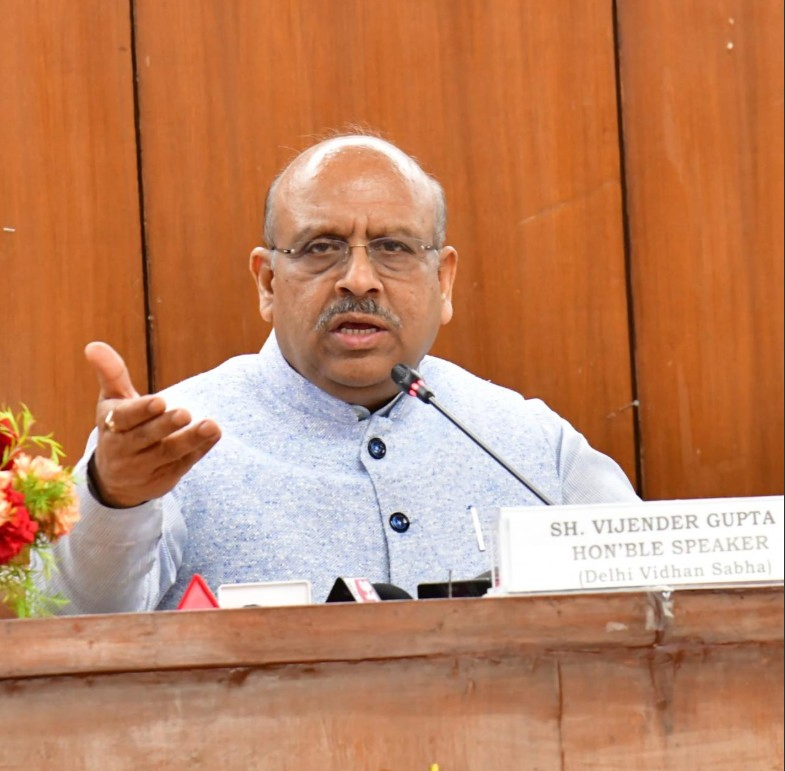
New Delhi, April 2 – Delhi Assembly Speaker Vijender Gupta, on Thursday, raised concerns about systemic failures in the excise framework and called for timely action on the recommendations of the Public Accounts Committee, an official said.
He also called for measures to ensure accountability and compliance with legislative scrutiny within a specific timeframe.
Following the adoption of the second report of the Public Accounts Committee on the "Report of the CAG on Performance Audit on Regulation and Supply of Liquor in Delhi", the Delhi Assembly Secretariat has directed the concerned departments to review the Committee's recommendations.
The Secretariat has also advised the departments to submit an action taken report, detailing the status as of December 31, 2026, by January 31, 2027.
"In this regard, a formal communication has been issued to Delhi Excise Minister (Chief Minister Rekha Gupta) and the Principal Secretary (Finance) (Ashish Chandra Verma), conveying these directions and calling for a comprehensive and time-bound response to the findings and recommendations of the Committee, thereby initiating the follow-up process at the departmental level," the statement said.
This directive marks the commencement of a critical follow-up exercise, placing clear responsibility on the Executive to respond within a defined timeframe to the findings placed before and adopted by the House.
The move is aimed at ensuring that the observations of the Public Accounts Committee translate into concrete administrative action and measurable outcomes, the statement added.
Assembly Speaker Gupta said that the Committee has submitted its report to the House, concluding that there were serious systemic deficiencies in the regulation, licensing, pricing, quality control, enforcement, and overall policy implementation of the Excise Department, leading to substantial revenue losses amounting to Rs 2,026.91 crore and posing significant risks to public health and governance.
He noted that the Excise Supply Chain Information Management System (ESCIMS) failed to effectively track liquor sales due to excessive reliance on the "stock take sold" method and the presence of a large number of unaccounted barcodes, resulting in potential revenue leakages, while the Excise Intelligence Bureau module remained dysfunctional and underutilized for intelligence purposes.
The Assembly Speaker observed widespread lapses in licensing processes, including non-production of records and issuance of multiple licenses to related entities, alongside ambiguity in defining and regulating Ex-Distillery Price and Ex-Brewery Price, which led to discretionary pricing, undue benefits to licensees, and inflated profit margins.