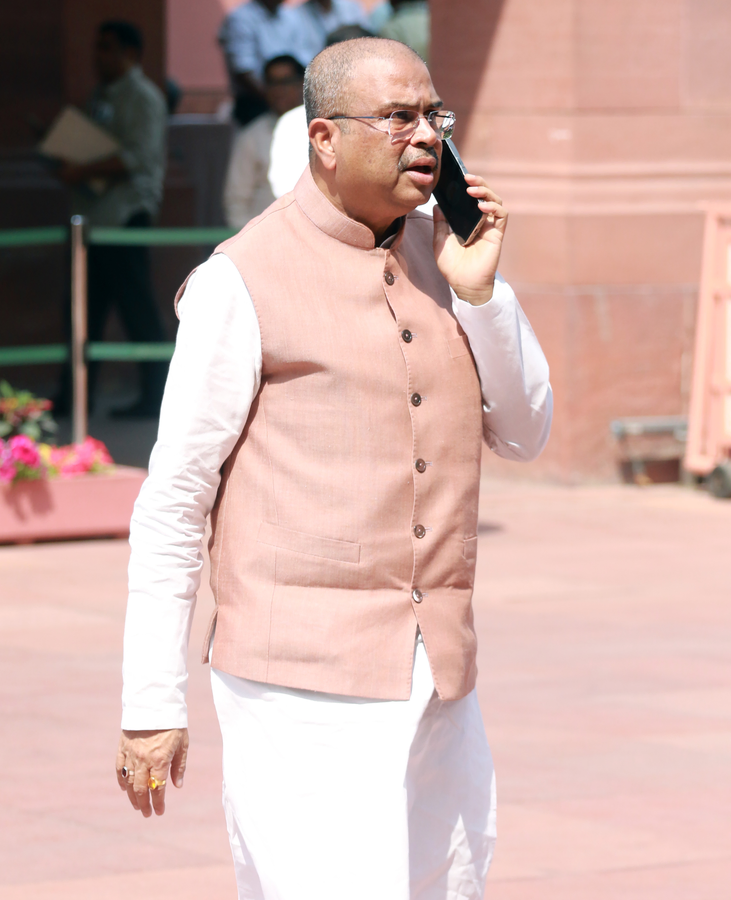
Chennai, April 4 Union Education Minister Dharmendra Pradhan launched a strong attack on Tamil Nadu Chief Minister M.K. Stalin on Saturday over the ongoing controversy surrounding the three-language policy under the National Education Policy (NEP) 2020, accusing him of misrepresenting the reforms for political gain.
In a strongly worded statement, Pradhan rejected Stalin's claims of "imposition of Hindi," describing them as a "tired narrative" aimed at masking governance failures. He asserted that the NEP promotes linguistic freedom rather than coercion, emphasizing that the policy prioritizes education in the mother tongue to ensure better learning outcomes for students.
"Portraying NEP as a compulsory Hindi policy is misleading," Pradhan said, adding that multilingualism should be viewed as an asset rather than a threat. He argued that the Tamil language and culture would be strengthened, not weakened, if students are equipped with multiple linguistic skills in an increasingly globalized world.
Highlighting the Centre's initiatives, Pradhan said the Union government, under Prime Minister Narendra Modi, has actively promoted the Tamil language and heritage through national and international platforms, including events such as the Kashi Tamil Sangamam.
He also pointed to structural reforms under the NEP, including teacher training programmes, institutional strengthening through District Institutes of Education and Training (DIETs), and national frameworks such as the National Professional Standards for Teachers (NPST) and the National Mission for Mentoring (NMM).
The Union Minister further accused the DMK government of obstructing key educational initiatives in the state. He alleged that Tamil Nadu has stalled the implementation of PM SHRI schools by refusing to sign the required memorandum of understanding, despite earlier commitments.
Pradhan also referred to the issue of Jawahar Navodaya Vidyalayas, stating that despite directions from the Supreme Court, the state government continues to resist their establishment. He said this has deprived underprivileged students of access to quality residential education and modern infrastructure.
Dismissing concerns about resource constraints as a "facade", Pradhan maintained that the Centre remains committed to funding, teacher training, and institutional development. He accused the state government of prioritizing "divisive politics" over educational progress.
Calling for cooperation, Pradhan urged the Tamil Nadu government to move beyond political rhetoric and join what he described as a national mission to empower Indian languages while enhancing educational opportunities for students.