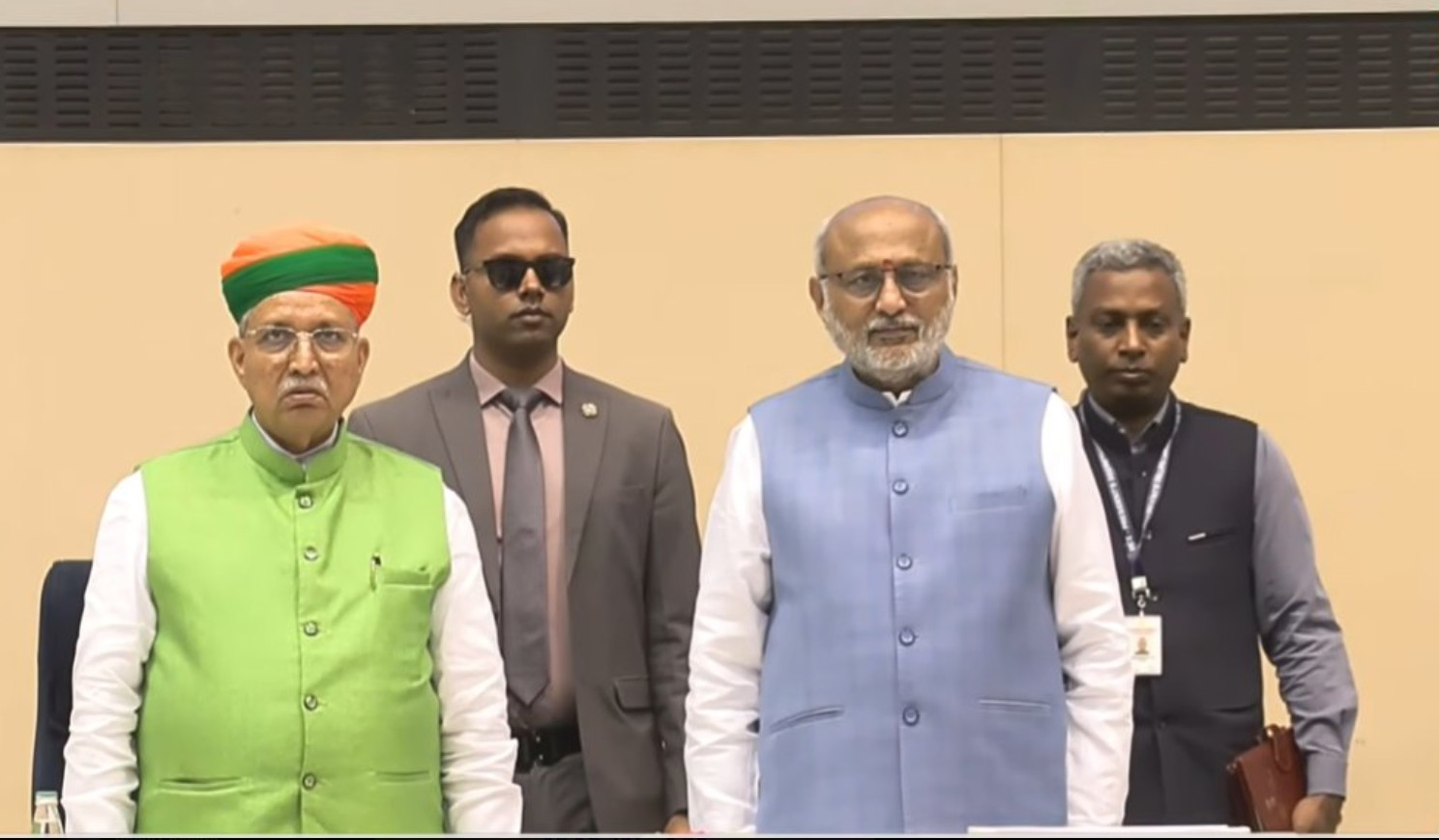
New Delhi, March 29 Vice-President C.P. Radhakrishnan emphasized the need for affordable, inclusive, and timely justice for citizens, stressing the importance of strengthening access to justice through technology-enabled legal services.
Speaking at a National Consultation organized by the Department of Justice under the Ministry of Law and Justice, the Vice-President said, "Legal empowerment depends on three priorities – inclusivity, quality, and accountability, and the innovative use of technology in a user-centric manner."
He added that the success of our legal system will depend on its inclusivity and its ability to reach the most vulnerable sections of society.
Vice-President Radhakrishnan cautioned that the use of technology should not compromise on the quality and accountability in the dispensation of justice.
"India stands today at a defining moment, with Prime Minister Narendra Modi sharing the vision for 'Viksit Bharat@2047'. For this, it is necessary to dismantle the colonial laws, which were designed to rule and not serve. The recent implementation of the new three criminal laws marks a significant step towards a citizen-centric justice system," he said.
Vice-President Radhakrishnan stated that the Tele-law initiative is an example of how technology is being used to democratize legal services.
"The pre-litigation aspect of the Tele-law initiative also helps in resolving matters and reducing the burden of litigation," he said, highlighting the Union government's decision to make laws available in regional languages.
"The consultation provided a platform for deliberations, policy dialogue, and stakeholder engagement," an official said in a statement.
The National Consultation 2026 under the Tele-Law initiative of the Designing Innovative Solutions for Holistic Access to Justice (DISHA) Scheme, a central sector scheme, is being implemented under the Access to Justice Division.
Minister of State (Independent Charge) for Law and Justice, Arjun Ram Meghwal, highlighted the importance of the Tele-law initiative in making access to law.
"Today, it is not necessary to go to cities to access justice or contact a lawyer," he said, adding that the Tele-law initiative is proving effective in delivering doorstep justice.
He also emphasized the importance of pro-bono legal services in making justice accessible.
The event also saw the launch of the "Voice of Beneficiaries" Booklet 2025–26, which captures compelling stories of individuals whose lives have been positively impacted through Tele-Law services, reflecting the transformative potential of digital access to justice.
A comprehensive presentation on the progress of the DISHA Scheme across India, including live interactions with Tele-Law Panel Lawyers, Village Level Entrepreneurs, and beneficiaries, showcasing real-time experiences and the grassroots impact of technology-enabled legal aid, was presented at the consultation.
"A special segment commemorated 150 years of the National Song "Vande Mataram", performed by local artists, celebrating its historic and cultural significance," the statement said.
The consultation featured the release of a white paper emerging from a technical session held prior to the event, which brings together insights, recommendations, and best practices from experts, policymakers, and practitioners.
An AI-powered chatbot, Nyaya Setu, was also launched.
It has been developed to act as a digital bridge between citizens and legal services.
Designed to provide instant, user-friendly legal information and guidance, the chatbot will assist users in understanding their legal rights, accessing Tele-Law services, and navigating dispute resolution mechanisms.
A series of legal awareness comic books developed in collaboration with the National Law University in Delhi were launched during the event.
"The event was attended by 1,200 participants, including officials from the Supreme Court e-Committee, National Legal Services Authority, members of the Bar, Government counsels, Tele-Law Panel Lawyers and Village Level Entrepreneurs," the statement said.