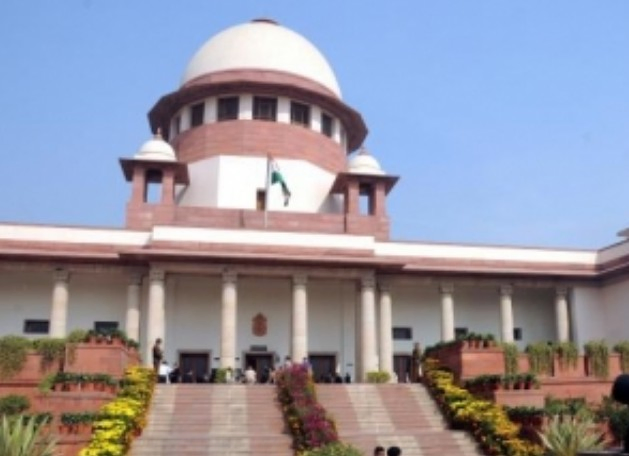
New Delhi, February 26 – The Supreme Court has ordered an immediate nationwide withdrawal of the Class 8 Social Science textbook published by the National Council of Educational Research and Training (NCERT), along with a complete ban on it. This decision comes after observing that the chapter, which includes references to "corruption in the judiciary," prima facie, reveals a "clear agenda to undermine the authority of the institution and demean the dignity of the judiciary."
In a suo moto hearing titled "In Re: Social Science Textbook for Grade–8 (Part-2) published by NCERT and ancillary issues," Chief Justice Surya Kant-led bench observed that while the chapter aims to discuss the role of the judiciary, it "effectively nullifies the illustrious history associated with the Supreme Court, High Courts, and District Courts," and "deliberately omits the significant contributions made by these institutions towards preserving our democratic system."
Furthermore, the bench, comprising Justices Joymalya Bagchi and Vipul M. Pancholi, stated that the textbook fails to acknowledge the judiciary's role in upholding constitutional principles and the Basic Structure doctrine, which are considered "the very foundation of the Indian citizens' public life."
The controversy centers around Chapter 4 of the Grade 8 textbook, titled "Exploring Society: India and Beyond," which includes a sub-topic on "Corruption in the Judiciary."
Referring to a February 24, 2026, newspaper report, the apex court noted that the chapter "makes prominent references to hundreds of complaints received against the judiciary, clearly indicating that no action was taken." It asserts that "people have experienced corruption at various levels within the judiciary."
The Supreme Court recorded that the publication of the textbook "caused significant concern," and that "including such material in a foundational school curriculum requires a rigorous review of its pedagogical suitability and its potential impact on the overall standing of the judiciary."
After examining the textbook and NCERT Director's response defending its inclusion, the CJI Kant-led bench concluded that the material "reveals a clear agenda to undermine the authority of the institution and demean the dignity of the judiciary."
The court cautioned that allowing this to continue "would erode the public's trust in the judicial office and, more importantly, the impressionable minds of young people."
However, the CJI Kant-led bench clarified that the proceedings were not intended to stifle legitimate criticism.
"We do not intend to initiate any suo moto proceedings to stifle any legitimate criticism or to hold any individual or organization accountable for scrutinizing public institutions, including the Judiciary. Instead, we firmly believe that dissent, deliberation, and rigorous discourse are essential for a healthy democracy and are crucial for institutional accountability," the order stated.
The intervention was necessary to "safeguard the integrity of the national curriculum," as exposing young students to a "biased narrative" at a formative stage is "fundamentally inappropriate."
The Supreme Court warned that if the publication was found to be deliberate, it could fall under Section 2(c) of the Contempt of Courts Act, 1971, which could be considered scandalous and interfere with the administration of justice.
Taking note of an NCERT press release stating that distribution of the book has been halted, that the chapter will be rewritten, and that an apology has been tendered, the CJI Kant-led bench said that the genuineness of the apology will be examined at a later stage.
"We will consider whether the apology was offered genuinely with the intention of purging the prima facie contempt, or whether it is merely a tactic to avoid consequences, particularly given the substantial and irreversible damage that has already occurred," the apex court said.
Issuing show-cause notices, the Supreme Court directed the Secretary, Department of School Education and Literacy, Ministry of Education, Government of India, and Professor (Dr.) Dinesh Prasad Saklani, Director, NCERT, to explain why action under the Contempt of Courts Act or other penal provisions should not be initiated against them or those responsible for introducing the "offending chapter."
Pending further consideration, the apex court directed NCERT, in coordination with the Union government and state education authorities, to immediately seize and remove all physical and digital copies of the textbook from schools, retail outlets, storage facilities, and online platforms.
It further imposed a "complete ban" on any further publication, reprinting, or digital dissemination of "Exploring Society: India and Beyond," warning that any attempt to circulate the same content would be treated as a wilful breach and defiance of its directions.
The CJI Kant-led bench made it the responsibility of the NCERT Director and principals of all schools where the book had been circulated to ensure immediate seizure and sealing of copies and to halt any teaching based on its contents. Principal Secretaries of Education across all states and UTs (union territories) have been directed to file compliance affidavits within two weeks.
Additionally, the NCERT Director has been asked to furnish a comprehensive list of members of the National Syllabus and Teaching Learning Material Committee who approved the chapter, the names and credentials of the Textbook Development Team responsible for drafting it, and the original minutes of meetings where the chapter was deliberated and finalised.
The Supreme Court observed that the framers of the Constitution had carefully ensured institutional autonomy among the legislature, executive and judiciary while requiring them to function in harmony to preserve democratic values.
"The framers of our Constitution were profoundly conscious and took abundant caution to ensure that constitutional responsibilities were inscribed with such precision that the three pillars, namely, the Legislature, Executive and Judiciary, remain capable of operating with institutional autonomy while functioning in concert to preserve the democratic fabric of our nation," it said.
The matter has been posted for further hearing on March 11, 2026.