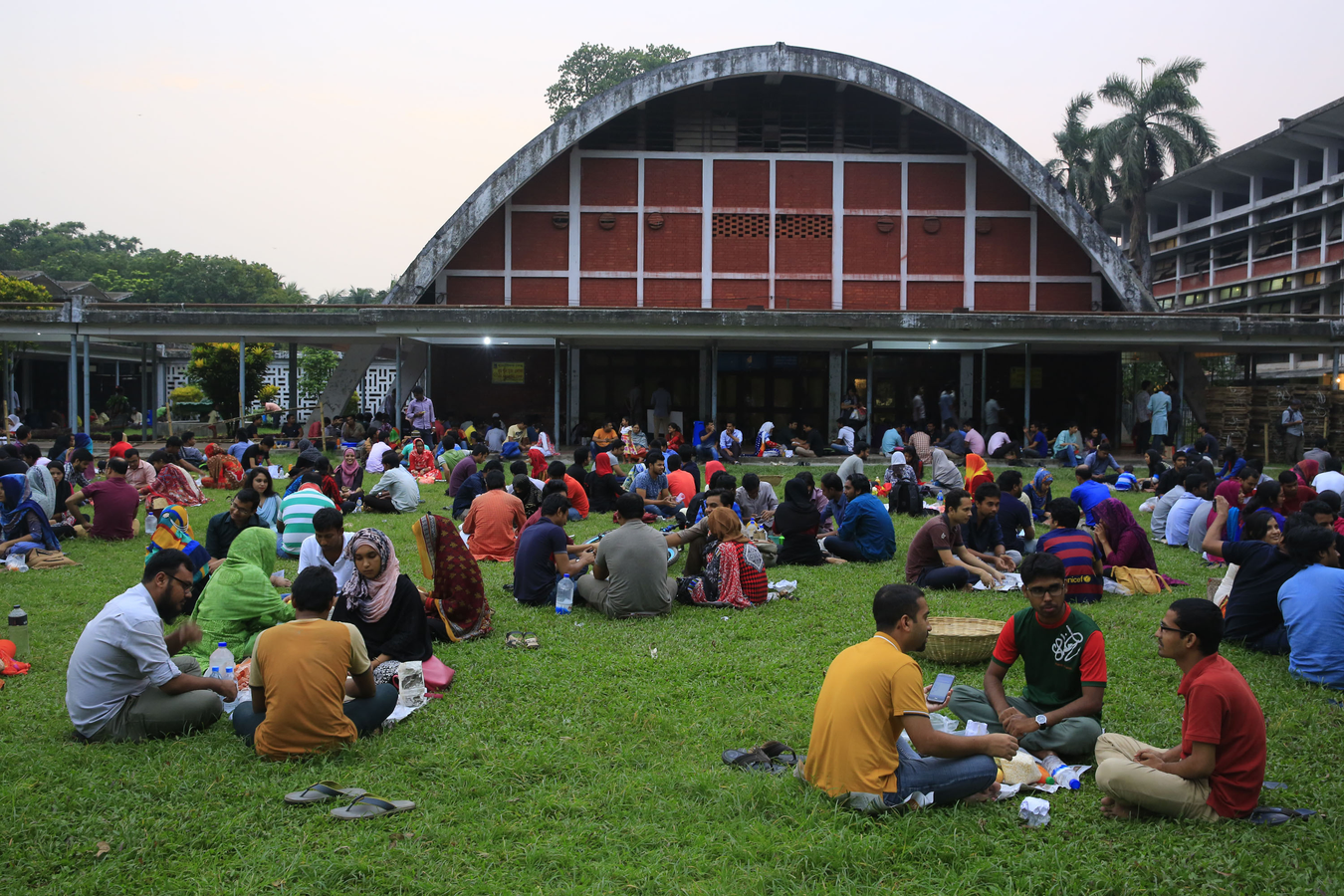
Dhaka: As Bangladesh seeks to return to normalcy following the Muhammad Yunus era, thousands of students associated with the Bangladesh Students’ League who have been expelled without due process are waiting to return to their universities.
Education should not be a casualty of political transitions. If allegations exist, they must be investigated through transparent legal and disciplinary procedures – not through mass punishment, intimidation, or administrative decrees. Bangladesh’s universities should remain spaces for learning, not arenas for collective retribution.
The Bangladesh Students' League (BSL), founded in January 1948 by Sheikh Mujibur Rahman, has historically been a pro-independence student body aligned with the ideals of the 1971 Liberation War. Supporters state that more than 17,000 of its members sacrificed their lives during the Liberation War. Whatever one's political view of the organization today, its historical impact on Bangladesh's political journey is significant.
Following the political upheaval of August 2024 and the formation of an interim administration led by Muhammad Yunus, the BSL was banned in October 2024. Since then, allegations have surfaced of widespread expulsions of students perceived to be affiliated with the organization across public universities, engineering institutions, agricultural universities, and medical colleges.
According to figures cited by student representatives, more than 15,000 students have been expelled over the past 18 months.
These include students from the University of Dhaka (403), Jahangirnagar University (289), University of Rajshahi (32), University of Chittagong (84), Begum Rokeya University in Rangpur (71), Jatiya Kabi Kazi Nazrul Islam University in Mymensingh (16), Islamic University in Kushtia (33), Rabindra University in Sirajganj (10), Bangladesh Agricultural University in Mymensingh (154), Bangladesh University of Engineering and Technology (60), Chittagong University of Engineering and Technology (19), Khulna University of Engineering and Technology (13), Rajshahi University of Engineering and Technology (46), Dhaka University of Engineering and Technology (14), Shahjalal University of Science and Technology (54), Mawlana Bhashani Science and Technology University (19), Hajee Mohammad Danesh Science and Technology University (102), Pabna University of Science and Technology (28), Jamalpur Science and Technology University (51), Rangamati Science and Technology University (10), Mymensingh Engineering College (10), Rangamati Medical College (6), Faridpur Medical College (34), Mymensingh Medical College (23), Rajshahi Medical College (20), Patuakhali Medical College (2), Chittagong Medical College (75), Khulna Medical College (3), Sir Salimullah Medical College (24), Chandpur Medical College (5), Dinajpur Medical College (39), Netrakona Medical College (11), Sylhet Medical College (55), Rangpur Medical College (16), Barishal Medical College (12) and Cox’s Bazar Medical College (3).
Beyond expulsion figures, student representatives claim that more than half a million students face criminal charges arising from the August 2024 political transition. Independent verification of each claim is essential, but the scale of the allegations alone warrants urgent institutional scrutiny.
The core issue is procedural fairness. Were formal charge sheets issued? Were hearings conducted? Was evidence presented? Were students given the right to defend themselves or appeal? If disciplinary action is taken solely on the basis of political affiliation, it constitutes collective punishment.
Equally concerning are reports of arrests and mob violence targeting students attempting to attend examinations. Allegations include students being detained in exam halls, attacked in dormitories, or assaulted on campuses. The reported killing of a student activist at Jahangirnagar University has been cited as a stark example of deteriorating campus security. Such incidents — if accurately documented — signal a breakdown of institutional neutrality and law enforcement responsibility.
Universities cannot permit mob enforcement of political boundaries. Nor can administrations share personal data with law enforcement without due legal process. The right to education is fundamental. Even individuals accused of crimes retain academic rights unless restricted by a court order. Denying examination access without conviction or proven misconduct risks permanently derailing young lives.
Supporters of the current dispensation may argue that student politics in Bangladesh has historically been associated with violence and patronage networks. Reform is legitimate. But reform must be rooted in due process, not blanket exclusion.
Student leaders such as Sheikh Mohammad Nayem and Shibli Sadik have described the present environment as one marked by certificate cancellations, academic blacklisting, and intimidation. These assertions demand impartial investigation, not political dismissal.
Bangladesh’s constitutional framework guarantees freedom of association and expression within lawful limits. If students have committed criminal offenses, they must face trial. If they have breached campus discipline, transparent disciplinary boards must act. But affiliation alone cannot justify academic erasure.
The broader danger is generational alienation. When tens of thousands feel systematically excluded, resentment deepens. Exclusion radicalizes; engagement moderates. Universities should be arenas of debate, not ideological purification.
Bangladesh’s history — from the Language Movement to the Liberation War — was shaped by students. Transforming campuses into spaces of political cleansing undermines that legacy.
The way forward is institutional review. An independent commission of senior academics, retired jurists, and civil society representatives should examine all expulsion orders issued since August 2024. Students against whom no substantiated charges exist should be reinstated. Examination access must be restored. Allegations of mob violence must be investigated impartially.
Restoring these students to classrooms is not about restoring partisan dominance. It is about restoring due process, academic integrity, and the democratic credibility of Bangladesh’s higher education system.
A nation’s democratic future depends on how it treats its youth — especially those with whom it disagrees.