New Delhi, February 19 The Congress launched its first phase of its campaign against the interim India-US trade deal on Thursday, with senior leaders alleging that the Modi government "compromised" the country's sovereignty and self-reliance.
The opposition party claimed that the deal would harm the interests of farmers in the country, alleging that opening the agricultural sector would allow the US to flood the Indian market with its agricultural products, including genetically modified ones.
As part of the party's campaign, senior leaders held press conferences on the issue in several states across the country.
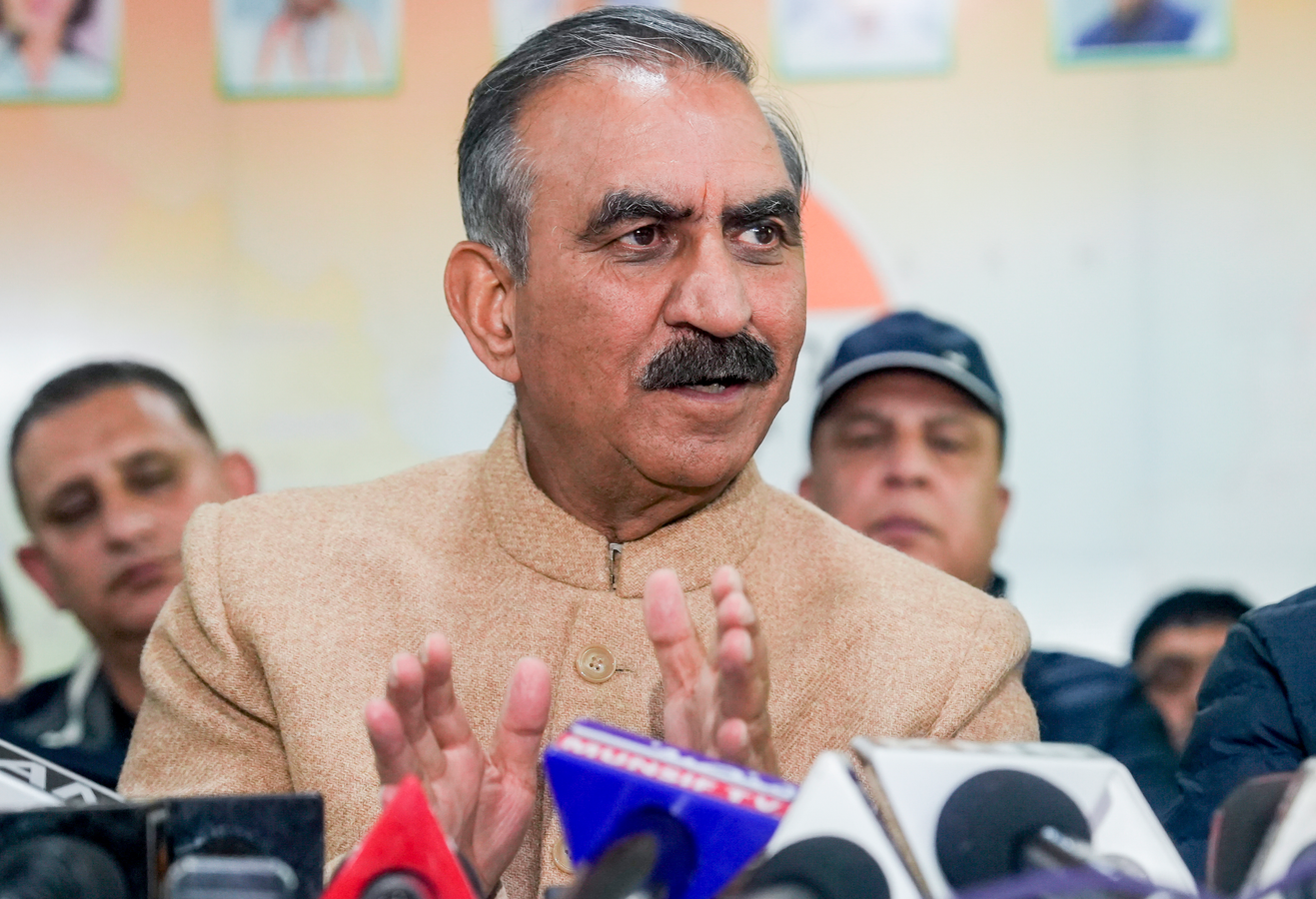
Himachal Pradesh Chief Minister Sukhvinder Singh Sukhu addressed a press conference in Srinagar, while party general secretary Sachin Pilot addressed another one in Mumbai and Deepender Hooda in Patna.
The second phase of the campaign will be launched this weekend, with three more press conferences by senior party leaders planned in Madhya Pradesh, Punjab, and Rajasthan, sources said.
Sukhu claimed that the interim trade deal with the US has dashed the hopes of farmers and orchard owners in the country, particularly in his state and in Jammu and Kashmir.
"This trade deal will have significant consequences for farmers, especially those in Himachal Pradesh and J&K, who rely on horticulture," Sukhu told reporters.
He said that many local fruit growers have invested years of hard work and resources, building controlled-atmosphere storage facilities to sell their products during the off-season.
Sukhu claimed that products imported from the US, including apples and almonds, will enter the Indian market without incurring any import duties. In contrast, Indian growers will face an 18 per cent duty when exporting to the US, putting them at a significant disadvantage, he said.
"They (the government) say they will protect the interests of farmers and orchard owners, but this trade deal has dealt a severe blow to them. The prices of our dry fruits have already fallen and will continue to decline further with the entry of American products into our markets duty-free," he said.
Congress leader Sachin Pilot in Mumbai criticised the trade deal, saying that trade agreements must be based on equality and mutual public interest and cannot come at the cost of national interest or sovereignty.
"No trade pact that mortgages the country's interests can be acceptable. Any agreement that attacks the livelihood of farmers, undermines energy security, or weakens India's sovereignty and self-reliance will not be accepted by the people," he said.
There have been non-Congress governments earlier, but never before has the "red line" been crossed in trade agreements, bilateral agreements, WTO negotiations, or FTAs in a way that put the country's food providers and dairy farmers on the margins, Pilot claimed.
Under the February 6 "framework agreement" with the US, the Modi government has agreed to open India's agricultural market to American farm and food products at zero duty, said Pilot while terming this a direct blow to Indian farmers.
He claimed that duty-free imports of products such as processed maize, sorghum, and soybean oil from the US would adversely affect domestic producers across several states, including Maharashtra, Karnataka, Madhya Pradesh, Rajasthan, and Uttar Pradesh.
Pilot also raised concerns that cotton imports from the US and changes in textile trade dynamics involving Bangladesh could hurt India's farmers and textile industry.
"Opening imports of fruits, nuts, and other agricultural produce from the US without tariffs would impact growers in states such as Himachal Pradesh, Uttarakhand, Jammu and Kashmir, and across other regions producing bananas, groundnuts, and horticultural crops," he added.
Congress leader Deepender Singh Hooda said in Patna that the trade deal would make the country "dependent on America".
"This trade deal has made people wonder whether we will achieve an 'America Nirbhar Bharat' instead of Atmanirbhar Bharat. We seem to have a 'majboor sarkaar' instead of a 'mazboot sarkaar'," alleged Hooda.
The Congress leader claimed that the deal "compromised the interests of our farmers, imperilled the country's energy security, and put India's data privacy and digital economy at risk".
"The trade deal also compels India to buy oil from the US without any assurance that prices will be as competitive as those already on offer from Russia and Iran. The deal has also warned India of a fresh penalty if oil is imported, directly or indirectly, from Russia. The nation wants to know why the government has agreed to such terms and conditions," said Hooda.