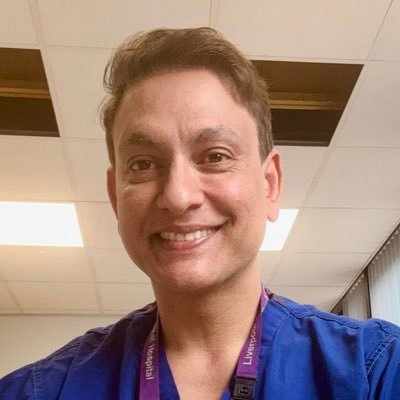
Chandigarh, April 3: British cardiologist and electrophysiologist Professor Dhiraj Gupta is currently on a tour of India, performing complex atrial fibrillation (AF) procedures while training local cardiologists during live cases.
After launching the program at the Postgraduate Institute of Medical Education and Research here, Professor Gupta completed a structured AF ablation workshop in Ahmedabad on March 31 and April 1, and has now moved to Mumbai, where he is performing complex electrophysiology procedures at Lilavati Hospital and Research Centre without charging patients or the hospital.
This initiative marks a clear shift from conventional practices, with procedures that are either not available in most parts of India or, if so, are available at a high cost, now being carried out at a low cost, while local specialists are simultaneously being trained to perform them independently.
"Atrial fibrillation is the most common heart rhythm disorder affecting millions of people. It can be successfully treated by a procedure called catheter ablation. I have developed a low-cost single catheter ablation technique, thereby allowing this treatment to reach more patients. I am performing ablation procedures and using the opportunity to train local cardiologists in this technique," said Professor Gupta, emphasizing "structured training alongside live cases."
Unlike standard visiting-surgeon programs, local cardiologists are actively participating in the procedures, gaining hands-on experience in advanced AF ablation and related interventions. The program will next move to Pune, where an advanced electrophysiology workshop is scheduled at Deenanath Mangeshkar Hospital and Research Centre on April 6 and 7, continuing the same model of live procedures combined with intensive training.
Professor Gupta, a consultant at Liverpool Heart and Chest Hospital, is internationally renowned in complex AF ablation and left atrial appendage occlusion, and has led multiple international catheter ablation research trials.
Medical experts said the immediate benefit was clear: patients who might otherwise struggle to afford such procedures are receiving advanced treatment free of charge or at low cost, while Indian doctors are being trained to carry forward the expertise independently.
With atrial fibrillation remaining a leading cause of stroke and widely underdiagnosed in India, experts said this combination of improved access and skill transfer could significantly improve long-term outcomes.