United Nations, February 24 – The intractable war in Ukraine entered its fourth year on Tuesday, with no early signs of an end to the conflict that has spread its influence across the globe, destabilizing geopolitics and international trade.
Secretary-General Antonio Guterres described it as "a stain on our collective consciousness and remains a threat to regional and international peace and security.”
According to the UN, more than 15,000 Ukrainian civilians have been killed and 41,000 injured in the four years of the conflict.
Children have been particularly affected, with an estimated 3,200 casualties, including about 660 deaths, and a third of all children in Ukraine displaced, according to the UN.
International think tanks estimate that 325,000 Russian troops and 140,000 Ukrainian troops have been killed in the war.
Russia's bombing of civilian targets in Ukraine continues, while the troops of the two countries are locked in a near stalemate on the ground, and Kyiv has made limited air and ground incursions into Russia.
The economies and societies of both countries have been devastated.
On February 24, 2022, Russia initiated the war – the largest conflict in Europe since World War II – with a ground assault and missile attacks on targets across Ukraine.
Russia's President Vladimir Putin expected a quick capture of Ukraine, a country with less than three times its population, with an economy about an eighth its size, and a much smaller military.
However, Ukraine mounted fierce resistance, and it did not follow Putin's plan, resulting in a virtual stalemate, with a slight advantage for Russia, which controls about 20 per cent of Ukrainian territory.
In a post on X on Tuesday, Ukraine's President Volodymyr Zelensky declared, "We have defended our independence, we have not lost our statehood; Putin has not achieved his goals."
The post-Cold War geopolitical stability in Europe was shattered by Moscow's invasion and heightened fears among smaller neighbors of Russia, especially those that were part of the Soviet Union, such as Ukraine.
Other European powers, such as Germany, France, and Britain, have had to reconsider and recalibrate their military and diplomatic strategies.
Ukraine has received support from Western nations that call themselves the "Coalition of the Willing", although without direct military involvement.
Many European leaders were visiting Kyiv on Tuesday to show their solidarity.
The US has committed approximately $175 billion to support Ukraine since the war began, and the European Union has committed $230 billion.
However, support has wavered, with Trump sometimes putting pressure on Russia and other times on Ukraine, and urging Europe to shoulder more of the financial burden.
Hungary's President Viktor Orban, who is sympathetic to Moscow, has tried to block increasing the EU's support for Ukraine.
The Security Council, which alone can take action to end a war, is unable to act due to Russia's veto, and the General Assembly's resolutions condemning the invasion and demanding Moscow withdraw from Ukraine are ineffective.
The Council was scheduled to hold a session on the Ukraine War on Tuesday afternoon, which would be just another repetition of the rhetoric.
The only impact the UN has had is in facilitating the export of Ukraine's wheat to the international market, where the shortages have particularly affected many developing countries, especially in Africa.
Trump claimed during his campaign that he would end the war in 24 hours, but 13 months later, the war continues, and he said in October, "I thought this would be an easy one to settle."
He has been unsuccessful, but he has not given up, despite a failed summit with Putin in Alaska last year, and his team of intermediaries are continuing to facilitate negotiations.
After the latest round of negotiations last week in Geneva, Trump's Spokesperson Karoline Leavitt reported there was "meaningful progress," and the two sides agreed to "continue to work towards a peace deal."
Trump said in December that a peace deal was "95 per cent" complete.
At the Munich Security Conference, US Secretary of State acknowledged, "The bad news is that the most difficult questions remain unanswered."
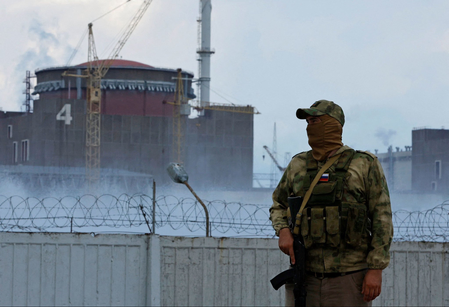
The main sticking points are Russia's demands that Ukraine give up territory, including those it has not captured in the Donbas region, and the fate of Crimea, which it took over in a 2014 invasion, and control of the Zaporizhzhia nuclear power complex that Moscow holds.
Ukraine refuses to give up any territory, and its constitution decrees a universal referendum to authorize any land transfer.