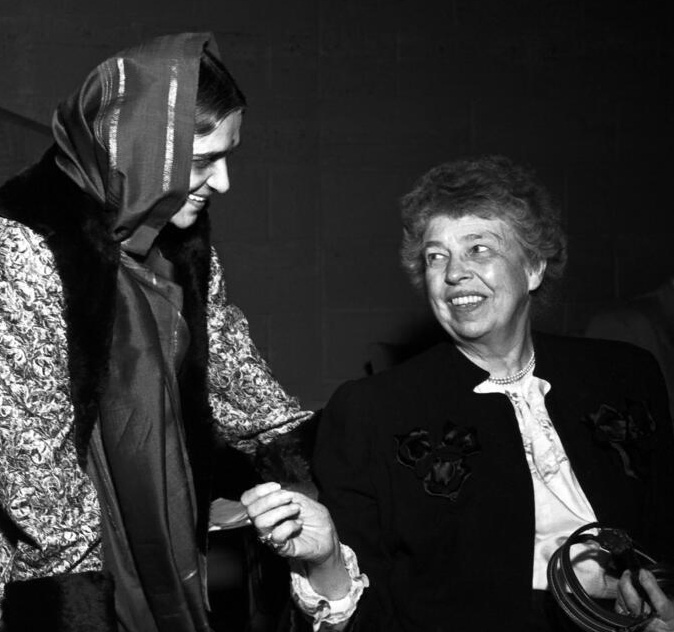
United Nations, March 8. According to General Assembly President Annalena Baerbock, India’s pioneering human rights advocate, Hansa Mehta’s unwavering commitment to recognizing women's rights continues to inspire contemporary struggles for their protection in the age of Artificial Intelligence.
“We should be reminded every day when we are working on these new AI regulations to hold our stand firmly, as Hansa Mehta once did,” Baerbock said.
Mehta is credited with revising Article 1 of the Universal Declaration of Human Rights from a version that focused solely on men to "All human beings are born free and equal", thereby making it inclusive of women.
Speaking at the annual Hansa Mehta Memorial lecture, sponsored by India's UN Mission, Baerbock said, "Her legacy lives on in the foundational principles she helped establish in the Universal Declaration of Human Rights."
When, as a member of the Commission on Human Rights in 1949, Mehta demanded the change from "all men" to "all human beings," "they were frankly dismissive," she said.
"She persisted until she secured a formulation that was unambiguous," and that was "a small change on the page but one with monumental consequences," Baerbock said.
This year's theme of the lecture was "Breaking Barriers for Social Transformation: The Inspiring Life of Dr. Hansa Mehta."
Baerbock said, "Advances in digital technology and Artificial Intelligence promise transformation, yet women remain less likely to have equal access to digital tools."
Moreover, these technologies are being used to target women, she said, pointing out that "96 per cent of non-consensual deepfake pornography depicts women."
“We should be reminded every day when we are working on these new AI regulations to hold our stand firmly, as Hansa Mehta once did,” Baerbock said.
Therefore, she added, it was fitting that “India is hosting the second AI Impact Summit, which reflects a commitment to harnessing these technologies for inclusive and equitable development.”
“If just a single person can make such an immense difference, imagine how profoundly a society can transform when that opportunity is extended to all humanity,” she said.
Mehta was one of only 15 women in the Constituent Assembly of India that was responsible for drafting the Constitution.