New Delhi, March 27 – The Parliament on Friday passed the Finance Bill 2026 with the Rajya Sabha returning it to the Lok Sabha by voice vote, completing the legislative process to provide legal backing for the proposals of the Union Budget 2026-27, which will come into effect during the new financial year beginning on April 1.
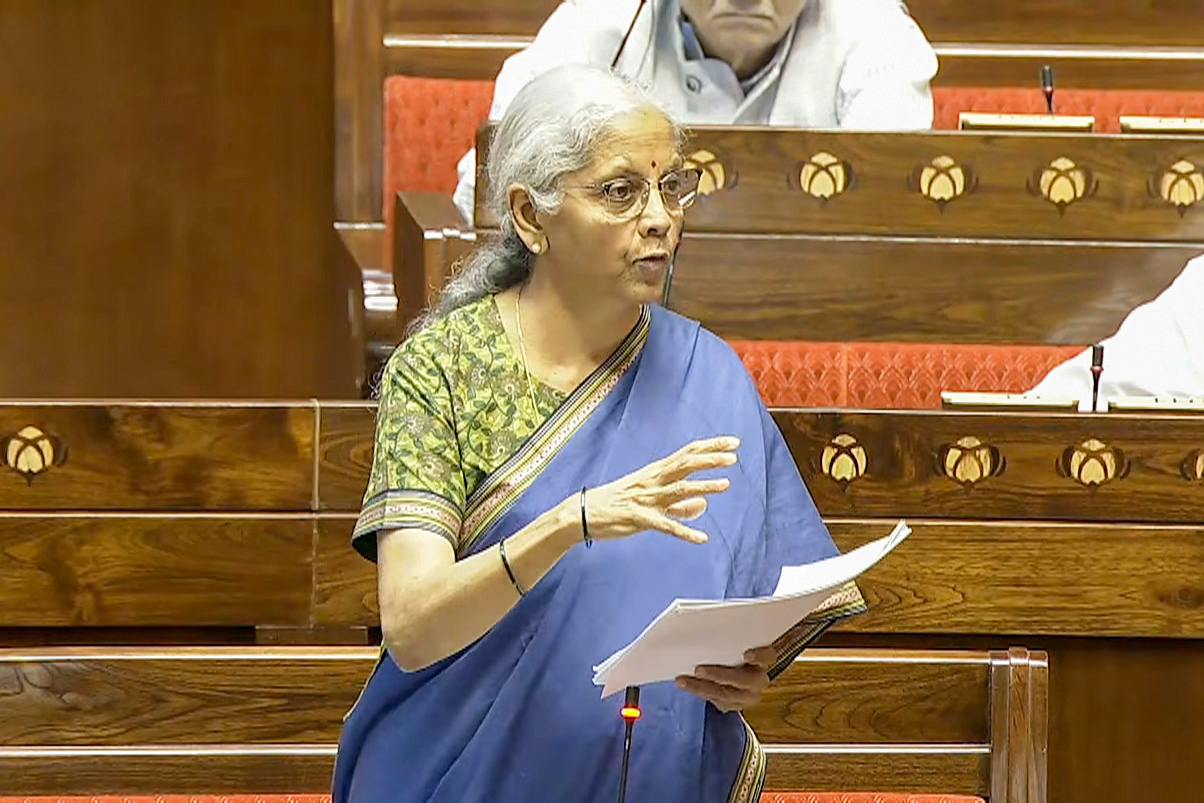
The Lok Sabha passed the bill on March 25, along with 32 amendments. The Rajya Sabha returned the bill after a brief discussion, and in response to questions raised by Members of Parliament regarding her budget proposals, Finance Minister Nirmala Sitharaman provided clarification.
The Union Budget 2026-27 outlines a total expenditure of Rs 53.47 lakh crore, an increase of 7.7 per cent over the current financial year ending on March 31.
The budget proposes a capital expenditure of Rs 12.2 lakh crore for large infrastructure projects to boost economic growth and create jobs. This represents an increase of Rs 2.2 lakh crore over the previous fiscal year.
The Finance Minister stated that an Infrastructure Risk Development Fund would be established to accelerate the development of these large projects.
She also projected a further reduction in the fiscal deficit to 4.3 per cent of GDP for 2026-27, as the government continues on a path of fiscal consolidation to ensure economic growth with stability.
The Finance Minister explained that this target represents a balance between supporting economic momentum and maintaining stable public finances. The fiscal deficit represents the gap between the government’s total expenditure and its total revenue.
She stated that the government would undertake net borrowing of Rs 11.7 lakh crore in FY27 through dated securities to finance its fiscal deficit, while gross market borrowing is estimated at Rs 17.2 lakh crore.
The Finance Minister said that the budget proposes to provide a significant boost to infrastructure, including highways, ports, railways, and power projects, as well as to scale up manufacturing in 7 strategic sectors and create champion MSMEs.
She further stated that the government has maintained fiscal prudence and monetary stability while maintaining a strong focus on public investment.
The Finance Minister also stated that India’s debt-to-GDP ratio has fallen to 56.1 per cent in 2025-26 and will be further reduced to 55.6 per cent in the 2026-27 budget.
This reduction in the debt-to-GDP ratio will reduce the government’s expenditure on interest payments, which will help maintain a lower fiscal deficit and free up resources for development, Sitharaman said.