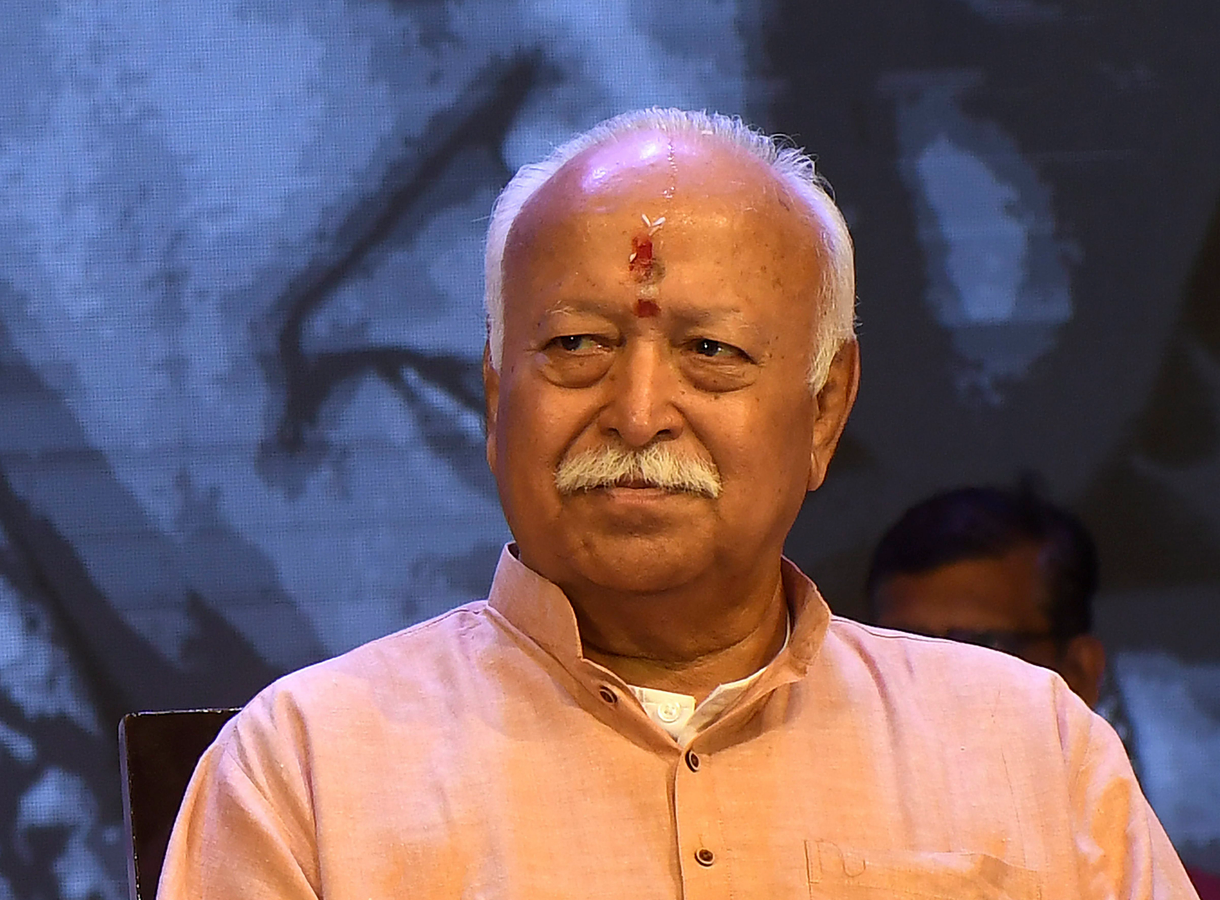
Meerut, February 21 RSS chief Mohan Bhagwat on Saturday described the Rashtriya Swayamsevak Sangh as a "workshop for personality development", asserting that it cannot be compared to any other organization.
Addressing a public dialogue in the Braj province here, Bhagwat said that some people mistakenly compare the Sangh's 'shakhas' (units) and 'sanchalan' (operations) to those of a para-military organization.
"The Sangh cannot be compared to any other organization, because there is no other like it. The Sangh is a workshop for personality development, where the process of all-round development of an individual is carried out," Bhagwat said.
He said the RSS was founded during foreign rule, when society was grappling with inequalities and social evils. Its founder, Keshav Baliram Hedgewar, was in contact with many freedom fighters of the era, including Lokmanya Tilak, Madan Mohan Malaviya, Subhas Chandra Bose, Veer Savarkar, Bhagat Singh, and Chandrashekhar Azad.
A major concern at that time was why India repeatedly fell under foreign domination. The conclusion was that society had forgotten its "Swa" (self), leading to increased fragmentation, the emergence of evil practices, and deepened inequalities.
This prompted Hedgewar to build a harmonious, organised, and disciplined society, which was furthered through the Sangh, he said.
Bhagwat said "every person living in India is a Hindu", clarifying that the term does not denote a particular religion or sect, but a vision of life that inspires the RSS to unite people and think for the welfare of all.
"Our ideology, sects, and methods of worship may be different, but our cultural identity is one. India's hallmark is its diversity, but despite this, we have lived together as a nation," Bhagwat said.
"Our ancestors understood that external happiness is temporary; true unity comes from inner realisation. This is why India made unity in diversity the foundation of its national life," he added.
Referring to the Sangh's centenary year, he said the organization had faced bans, allegations and political opposition, and sacrifices by its volunteers. However, driven by unwavering determination and strong willpower, the Sangh continued to progress, he said.
During an interactive session, Bhagwat stressed the need for accessible and value-based education and asserted that society should contribute to the education of the underprivileged.
"Prosperity is a good thing, but excessive resources should be used for the benefit of society," he said.
Regarding 'One Nation, One Education' and 'One Nation, One Health', he said the policies have been established, but some flexibility is necessary to suit regional needs, and implementing them is a matter for the states.
On social harmony, he said, "We must be cautious of those who divide the society... Caste is forgotten in the Sangh."