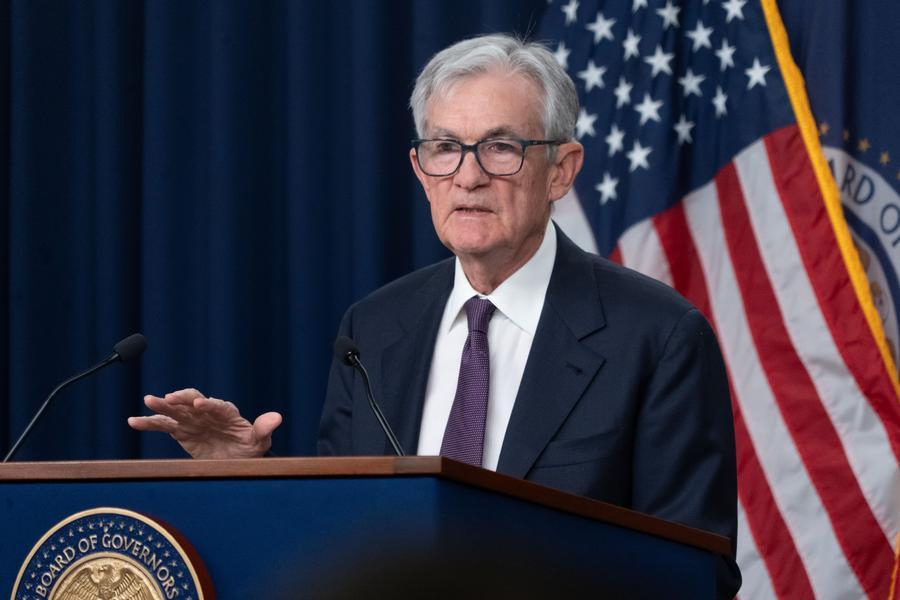
Washington, March 19 – Federal Reserve Chair Jerome Powell said the US central bank was keeping interest rates unchanged as it monitored the fallout from higher oil prices and broader uncertainty linked to the conflict in the Middle East.
On Wednesday (local time), Powell said the Federal Open Market Committee decided to keep its policy rate unchanged because the current stance remained appropriate. He said the US economy was expanding at “a solid pace”, even as inflation remained above target and the labor market showed signs of softness.
“The implications of developments in the Middle East for the US economy are uncertain,” Powell said. “We will remain attentive to risks to both sides of our dual mandate.”
The Fed kept the target range for the federal funds rate at 3.5 to 3.75 per cent. Powell said inflation had eased sharply from its 2022 peak, but was still running above the central bank’s 2 per cent goal. He said estimates suggested total PCE prices rose 2.8 per cent in the 12 months ending in February, while core PCE prices rose 3.0 per cent.
He said the latest price pressures were being driven in large part by goods inflation and tariffs, with fresh energy costs now adding another layer of risk. “In the near term, higher energy prices will push up overall inflation, but it is too soon to know the scope and duration of the potential effects on the economy,” he said.
Powell repeatedly stressed uncertainty when asked how the Fed would respond if oil prices stayed elevated or if the conflict disrupted supply chains more broadly. “Nobody knows,” he said. “The economic effect could be bigger. They could be smaller. They could be much smaller or much bigger. We just don’t know.”
He said the Fed was not on a preset course and would decide meeting by meeting. While the median projection still showed lower rates later this year, Powell made clear that any easing would depend on whether inflation slowed as expected. “If we don’t see that progress, then you won’t see the rate cut,” he said.
Asked whether the central bank could simply look through an energy shock, Powell said that it depended on inflation expectations staying anchored. He also said five years of inflation above target could not be ignored. “We are very strongly committed to doing what it takes to keep inflation expectations anchored at 2 per cent,” he said.
On the labor market, Powell said headline job growth had weakened, but the unemployment rate had been broadly stable. He said slower labor force growth, driven largely by lower immigration and participation, had changed how policymakers were reading employment data. Even so, he acknowledged concern over the very low pace of private-sector job creation.
Powell rejected comparisons with the stagflation of the 1970s. He said the current mix of inflation and employment pressures was difficult, but far less severe. “That is not the situation we’re in,” he said.
He also said the US economy had shown resilience through repeated shocks in recent years. “The US economy has really been just doing pretty well through a lot of significant challenges over the past few years,” he said.
The Fed has held rates steady after reducing them by three-quarters of a percentage point between September and December, a move Powell said helped bring policy closer to neutral. The central bank has since been weighing whether inflation is slowing enough to justify further easing.
The Fed’s dual mandate requires it to pursue both maximum employment and stable prices. That balance has become more complicated after a series of shocks, including the pandemic, tariffs, and now a fresh oil surge tied to geopolitical conflict.