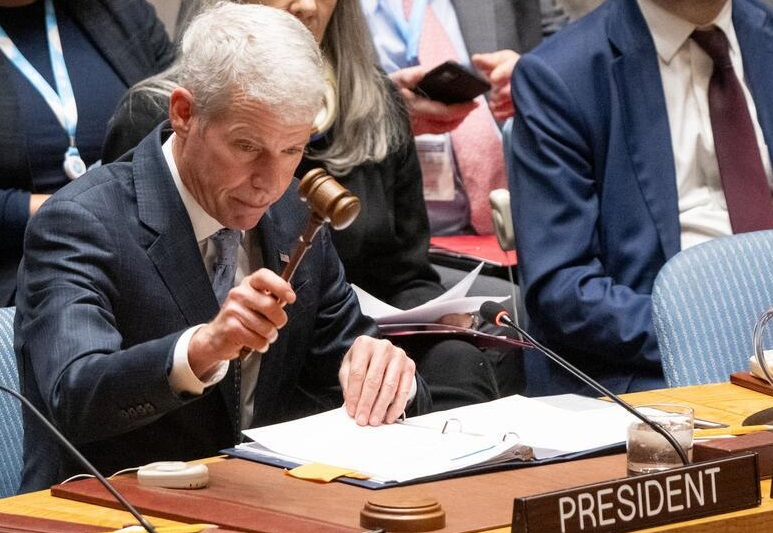
United Nations, March 6 – According to US Energy Secretary Chris Wright, the only way to improve the lives of hundreds of millions of people living in poverty is to massively increase energy production.
During a briefing on “Energy, Critical Minerals, and Security” on Thursday, he cited the problems faced by the poor in the Global South as he criticized “aggressive climate policies” and elaborated on President Donald Trump’s administration’s doctrine of “energy abundance”.
Looking around the Security Council chamber, he said that only one billion people in the world live lives of plenty like those there.
“Seven billion people aspire to the lives we have,” he said. “The only path from here to there is massively more energy”.
He cited the example of “two billion people, one-quarter of humanity today” who do not have access to clean cooking fuels and burn wood, charcoal, and dung indoors to cook and heat.
“The indoor air pollution from this alone kills over two million people, as estimated by the United Nations health agency,” he said.
The “aggressive climate policies”, he asserted, "have been unrealistic and poorly planned".
“The energy delusions implicit in climate policies represent real and growing threats to nations and peoples around the world,” he said.
This was a critique directed at developing countries and barbs aimed at previous Democratic Party administrations, most European countries, and the UN itself, which have pressured the Global South to stop developing energy based on fossil fuels.
“These are enormous problems, and we cannot ignore them,” Wright said.
Criticising developed countries that cut back on energy produced by fossil fuels at home, he said they sent “their own energy-intensive industries outside of their own borders”.
He said those who restricted domestic energy supply “increased their dependence on unfriendly sources beyond their borders”.
“We saw what happened four years ago when our European friends faced energy problems because they heavily relied on Russian oil and gas,” he said, referring to the problems that arose when Moscow invaded Ukraine.
“Energy is too important, too central to life to get wrong, and it is the same with critical minerals,” he said.
“It is in the security interest of the United States and our allies to not overly depend on any single country for materials critical to our economies and national security,” he added.