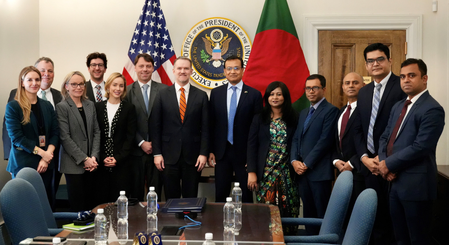
Economists and business leaders in Bangladesh have urged the government to re-evaluate its recently signed trade agreement with the United States, following the US Supreme Court's ruling on Friday that Trump's sweeping emergency tariffs were illegal. The debate intensified after the US Supreme Court ruled that the earlier emergency tariffs imposed were unlawful, casting uncertainty over the Bangladesh-US Agreement on Reciprocal Trade (ART), signed on February 9. Officials said the government plans to formally seek clarification from Washington regarding the status of the deal.
Commerce Secretary Mahbubur Rahman indicated that a letter could be sent shortly as policymakers evaluate the next steps. The agreement had already faced criticism because it was signed just days before national elections and committed Bangladesh to significant import obligations in exchange for a modest reduction in supplementary tariffs to 19 percent.
Analysts argue that the concessions – including increased purchases of agricultural goods, liquefied natural gas, and aircraft – may outweigh potential export gains. Business organizations, including knitwear and chamber leaders, described the pact as "uneven" and warned that local industries, particularly small manufacturers and poultry producers, could face losses if American products gain wider market access. Exporters also remain uncertain about how tariff benefits tied to the use of US cotton will operate in practice. Some economists suggested that the court ruling provides an opportunity to reconsider or renegotiate the deal before binding obligations take effect.
Others said that Bangladesh should still pursue structured trade arrangements with the United States to ensure long-term market access as the country prepares to graduate from least-developed-country status. The commerce ministry, however, defended the agreement, saying key provisions – especially those related to cotton-based garments – were favorable and consistent with existing international commitments.