March 31, New Delhi — The West Asia region is at a critical turning point, with the conflict showing signs of both escalation and potential diplomatic movement, raising the prospect of a decisive shift in the coming days.
United States Secretary of War Pete Hegseth said recent developments could prove pivotal, citing reports of strain within Iran's armed forces.
"The coming days will be decisive. Iran knows that. And there's almost nothing they can militarily do about it," Hegseth said, adding that the past 24 hours saw the lowest number of Iranian missile and drone launches.
Even as military operations continue, diplomatic efforts are underway. Washington said talks to end the conflict are active and gaining momentum despite the ongoing US-Israeli campaign against Iran.
Regional pressure is also building for de-escalation. Qatar said Gulf nations are united in calling for an immediate end to hostilities.
On the ground, violence continues. In Iran's Zanjan, reported US-Israeli strikes killed four people and injured more than two dozen, with damage to a major Shia religious site.
In Israel, missile debris caused damage in Petah Tikva, injuring several people and prompting an emergency response.
Tensions are also rising along the Lebanon front, with Israel signalling plans to retain control over parts of southern Lebanon, indicating a possible long-term strategic shift.
With both military escalation and diplomatic engagement unfolding, the situation remains fluid and the coming days are expected to be crucial.
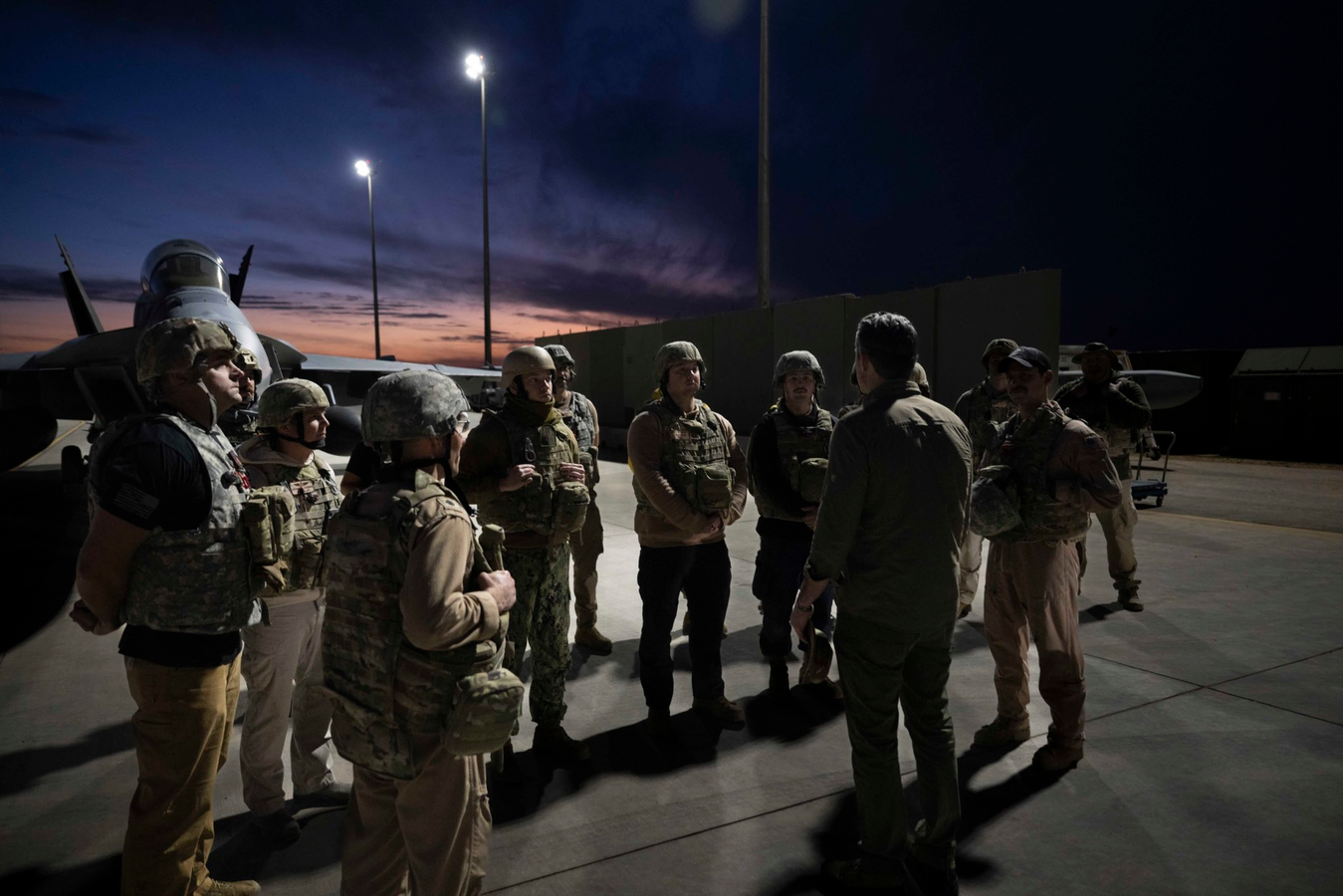
Photo Source & Caption: Pete Hegseth, United States Secretary of War, with military personnel & X/@SecWar