New Delhi, April 7 Pakistan had attempted to position itself as a net security provider in West Asia, and even explored the possibility of establishing an Islamic NATO. Given that Pakistan is a nuclear state, it felt that it could lead such a coalition, and the creation of the Islamic NATO would be central to developments in West Asia.
Pakistan entered into a defense pact with Saudi Arabia, after which Turkey also sought a similar agreement with Islamabad. Pakistan had hoped to also involve Egypt and Somalia in this alliance. When Pakistan felt that everything was going in its favor, the US-Israel-Iran conflict broke out.
Iran began targeting US assets in several Gulf nations, and Saudi Arabia, in particular, hoped that Pakistan would honor the defense pact and stand by it. Officials say that Pakistan has a surplus of resources and therefore has backed out from supporting Saudi Arabia. It cannot afford to anger the 15% Shia population in the country. Although smaller in number compared to the Sunni population, the Shias are present throughout the ranks of the Pakistani military.
Pakistan also cannot join the US and Israel, as this would anger the Sunni population within the country, who view the ongoing conflict as a religious one between Muslims and the Christian-Jewish combine.
Another official said that Pakistan, which was riding high on its newfound ties with the US and a defense pact with the Saudis, ultimately turned out to be a nation that exploited opportunities. The way events have unfolded recently makes it clear that globally, Pakistan is not trusted and cannot be relied upon when a problem arises.
Another official said that Pakistan had made a desperate attempt to establish the Islamic NATO and also play a key role in it. The official added that Pakistan's lack of commitment during a crisis situation, coupled with its opportunistic nature, ended its dream of an Islamic NATO. With this, Islamabad's strategic ambitions in West Asia also collapsed, the official added.
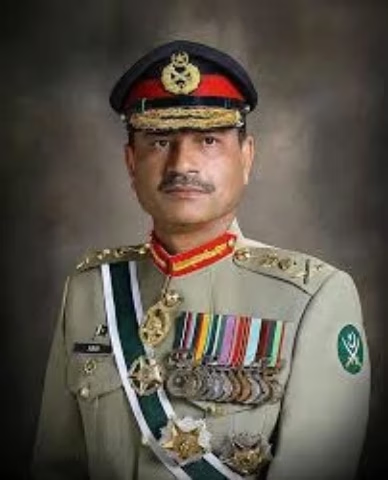
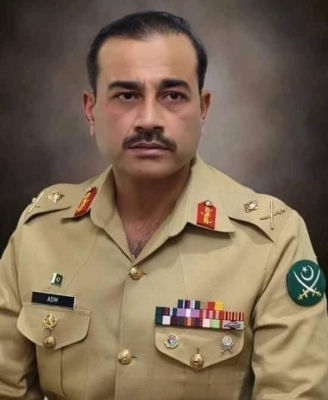
With the dream of the Islamic NATO collapsing, Pakistan's Army Chief, Field Marshal Asim Munir, tried to play a mediating role by offering to negotiate between the US and Iran. However, Iran has rejected the offer. There are many trust issues between Iran and Pakistan. It may be recalled that in January 2025, Iran had launched missiles and conducted drone attacks on the terror group, Jaish-al-Adal's bases in Balochistan.
Pakistan watchers say that with one policy after another failing, Munir has decided to increase pressure on Afghanistan. Experts say that Munir, who had positioned himself as a great leader capable of reshaping Pakistan's position on the global stage, has failed miserably.
After he successfully maneuvered his way into becoming a Field Marshal after the losses his terror groups faced during Operation Sindoor, Munir is also facing internal criticism. Recently, he has not been consulting with the political class and has been making decisions unilaterally. It is no longer about saving Pakistan's face. It is about making Asim Munir look good, officials say.
An Intelligence Bureau official said that Munir will not increase pressure on Afghanistan and also indulge in widespread atrocities in Balochistan and Khyber Pakhtunkhwa (KP), where the Pakistani security forces are battling against the Balochistan Liberation Army (BLA) and Tehreek-e-Taliban Pakistan (TTP).
In Afghanistan, Pakistan has indulged in atrocities and in one attack, over 400 children were killed after a school in Kabul was bombed. The official also adds that the Indian security agencies, too, need to remain on high alert as Munir would instruct his forces to increase tensions along the border. Field Marshal Asim Munir is a desperate man, and owing to multiple failed policies, both internally and externally, he is likely to engage in some major misadventures.