Kolkata/New Delhi, March 21 – A 40-year-old visitor died in a freak elevator accident at Kolkata’s R.G. Kar Medical College and Hospital on Friday morning, raising concerns about administrative lapses and criminal activity that allegedly affect services at even West Bengal's reputable public health centers.
The incident on Friday has raised fresh questions about public hospital infrastructure, safety, and accountability in West Bengal, reviving memories of the August 2024 rape and murder of a young doctor at the same premises, which triggered massive protests across the state.
This time, the protests were limited, and the administration responded quickly after the incident, although the hospital's top brass has not yet been questioned.
It has also been reported that the victim was a supporter of the Trinamool Congress, which has helped to control the opposition's mobilization.
Just a day earlier, the mother of the 2024 victim, a doctor, announced her intention to contest elections as a BJP candidate, which has dampened some of the earlier protests.
This has created a political situation, reducing broader civic unity.
With Assembly elections scheduled for April 23 and 29, and results to be announced on May 4, the state government's focus on welfare and minority protection remains a strong factor.
The ongoing dispute over the Election Commission's Special Intensive Revision (SIR) of electoral rolls is also seen as a strong emotional factor.
However, the accident has raised fresh questions about public hospital infrastructure, safety, and accountability in the state.
Chief Minister and Trinamool Congress supremo, Mamata Banerjee, has been relying on the support of two key groups – Mahila (women) and Minority – largely through government-sponsored welfare schemes, symbolic leadership, and political positioning.
Since she took direct control of the health department after the 2024 incident at R.G. Kar Medical College and Hospital, the backlash has subsided, adding another group – medical personnel.
The tragic death of the hospital visitor in front of his wife and three-year-old son, who was brought for medical attention, has failed to stir strong emotions in Bengal.
The three were trapped in an elevator marked for patients at the hospital on Friday morning.
Reports said the victim was found wedged between the elevator doors while he was trying to pry them open, and his wife and son suffered minor bruises.
Ironically, women, like the victim's wife, constitute nearly half the electorate, and surveys suggest that most vote for the Trinamool, making them one of Mamata's most reliable blocs.
The state government's flagship schemes include Kanyashree, which provides financial aid for girls to continue in school, benefiting nearly 10 million students.
Additionally, there is Rupashree, which provides grants of Rs. 25,000 for women during marriage, reaching over 22 lakh families.
In its 2026 manifesto, the Trinamool has promised Rs. 1,500 per month to unemployed youth and women in the general category. These schemes have transformed women from passive voters into active political stakeholders.
Women now see Mamata as a guarantor of dignity, education, and financial stability.
Meanwhile, Muslims, who comprise roughly over 30 per cent of West Bengal's population, have also benefitted from financial assistance.
Mamata has positioned herself as a defender of minority rights, and consistently opposed the NRC, CAA, and now, SIR.
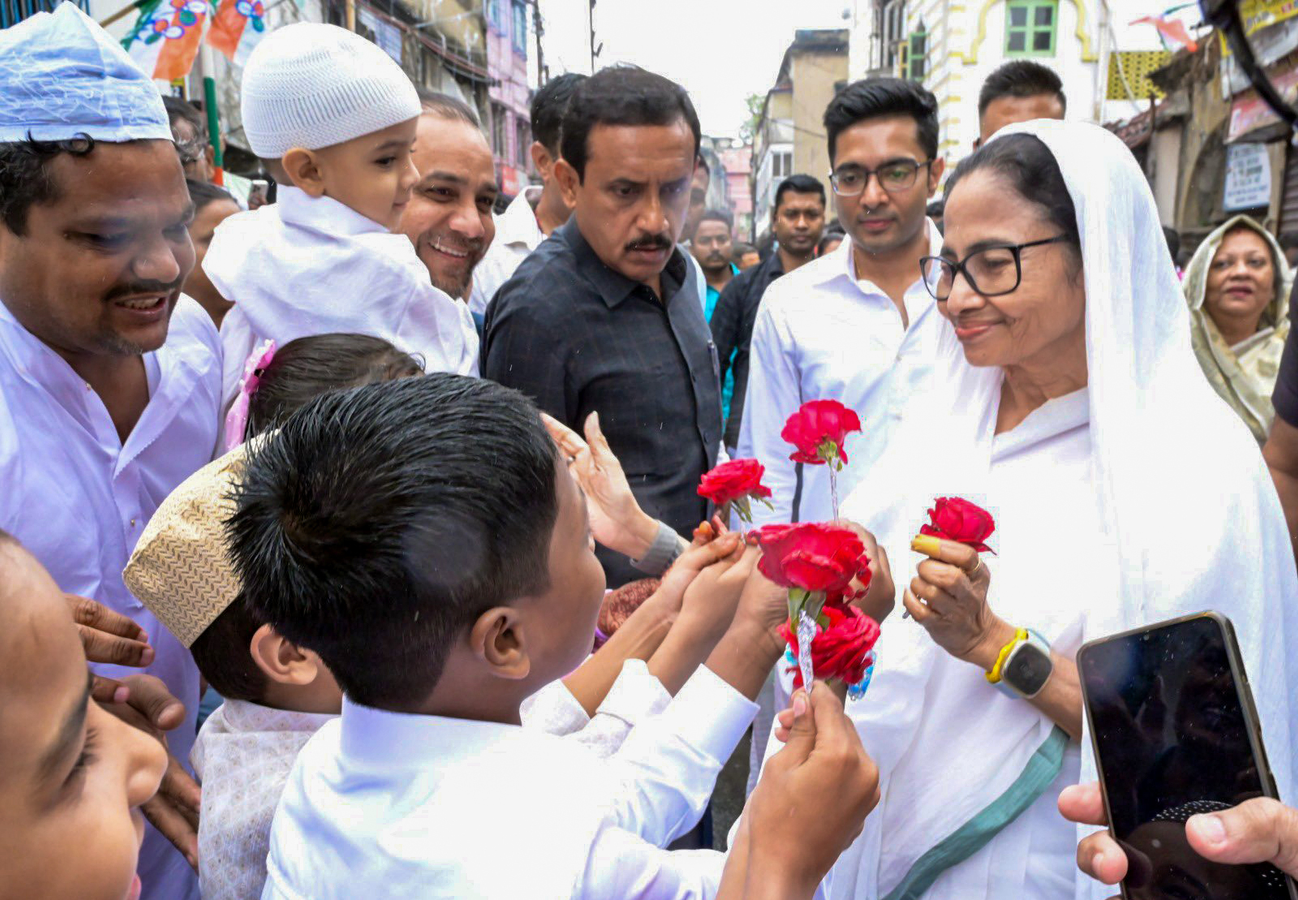
Her use of Urdu in speeches, presence at Eid gatherings, and welfare targeting of minority-dominated districts reinforce her image as a protector of pluralism.
Now, the party has added expansion of healthcare, housing, and job support programmes in its poll promises, specifically aimed at marginalized communities.
On the other hand, the narrative frames incidents like Friday's as administrative failures rather than systemic collapse, and her welfare-driven legitimacy prevents the Opposition BJP from converting outrage into mass movements.
From 2011 to 2026, the Trinamool has systematically built and reinforced a coalition of women and minorities through welfare schemes and political positioning. As West Bengal heads into the 2026 elections, the 2M factor remains the decisive factor in her continued dominance.