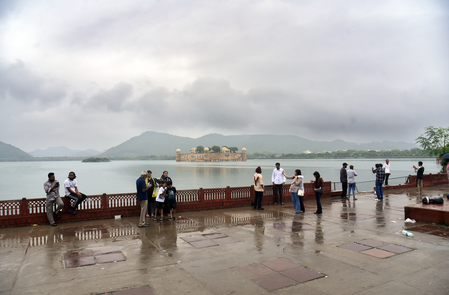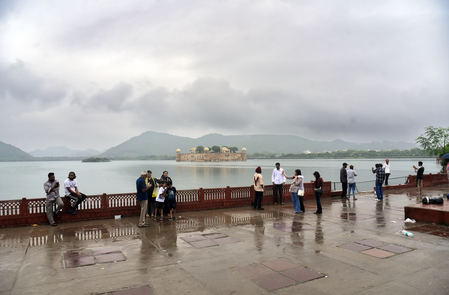
Jaipur, March 23 – The weather in Rajasthan, including Jaipur, Alwar, Dausa, and Didwana, took a dramatic turn on Monday morning as heavy rain lashed the region, bringing down temperatures and causing a chill.
The skies remained heavily overcast as rain, accompanied by thunder and lightning, swept through these areas. The Meteorological Department has issued a yellow and orange alert for rain in parts of the state for the day.
In Jaipur, rainfall began around 8:00 a.m., with thunder and lightning significantly reducing visibility. Vehicles were seen moving with headlights on due to the cloud cover and rain. Light rain also started in Dausa around 7:30 a.m. The weather change occurred under the influence of the Western Disturbance, according to the weather department.
The minimum temperature dropped to 15 degrees Celsius, while the maximum is expected to hover near 30 degrees.
The district has been experiencing fluctuating weather over the past few days, with rainfall recorded on March 20 and 21.
In Alwar, light rain also began around 8 a.m. after dense clouds covered the city early in the morning. The weather has since turned cool and pleasant in the city.
The ongoing spell of rain and storms across Rajasthan is being driven by successive Western Disturbances.
On Sunday, most districts in the Jodhpur and Bikaner divisions witnessed cloudy skies. Areas in Jaisalmer and Phalodi also experienced light rain accompanied by strong winds.
The Meteorological Centre in Jaipur has predicted dry weather across the state on Tuesday. However, a new, weak weather system is expected to become active on March 25 and 26. Under its influence, alerts have been issued for thunderstorms and rain in around 15 districts.
In Balotra district’s Samdari area, heavy hailstorms lashed the region late Sunday night, adding to the sudden weather shift. On Sunday, districts such as Barmer, Jalore, Bikaner, Sri Ganganagar, and Jodhpur saw a mix of clouds and sunshine, leading to a slight rise in maximum temperatures.
According to the weather department, a yellow alert is the lowest level of warning, used to keep people informed about potential weather-related inconveniences, and an orange alert is a more serious warning, indicating a higher potential for damage and severe weather.