In Guwahati, on April 7, women nearly match the number of men in Assam's electoral rolls, and they outnumber men in 16 out of the 35 districts. However, they constitute only 59 out of the 722 candidates contesting in the 126-member Assam Assembly election.
Women, dressed in their bright and vibrant clothing, mostly traditional handloom textiles, significantly outnumbered men at campaign rallies and political party meetings.
Political parties have made numerous promises to attract female voters, but when it comes to nominating them, most parties adopt a token approach, according to activists.
Women constitute 49.98% of the electoral roll in Assam, but they represent only 8.17% of the total candidates contesting the April 9 elections.
In the 2021 Assam Assembly election, 74 women candidates were in the race, but this time the number has decreased to 59, according to activists.
In 16 out of the 35 districts of Assam, women voters outnumber men, but only 59 women candidates are contesting in the Assam Assembly election.
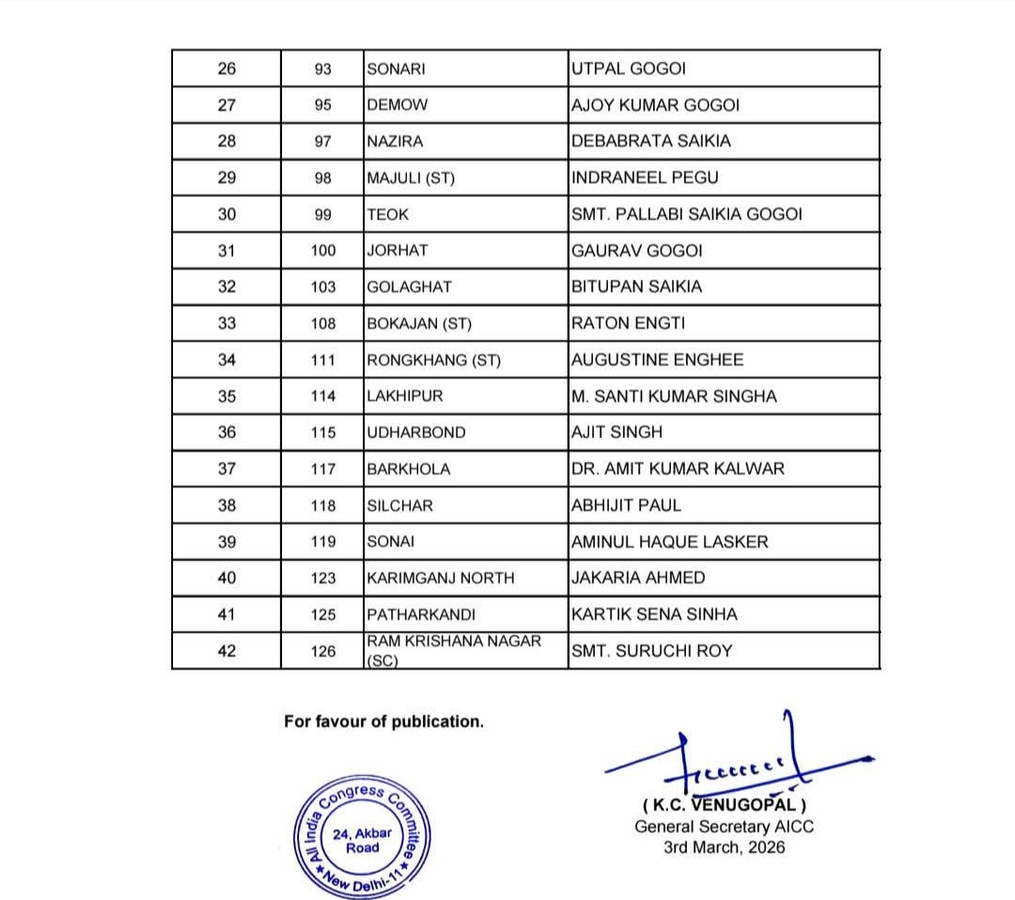
Among the parties, the opposition Congress has the highest number of women candidates at 14, followed by the ruling BJP at 7, while NDA partners, including the Bodo Peoples' Front (BPF) with one candidate, and the regional party AGP, have no women candidates.
The AIUDF has nominated two women candidates, while the United Peoples’ Party Liberal (UPPL), Raijor Dal, and the Assam Jatiya Parishad (AJP) have each nominated one candidate, with the remaining candidates being independents.
Prime Minister Narendra Modi, in his campaign rallies, has emphasized the need for greater female representation in both Parliament and assemblies, aiming to address the underrepresentation of women in the electoral field.
He has assured that a 33% reservation for women will be implemented in the 2029 Lok Sabha elections and urged women to convince all parties to reach a consensus on the upcoming special session of Parliament, scheduled to begin on April 16.
The ruling BJP claims that they have nominated candidates based on their performance and their contributions to strengthening the party at the grassroots level.
The decline in the number of women candidates contesting the elections has been a concern for women activists, who argue that political parties have consistently failed to implement the 33% seat reservation promise and have neglected women's representation despite their strong track record in public life and governance.
Among the BJP candidates is minister Ajanta Neog, who is contesting from the Golaghat constituency for the sixth consecutive time.
Another woman minister in the outgoing cabinet, Nandita Garlosa, was denied a ticket by the BJP and subsequently joined the Congress to contest from Haflong (ST).
The Congress has a mix of old and new candidates, including former minister Pranati Phukan from Naharkatia, sitting MLA Nandita Das from Hajo-Sualkuchi, former legislator Roselina Tirkey from Khumtai, and the party’s state Mahila Morcha President Mira Borthakur Goswami, among the veterans.
Two women candidates from its alliance partners – AJP's Kunki Chowdhury from Guwahati Central and Raijor Dal's Gyanshree Bora from Mariani – are making their electoral debut, but have garnered significant attention from the public and their opponents.
For 27-year-old Chowdhury, her support from Gen-Z voters and a segment of the Assamese and Bengali electorate has rattled her ruling BJP opponent Vijay Gupta, and even Chief Minister Himanta Biswa Sarma has questioned her mother’s dietary habits and pointed out that she is not originally from Assam.
Given that women voters outnumber men in 16 of the 35 districts in the state and that they represent a significant force, political parties have been actively courting them with various benefits and incentives.
“We celebrate women as voters, emphasizing how their turnout has increased in each election, but there is a lack of investment in building the capacities of potential female candidates,” said gender activist Anurita Pathak Hazarika to