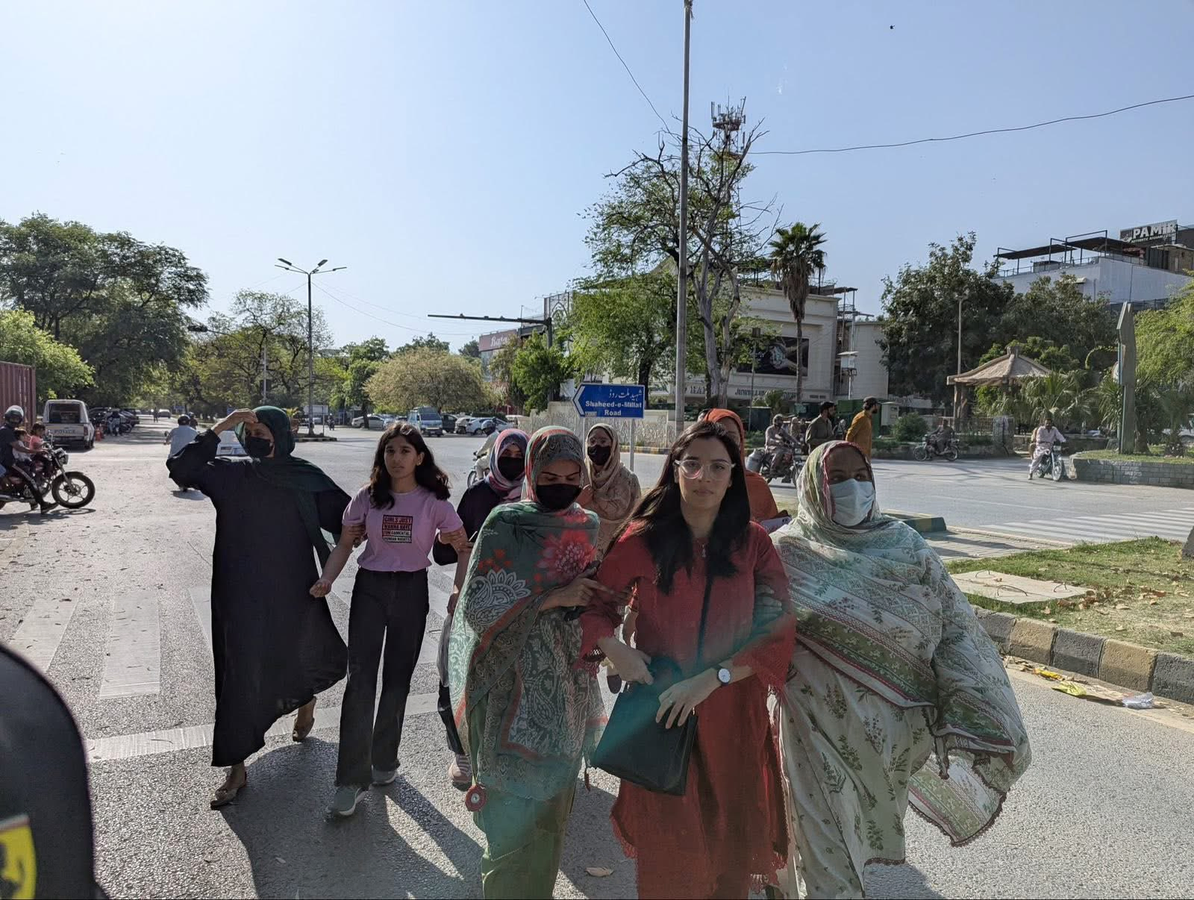
Islamabad, March 11 – Local police authorities in Islamabad, the capital of Pakistan, arrested several activists from the "Aurat March" earlier this week. These activists had gathered near the National Press Club to demand gender justice on the eve of International Women's Day. Even those who went to the police station to obtain information about the detained participants were reportedly taken into custody. This heavy-handed approach highlights a troubling trend in Pakistan, where the constitutional right to peaceful protest is regularly curtailed through administrative orders and policing, according to the country's media.
The alleged offense of the detained activists was that they were part of a peaceful assembly that was deemed unlawful under Section 144 of the Criminal Procedure Code after the district administration denied a no-objection certificate for the march, according to an editorial in Pakistan's leading daily, Dawn. All those arrested were later released by the police, however, the incident is concerning because the women who were demanding protection from gender-based violence and discrimination were arrested by the very state meant to safeguard their rights.
"Section 144 exists for a reason. The state must have the authority to prevent violence or imminent threats to public order. However, this provision has increasingly become a blunt instrument used to preempt dissent rather than address genuine security concerns. When peaceful gatherings are treated as law-and-order risks, the state effectively criminalizes civic engagement," the Dawn editorial stated.
Since 2018, the "Aurat March" has become a platform for women and marginalized groups to raise issues such as domestic violence, forced marriages, and access to justice. Whether one agrees or disagrees with the slogans of the marchers, their right to gather and speak must be protected.
The leadership of the "Aurat March," civil society members, and rights activists have condemned the Pakistani authorities for "manhandling and threatening them and forcing them to sign unreasonable affidavits." Addressing a press conference at the National Press Club, they demanded an investigation into the incident and action against those involved.
Farzana Bari, a prominent activist who was also detained along with her daughters, noted that the march is held every year. "We were aware that Section 144 was imposed in the federal capital, but civil society does not accept any law that violates basic rights. You cannot take away our right to protest. Similar protests have been held across the globe, but we were stopped by the threat that a suicide bomber had come and that it might blow up," Dawn quoted her as saying.
Haris Khaliq, Secretary General of the Human Rights Commission of Pakistan (HRCP), said that they do not believe in violating the law, however, societies cannot function with laws like the Prevention of Electronic Crimes Act (Peca) and others.
"Yesterday, the girls were manhandled and beaten. They were taken into custody and shifted to a women's police station. When their relatives and friends reached there, they were also locked up. Batons were used against the girls, their hair was pulled, and they were forced to sign fake affidavits," Dawn quoted Khaliq as saying.