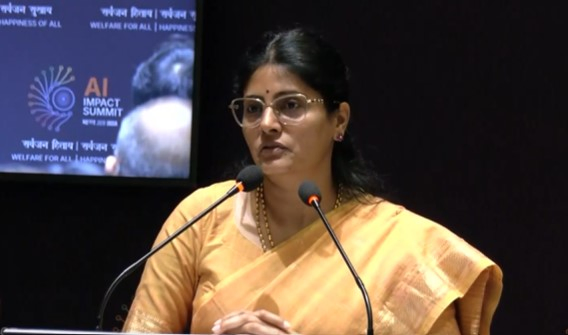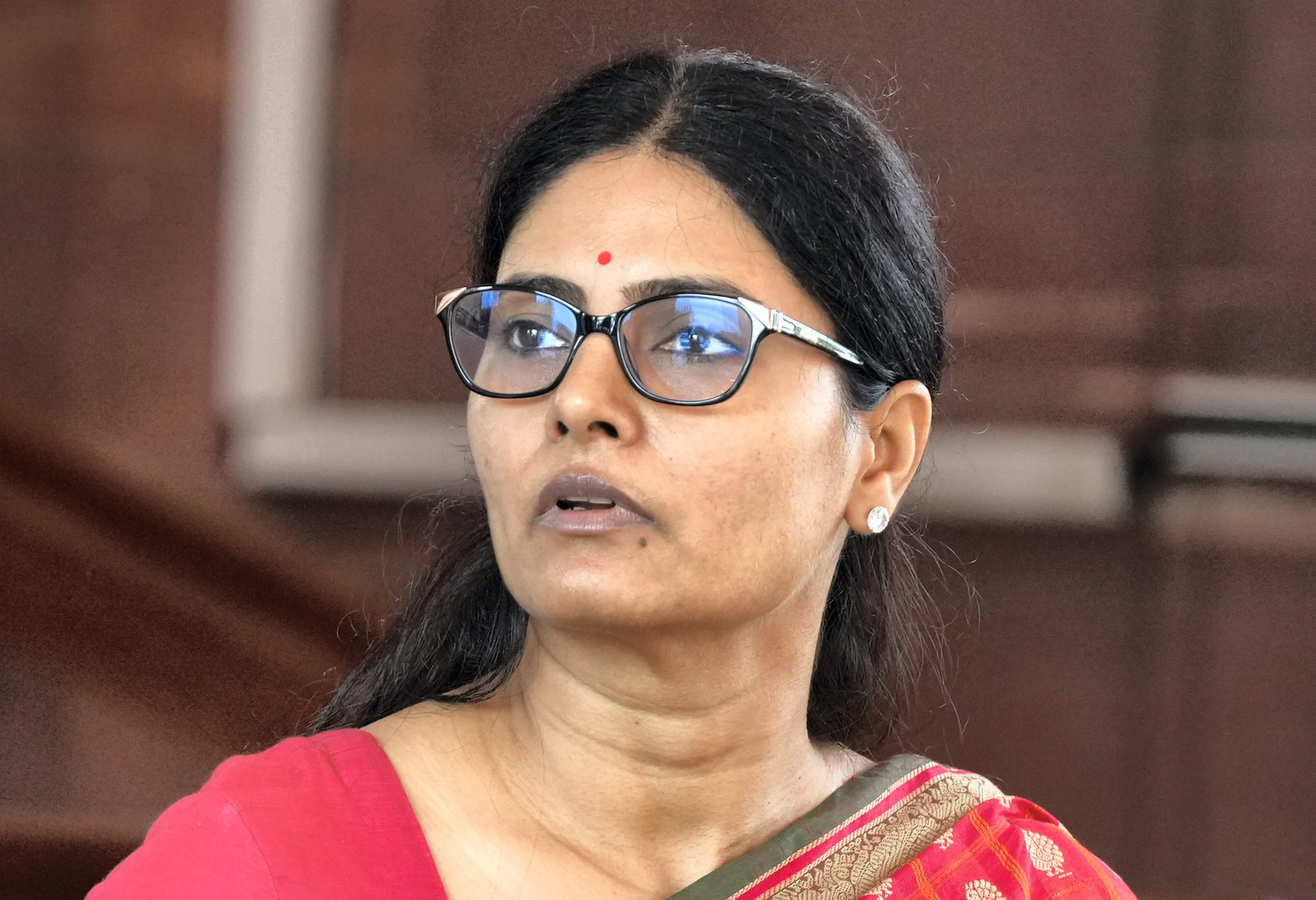
New Delhi, February 17 – Concerns that Artificial Intelligence (AI) could replace doctors and clinicians are "largely unfounded," Union Minister Anupriya Patel said on Tuesday, asserting that the technology would actually benefit the entire medical community.
Addressing the AI Impact Summit 2026 in the national capital, Patel, the Minister of State in the Ministry of Health & Family Welfare, urged the medical community to become AI literate. She also emphasized the importance of developing cost-effective AI tools that should be used ethically and responsibly.
The minister noted that the government has integrated AI throughout the entire health ecosystem, from disease surveillance to prevention, diagnosis, and treatment.
There has been considerable debate about the use of AI and its potential impact on our clinicians.
"Therefore, there are a significant number of doctors and clinicians who are convinced by the power of AI. However, there are also concerns that AI could pose a threat to doctors and clinicians. AI could replace, and I believe that these concerns are largely unfounded. Because AI is here to augment. AI is here to assist. AI cannot replace clinicians," she asserted.
Patel stated that AI would have a positive impact, reducing the burden on doctors.
"Routine, high-volume tasks will be handled by AI, and doctors or specialists can focus on complex cases or clinical decision-making," she said.
Even non-specialist doctors can benefit from AI, as it will enhance their roles and allow them to operate at the peak of their expertise, she added.
"Therefore, there are numerous benefits that AI brings to our medical community, and the fear that AI could ever replace clinicians is not entirely accurate," Patel said.
The minister emphasized that medicine is not just a science but also an art.
"When a treatment proceeds, healthcare thrives not just on algorithms. Healthcare thrives on human touch, empathy, compassion, and communication between a clinician and a patient, and this human touch can never be provided by AI. Only a clinician or doctor can communicate with the patient and provide the compassion and empathy that a patient needs," she said.
Instead of being a threat, Patel said doctors should focus on AI literacy.
"Now, our future-ready clinicians need to be AI literate... Therefore, I urge all members of the medical community who are present here today to spread this message that AI cannot compete with clinicians. It can only compensate for their absence, and our doctors and clinicians need to be AI literate," she said.
Patel stated that AI for India is "All Inclusive", not artificial intelligence.
"When we speak of AI in healthcare, we think not just in terms of sophisticated algorithms and precision. For those of us in the government, the real measure of the power of AI lies in its ability to touch lives and address health inequities," she said.
The minister emphasized that health is an extremely important pillar for India to become a developed nation by 2047, and technology will play a crucial role in addressing these challenges.
"India faces unique challenges, including its vast and diverse population, the rural-urban divide, and the dual burden of non-communicable and communicable diseases. Therefore, when we look at these challenges, it becomes extremely important to use technology," she said.
Patel highlighted that the government has integrated AI throughout its national healthcare framework.
"Today, we have integrated AI throughout the entire health continuum, from disease surveillance to prevention, diagnosis, and treatment, which shows the power of AI in bringing about transformation," she said.
The minister highlighted several examples of AI tools that the government has used to bring about transformation and strengthen its efforts towards inclusivity in healthcare.
AI is being used to monitor digital news in up to 13 languages and issue disease alerts.
Under the One Health Mission, the Indian Council of Medical Research (ICMR) has launched an AI tool that surveys genomes and predicts zoonotic outbreaks before transmission from animals to humans.
The government has deployed AI-enabled handheld X-rays in its efforts to eliminate TB.
"Considering that we are a very large population and a low-resource setting, we need to focus on solutions that are scalable, frugal, and address systemic gaps, instead of solutions that are suitable for resource-rich health settings," Patel said.
The minister also emphasized the ethical and responsible use of AI technology.
"For this, we need strong regulatory frameworks in India. We have created robust regulatory frameworks to ensure that AI is used ethically and responsibly. The Indian Council of Medical Research has come up with guidelines on the ethical use of AI," she added.