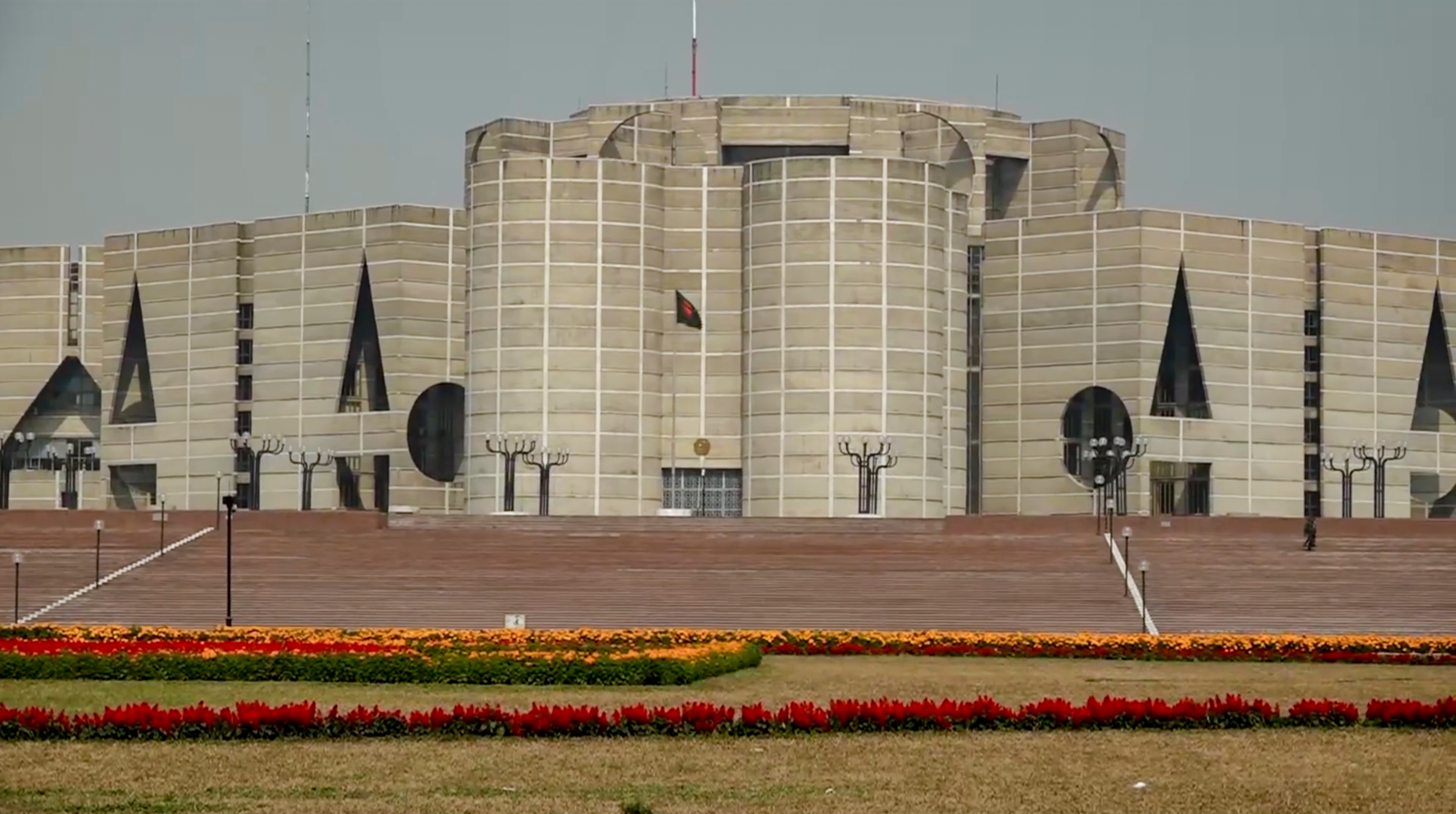
New Delhi, February 13 – A positive turn is expected in India-Bangladesh relations after a period of over 18 months marked by strained ties, as the Bangladesh Nationalist Party (BNP) is set to secure a clear mandate in the neighboring country's elections, according to strategic affairs experts on Friday.
As the BNP, led by Tarique Rahman, appears poised for a sweeping victory in the parliamentary polls, several former Indian ambassadors welcomed the outcome and stated that it is "good news" for Bangladesh, its people, and those who are "friends of Bangladesh."
Many other former diplomats and strategic affairs experts, including those who have served in Bangladesh, also view the BNP's imminent victory in the 13th parliamentary election as a positive development for India-Bangladesh ties.
The election, held on February 12 after a period of political instability and security concerns following student-led protests that ousted Sheikh Hasina in August 2024, gained significance.
The BNP is set to return to power after a gap of two decades.
Bharatiya Janata Party (BJP) MP and former foreign secretary Harsh Vardhan Shringla described the election outcome as "good news," stating that the results "vindicate" the sentiments of the Bangladeshi people.
"This is good news, not only for Bangladesh and the people of Bangladesh, but also for those who are friends of Bangladesh, who believe in good relations with Bangladesh. It vindicates their sentiments, for all of us, a very, very good news," he told reporters in the Parliament complex.
Shringla, among other key assignments, has also served as India's high commissioner to Bangladesh, and keenly observed the regional developments.
According to media reports, the BNP has secured more than 151 seats in the 300-member Parliament and is likely to win more seats. The Jamaat-e-Islami, a hardline party known to be close to Islamabad, is expected to win around 75 seats.
"I think in many senses, we have come full circle and the people of Bangladesh have voted for a party that represents political interest. It is a pro-Liberation party and it believes in the spirit of 1971, as opposed to the Jamaat-e-Islami, which was opposed to the Liberation struggle of Bangladesh in 1971," Shringla said.
India played a crucial role in the 1971 Liberation War that led to the creation of Bangladesh, the territory which was known as East Pakistan from 1947 to 1971.
The August 2024 uprising that ousted Hasina also saw several symbols of the Liberation War being attacked by protesters, including the toppling of an imposing statue of Sheikh Mujibur Rahman and the torching of his old residence in Dhaka.
Rahman, or Mujib, as he was popularly called, was given the epithet of the Father of the Nation, or Bangabandhu, and his legacy has been a binding factor between the two countries.
The Park Street in New Delhi was renamed after Mujibur Rahman, the father of Hasina, ahead of her 2017 visit to India.
The preceding 18-month period has also seen many reports of attacks on minorities in Bangladesh.
India continues to monitor reports of attacks on minorities in Bangladesh, including on their houses and places of worship, and New Delhi has "consistently raised" the issue with authorities in Dhaka, the government informed Rajya Sabha on January 29.
Shringla said the BNP chief has made "some positive statements about his intentions to maintain good relations with India, to ensure that minorities are protected in his country".
"And cooperation with Bangladesh, most immediate neighbour, would be one that would be mutually beneficial to both sides. It is all good news and I think the results are a vindication of the way the people of Bangladesh want this country to go," he said.
The former envoy, however, said, it does not mean that the "spectre of a move towards a communal, radical ... and Islamisation of the country is over".
It is an important time for the pro-Liberation, largely secular forces of Bangladesh to "come together on a united front to counter these forces" that would "represent, in many senses, the end of the idea of Bangladesh", he said.
India had said on Thursday that it would wait for the poll outcome in Bangladesh and then look at the issues that are there.
It is becoming increasingly clear that Rahman is set to become the prime minister and replace the interim government headed by Nobel laureate Muhammad Yunus.
The Awami League party of Hasina was barred from contesting the polls.
Veena Sikri, who served as India's high commissioner to Bangladesh from 2003 to 2006, said the Jamaat-e-Islami has been "rejected" by the people of Bangladesh.
The BNP getting a two-thirds majority is a "reaffirmation of the people of Bangladesh supporting democratic values," she told news agency PTI.
Earlier in the day, Prime Minister Narendra Modi warmly greeted Rahman on his "decisive victory" in Bangladesh's parliamentary election and said he looks forward to working with him to advance common development goals.
In another post on X, Modi said: "Delighted to speak with Mr. Tarique Rahman. I congratulated him on the remarkable victory in the Bangladesh elections."