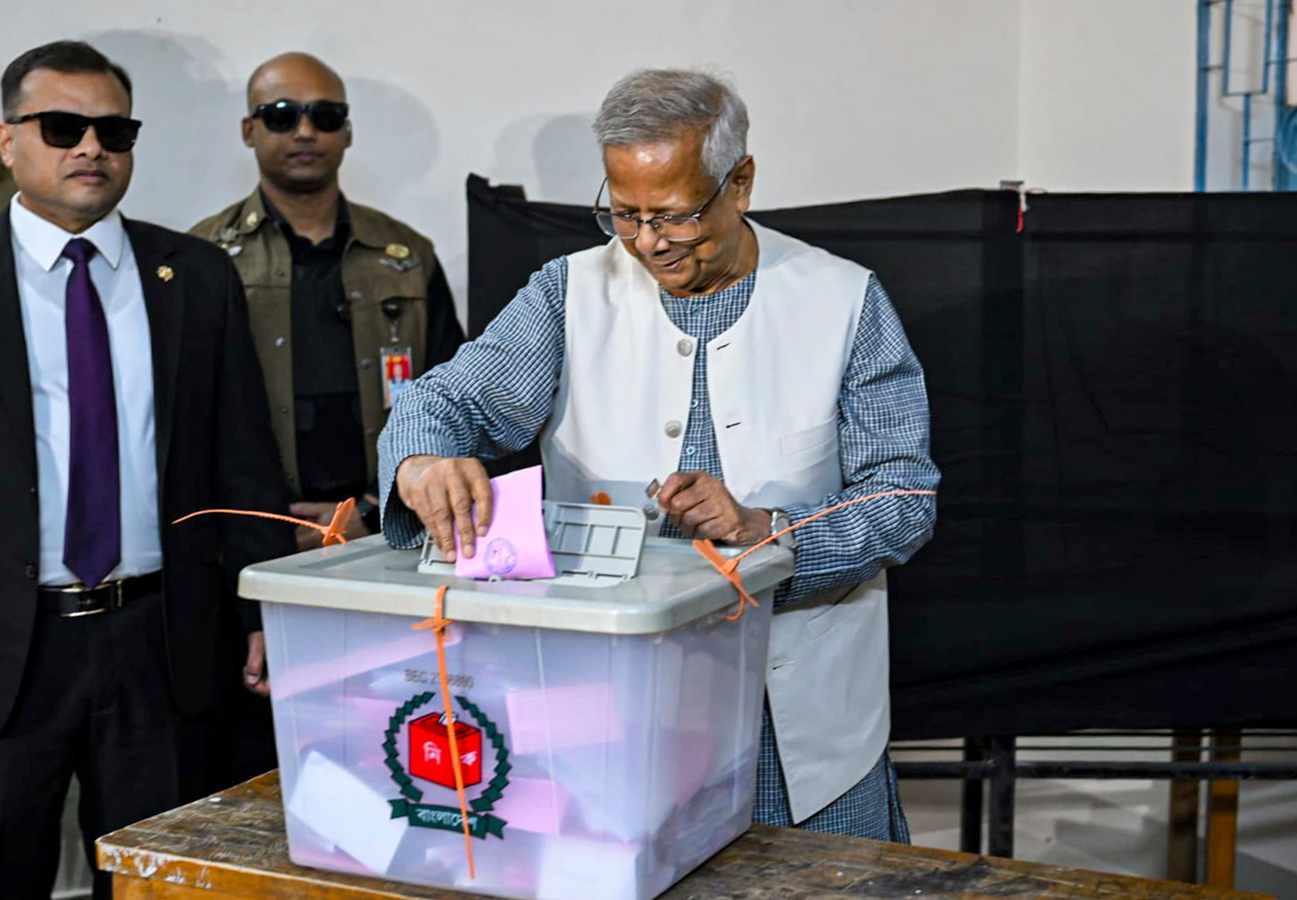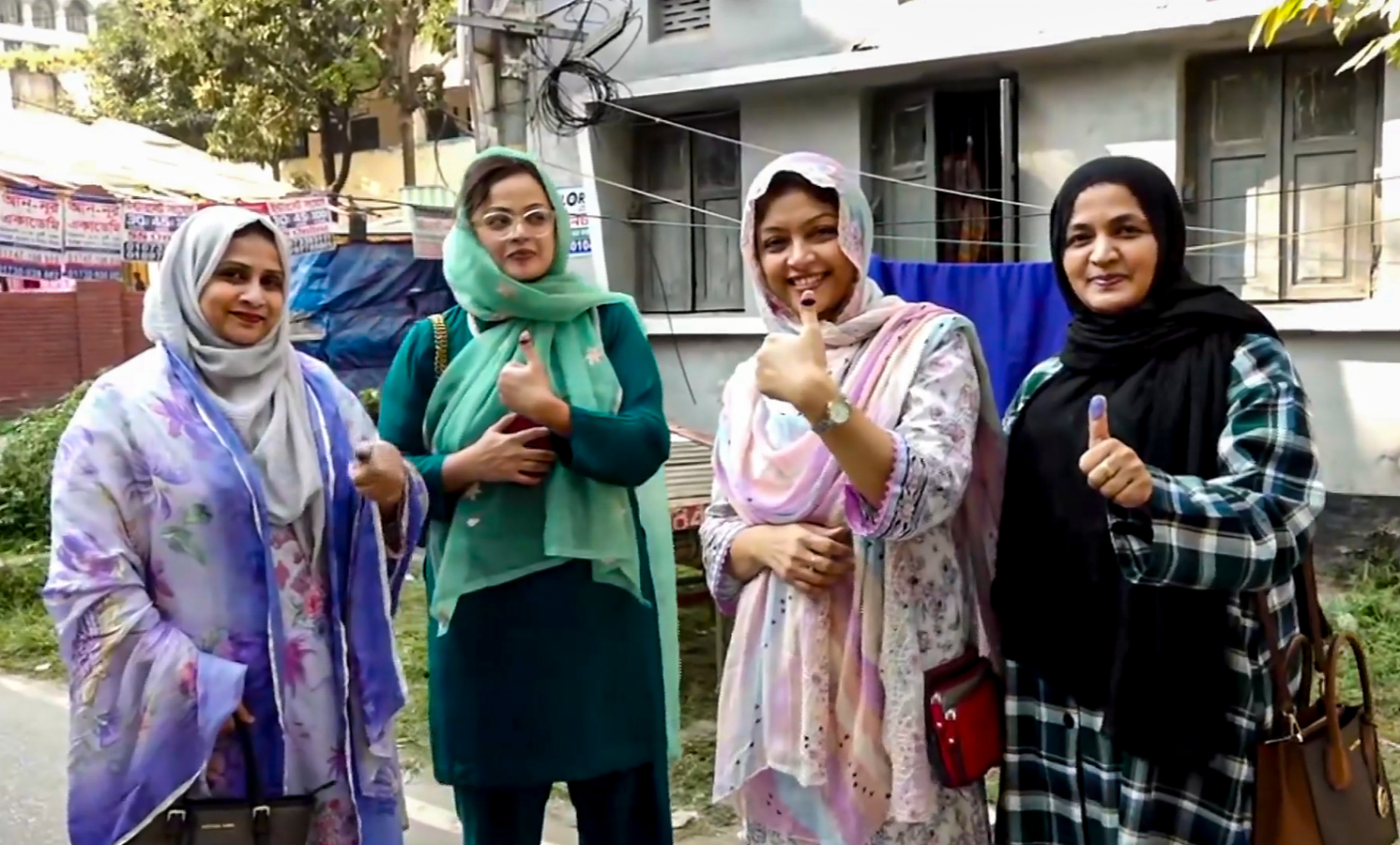
On February 12, the people of Bangladesh voted in the crucial general elections, which were marred by sporadic incidents of violence, to elect a new government to replace the interim administration that took office after the Awami League regime fell in August 2024.
The voting for the 13th parliamentary elections was held along with a referendum on a complex 84-point reform package.
Voting began at 7:30 am (local time) in 299 out of 300 parliamentary constituencies across the country, amid tight security, and continued until 4:30 pm. However, in areas where voters were inside polling stations, voting would continue until they cast their ballots.
Vote counting has already begun in many areas.
An election was cancelled due to the death of a candidate.
The election is seen as a direct contest between the Bangladesh Nationalist Party (BNP) and its former ally, Jamaat-e-Islami, in the absence of ousted Prime Minister Sheikh Hasina's now disbanded Awami League. Chief Adviser Muhammad Yunus' interim government disbanded the Awami League and barred it from contesting the polls last year.
Election Commission Senior Secretary Akhtar Ahmed said that around 48 per cent voter turnout was recorded nationwide by 2 pm, according to state-run BSS news agency.
Nearly 127 million voters were registered to cast their ballots across 42,779 polling centers in 299 constituencies nationwide.
Key leaders of Bangladesh's two major contending parties, as well as Chief Adviser Yunus, cast their votes early in the day.
BNP Chairman Tarique Rahman, who cast his vote at the Gulshan Model School and College center in Dhaka's upscale Gulshan area, said that the election results would be accepted if it is held in a free, fair, and neutral manner.
"If the election is held in a free, fair, and impartial manner and without controversy, why shouldn't we accept it? We will accept it. However, of course, there is one condition that the election must be impartial and peaceful. If the people cast their votes, there can be a democratic beginning in the country from today," he said.
Shafiqur Rahman, the chief of the right-wing Jamaat-e-Islami, which leads an 11-party alliance, cast his vote at Monipur Uchcha Vidyalaya and College.
He said that his party would accept the election results if the polls were held in a free and neutral manner.
"We want the results that will come through a fair process. If the vote is free and impartial, we will accept the outcome. Others must also accept it. That is the beauty of democracy. This is what we want," he said.
The Election Commission made elaborate security arrangements, deploying nearly 1 million security personnel – the largest ever in the country's electoral history.
There were reports of electoral violence in some areas.
In Gopalganj, three people, including a 13-year-old girl, were injured in an alleged hand bomb attack at a polling station, BDnews24 reported.
The blast occurred around 9 am at the Reshma International School center at Nichupara. Two members of the Ansar, a paramilitary auxiliary force responsible for election security, were among those injured. The injured have been taken to a hospital.
Zahirul Islam, the presiding officer at the polling station, said that the injuries were minor and that voting resumed shortly afterward.
In a separate incident, a series of hand bomb explosions took place outside a polling station in the Munshiganj-3 constituency, temporarily disrupting voting.
The blasts occurred around 10:15 am in front of the Makhati Gurucharan High School center. Between 10 and 12 crude bombs were detonated, officials said. Voting at the center was suspended for around 15 minutes.
Presiding Officer Md Titumir said the explosions caused panic among voters.
"We stopped voting briefly, but it has now started again, and people are casting their ballots,” he said.
Also, a BNP leader died during an altercation with Jamaat-e-Islami activists outside a polling center in Khulna.
The BNP claims that he died when a Jamaat leader "pushed him" into a tree and hurt him. The Jamaat leader claims that the victim "fell ill" amid the unrest.
A total of 1,755 candidates from 50 political parties and 273 independents are contesting the election. The BNP has fielded the highest number of 291 candidates. There are 83 female candidates.
Yunus, who has promised to quickly transfer power to the elected government, voted at the Gulshan Model School and College polling center.
Nearly 900,000 law enforcement personnel were deployed to enforce the security vigil to prevent violence and maintain order during the voting. Authorities have deployed Armoured Personnel Carriers (APCs) and Rapid Action Teams (RATs) across key areas of the capital.
For the first time, drones and body-worn cameras were used for election security.
Some 55,454 observers from 81 local organizations have monitored the elections, while the number of foreign poll monitors was 394.
Of the international observers, 80 represent various international organizations, while the rest come from different countries, including independent European observers.
Three persons were arrested on allegations of distributing ballot paper photocopies among activists of a party at Kalai area of northwestern Joypurhat, Ittefaq newspaper reported.
The Daily Star reported "ballot stuffing allegations spark clash between Jamaat and BNP activists" in northeastern Sylhet’s Balaganj subdistrict, where a local Jamaat leader and several others entered a polling centre at around midnight when BNP activists rushed in, resulting in scuffles requiring security interventions.
The BNP nominee there alleged that ballot stamping had begun at 11:00 pm with the presiding officer's help.
In Dhaka, police arrested a Jamaat leader for buying votes while crude bombs were exploded near seven polling centers in southwestern Gopalganj hours before voting.