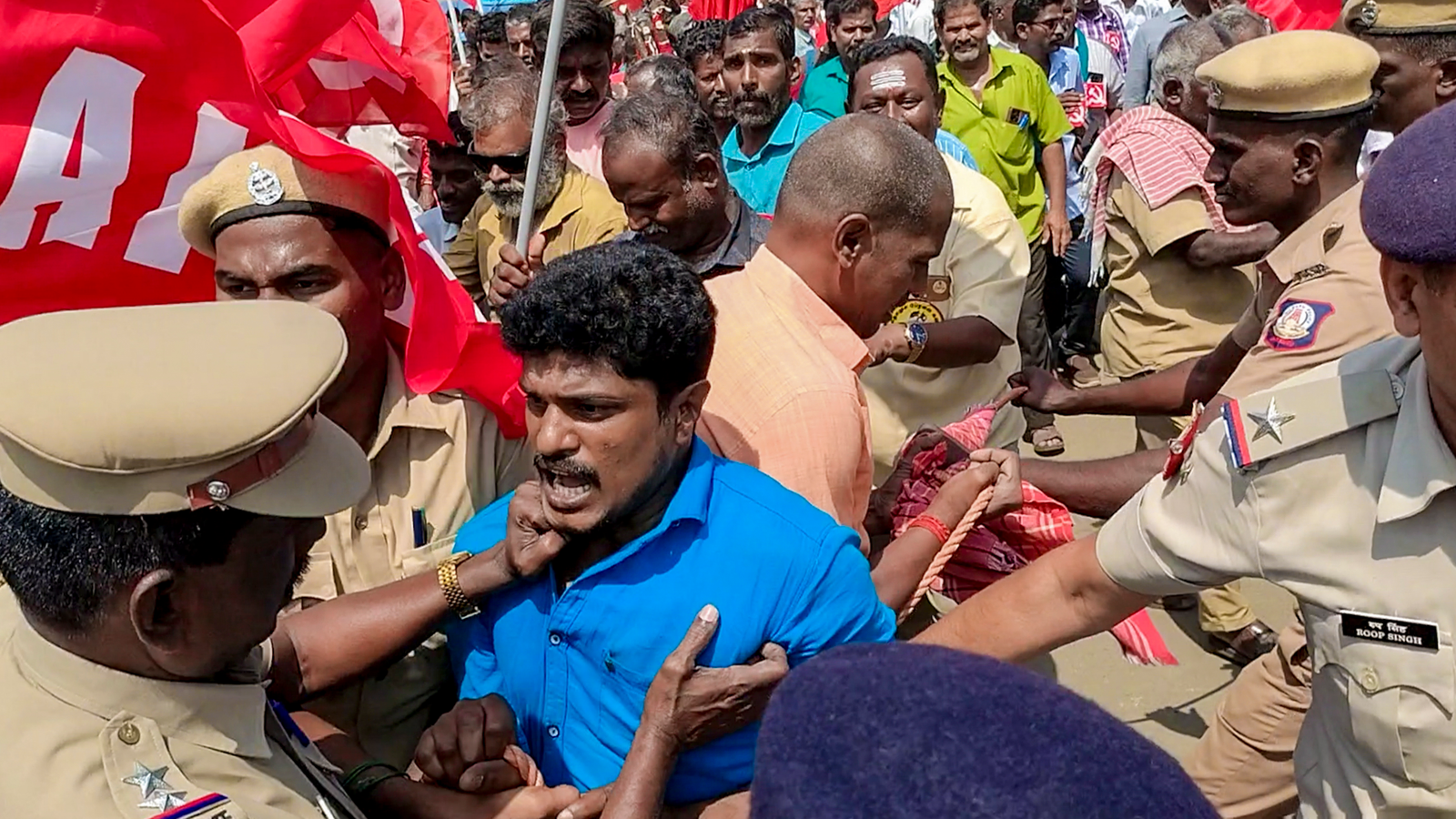
Kolkata, February 12 A statewide industrial strike called by a joint forum of central trade unions in West Bengal on Thursday evoked a partial response, with work affected in some banks and industrial zones.
The joint forum announced a general strike across the country on Thursday, demanding the repeal of the new labour code and other issues.
Members of the trade unions, including CITU, AITUC, and UTUC, who have also given the call of "save Bengal" in the state, which is heading for assembly elections, demonstrated outside factories in industrial hubs at Durgapur and Haldia.
Banking operations in several public and private sector banks in West Bengal were affected due to the strike, trade union leaders said, while the State Bank of India (SBI) reported normal functioning.
Bank Employees Federation of India general secretary Debasish Basu Chaudhury claimed the strike was "successful" in the banking sector across the state. He claimed services in most public and private sector banks were disrupted, although SBI employees did not directly participate.
"SBI employees have not joined the strike but have extended moral support," he said.
SBI sources maintained that operations at its branches across the state remained normal without any disruption.
Meanwhile, Kolkata Port authorities said that cargo handling and other port activities, including loading and unloading, continued as usual.
The jute sector reported partial disruption. Former Indian Jute Mills Association chairman Sanjay Kajaria said that several mills were either shut or operating partially due to the strike.
Public transportation in the state was, however, not affected as it has been kept outside the purview of the strike owing to the ongoing state school board examinations.
The industrial strike is being supported by the Left Front and Leftist employees' federations, according to a CPI(M) party official.
A group of trade unions, on January 9, announced the nationwide strike to show their "resistance to anti-worker, anti-farmer and anti-national pro-corporate policies of the central government".