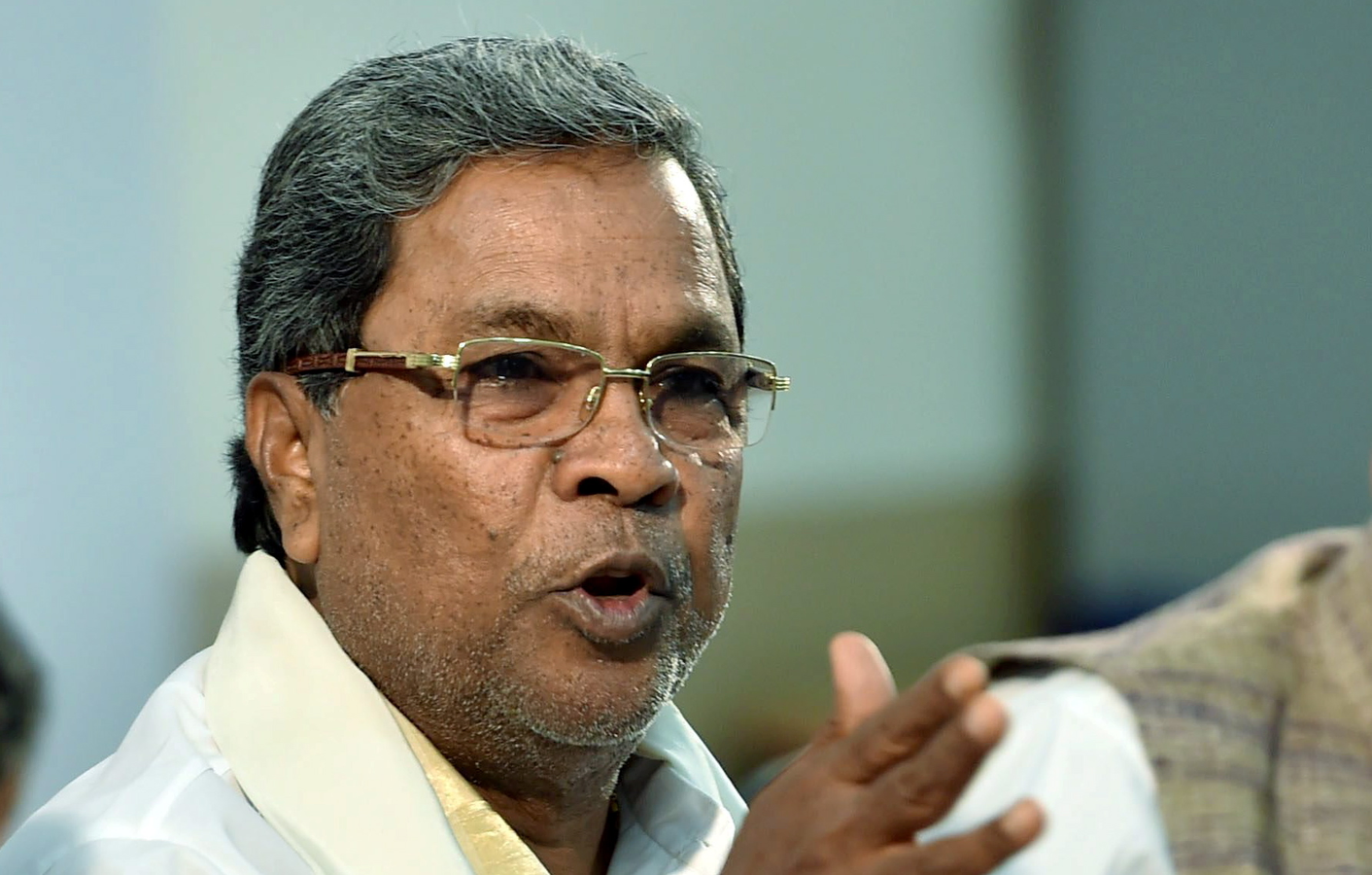

On February 13 in Bengaluru, Siddaramaiah emphasized the urgent need for a systematic and comprehensive evaluation, modernization, and operation of dams based on risk assessment, noting that nearly 70% of them are over 25 years old.
The CM stated, "Water does not recognize political boundaries, and safety standards should not be compromised," highlighting the importance of cooperative federalism in water governance.
Addressing the audience after inaugurating the two-day international conference on Dam Safety–2026 at the Indian Institute of Science, the chief minister said that dam safety is not solely the responsibility of a single department but a shared national obligation requiring coordinated institutional action.
"We are facing extreme hydrological events driven by climate change. Seismic vulnerabilities, reservoir sedimentation, and the aging of infrastructure create complex, interconnected risks. Dam safety is no longer just a technical afterthought; it is a critical national security imperative," he said.
According to him, India has 6,628 dams, making it the third-largest dam-owning nation in the world. Karnataka, with 231 dams, ranks sixth in the country.
He noted that nearly 70% of these dams are over 25 years old, underscoring the urgent need for systematic safety evaluation, modernization, and risk-informed operation.
Describing dams as embodiments of collective aspiration, Siddaramaiah recalled that India’s first Prime Minister, Jawaharlal Nehru, had called them the "Temples of Modern India," emphasizing their role in agricultural prosperity and industrial progress.
He said that as dams become digitally operated, cybersecurity and protection against technological sabotage must be treated as core elements of national infrastructure security.
The chief minister emphasized that critical water infrastructure remains vulnerable to terrorism and strategic disruption, requiring constant vigilance and coordinated intelligence mechanisms.
In a world of rising water stress, he said, interstate and transboundary river governance demands cooperation, data sharing, and diplomatic maturity.
"Recognizing these multidimensional challenges, our response must be equally comprehensive, rooted in science, strengthened by institutions, and guided by a long-term vision of safety, sustainability, and shared responsibility," he said.
Siddaramaiah suggested that both the union and state governments must move beyond mere compliance to build a comprehensive safety culture, ensuring that periodic inspections, safety audits, and Emergency Action Plans are not treated as formalities but as dynamic instruments of risk governance.
"Second, regulatory bodies and technical agencies must institutionalize risk-informed decision-making. Data from instrumentation, remote sensing, and structural health monitoring systems must be integrated into real-time dashboards," he said.
Third, he said, academic and research institutions must deepen multidisciplinary collaboration to anticipate compound risks arising from climate variability and ageing infrastructure.
Fourth, financial institutions and development partners must prioritize long-term sustainability by supporting modernization, sediment management, and capacity building rather than episodic repairs.
Finally, local administrations and communities must be empowered through awareness and preparedness, he said.
"Only when policy, science, engineering, finance, and community participation converge can we ensure that our dams remain not sources of vulnerability but enduring pillars of national prosperity and public trust," he said.
As India aspires for progress, Siddaramaiah said Karnataka remains committed to cooperative federalism in water governance.
"Our collaboration today—between the Government of India, the Government of Karnataka, the Central Water Commission, the World Bank, IISc, and international partners—reflects a shared commitment to public safety above politics," he added.
Deputy Chief Minister D K Shivakumar, who also addressed the gathering, said the conference was being held at a critical juncture.
He said dam safety has become a national priority. He highlighted the Dam Rehabilitation and Improvement Programme (DRIP), launched in 2012 by the Government of India with assistance from the World Bank, as a strong example of Centre–State partnership.
"Karnataka is implementing DRIP Phase II and Phase III, covering 58 dams with an approved outlay of Rs 1,500 crore, focusing on structural strengthening, surveillance, and long-term resilience," he said.
Referring to major projects, Shivakumar said the Mekedatu Balancing Reservoir and Drinking Water Project had achieved a milestone with a favourable Supreme Court judgment, and the State was pursuing statutory clearances.
The project, he said, aims to meet Bengaluru’s drinking water needs while ensuring stipulated Cauvery water deliveries and generating around 400 MW of power.
He also said a consent award mechanism had been formulated under the Upper Krishna Project–Stage III to ensure transparent land acquisition, adding that the government had created irrigation potential for over 1.72 lakh acres up to December 2025.
The Deputy CM also sought reconsideration of the blanket 500-metre restriction under the National Dam Safety Authority (NDSA) guidelines, advocating for flexibility.
He said tourism activities downstream of dams contribute to local economic development and can coexist with uncompromised safety standards. Union Minister of State for Jal Shakti Raj Bhushan Choudhary and Johannes Zutt, the World Bank’s Vice President for the South Asia Region, were among the other dignitaries present.