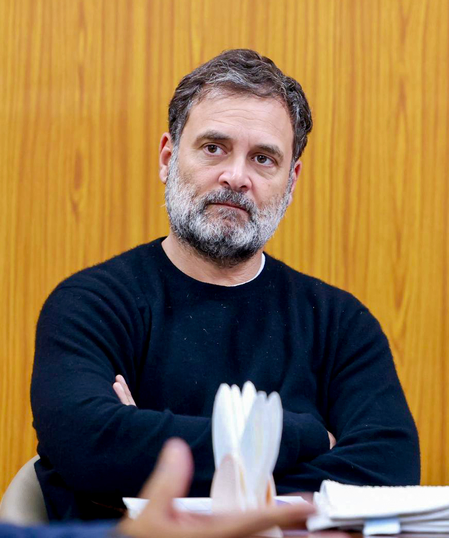
New Delhi, February 15 – In his continued efforts to scrutinize the Modi government's India-US trade pact, Leader of the Opposition Rahul Gandhi on Sunday posed critical questions to Prime Minister Narendra Modi, demanding direct answers to five "straightforward" queries.
On his social media platform, the Congress MP highlighted five key issues related to the trade pact that require not only the government's attention but also clarification.
Reiterating that Indian farmers have been betrayed in the name of the US trade deal, he questioned the government about the detrimental effects of the pact on genetically modified crops, soya farmers, and accused the Centre of removing the safeguards that farmers once enjoyed.
"What does importing DDG really mean? Does it mean that Indian cattle will be fed with distillers' grain derived from genetically modified American corn? Wouldn't that effectively integrate our dairy industry with the US agricultural system?" Rahul asked.
His second and third questions focused on soya oil and pulses.
"If we allow imports of genetically modified soya oil, what will happen to our soya farmers in Madhya Pradesh, Maharashtra, Rajasthan, and across the country? How will they cope with another price shock?" he asked.
Further, Rahul inquired, "When you say 'additional products', what does that entail? Does it signal pressure to open up pulses and other sensitive crops to US imports over time?"
"What does removing 'non-trade barriers' mean? Will India be forced to compromise its stance on genetically modified crops, weaken procurement, or undermine the Minimum Support Price (MSP) and bonuses in the future?" he questioned.
Demanding that farmers be protected from the impact, Rahul said, "Once this door is opened, how can we prevent it from widening every year? Will there be safeguards, or will more crops be steadily put on the table in each negotiation round?"
Repeating his charge that the Modi dispensation is succumbing to US pressure, he added, "This is not just about today. It is about whether we are allowing another country to exert long-term control over India's agricultural system."