New Delhi, February 22 – India on Thursday launched a new series of its Consumer Price Index (CPI), the benchmark that tracks retail inflation, starting with data for January, at 2.75 per cent.
The new series covers a wider range of goods and services and adjusts the weights of different components. With data collected from more rural and urban markets, the figures are expected to reflect the quality of data used in formulating monetary and fiscal policies.
The data was released by the National Statistics Office (NSO) under the Ministry of Statistics and Programme Implementation.
The Reserve Bank of India (RBI), which considers CPI while setting monetary policy, did not issue an inflation projection for the next fiscal year last week and has decided to wait for the release of the new CPI series.
The central bank is mandated to keep retail inflation at 4 per cent with a margin of 2 per cent on either side.
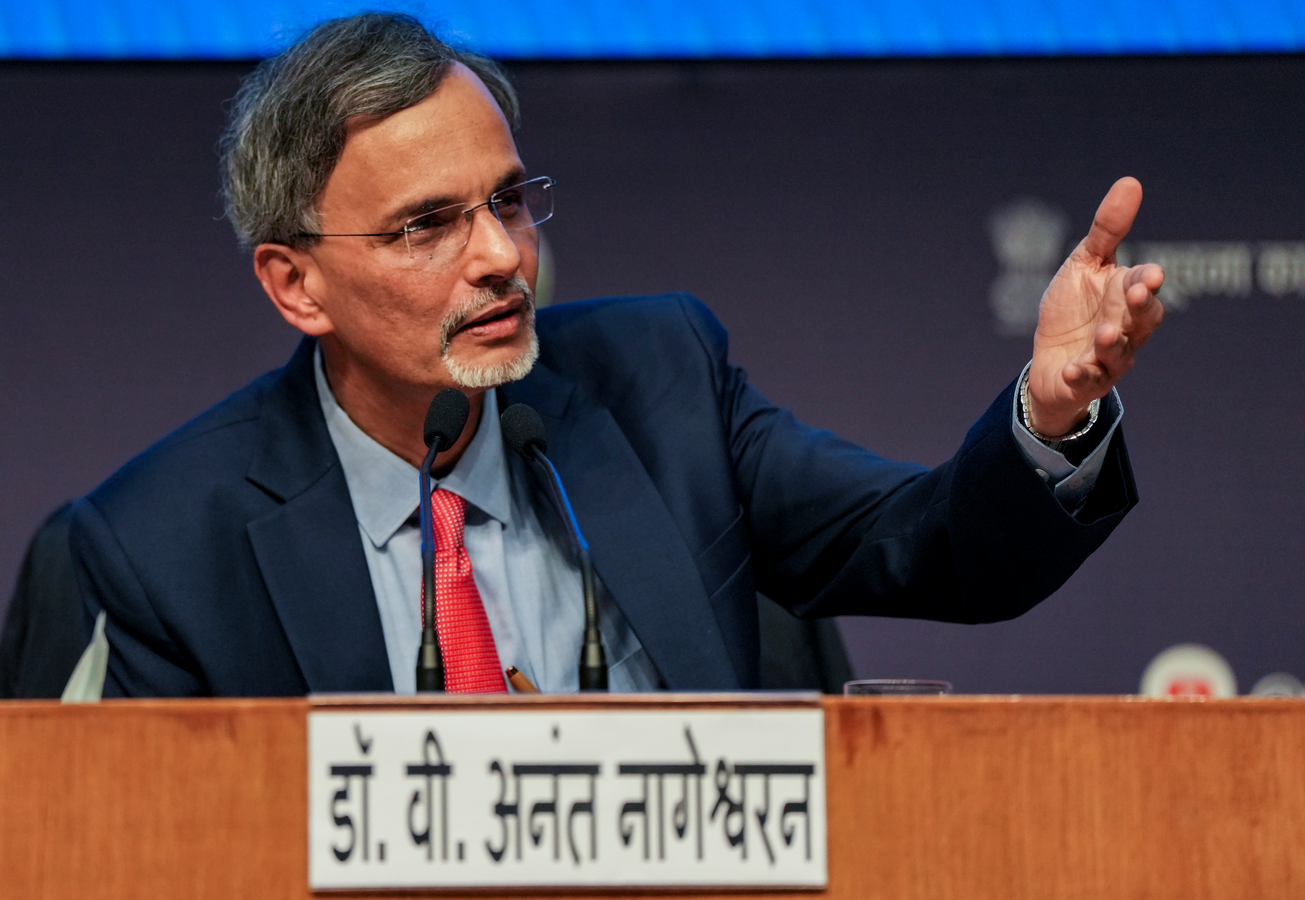
Addressing a press conference on the data release, Chief Economic Advisor V Anantha Nageswaran said the new CPI series will improve the quality of data used in formulating monetary and fiscal policies.
The new index will reflect changes in spending patterns since the last overhaul more than a decade ago.
The CPI under the new series is 2.75 per cent for January, according to the NSO.
The food inflation for January is 2.13 per cent, and housing is 2.05 per cent.
The retail inflation, using the old series with a base year of 2012, was 4.26 per cent in January 2025 and 1.33 per cent in December.
Headline inflation in rural areas during January was 2.73 per cent, and in urban India, it was 2.77 per cent, according to NSO data.
Telangana had the highest inflation at 4.92 per cent, followed by Kerala and Tamil Nadu.
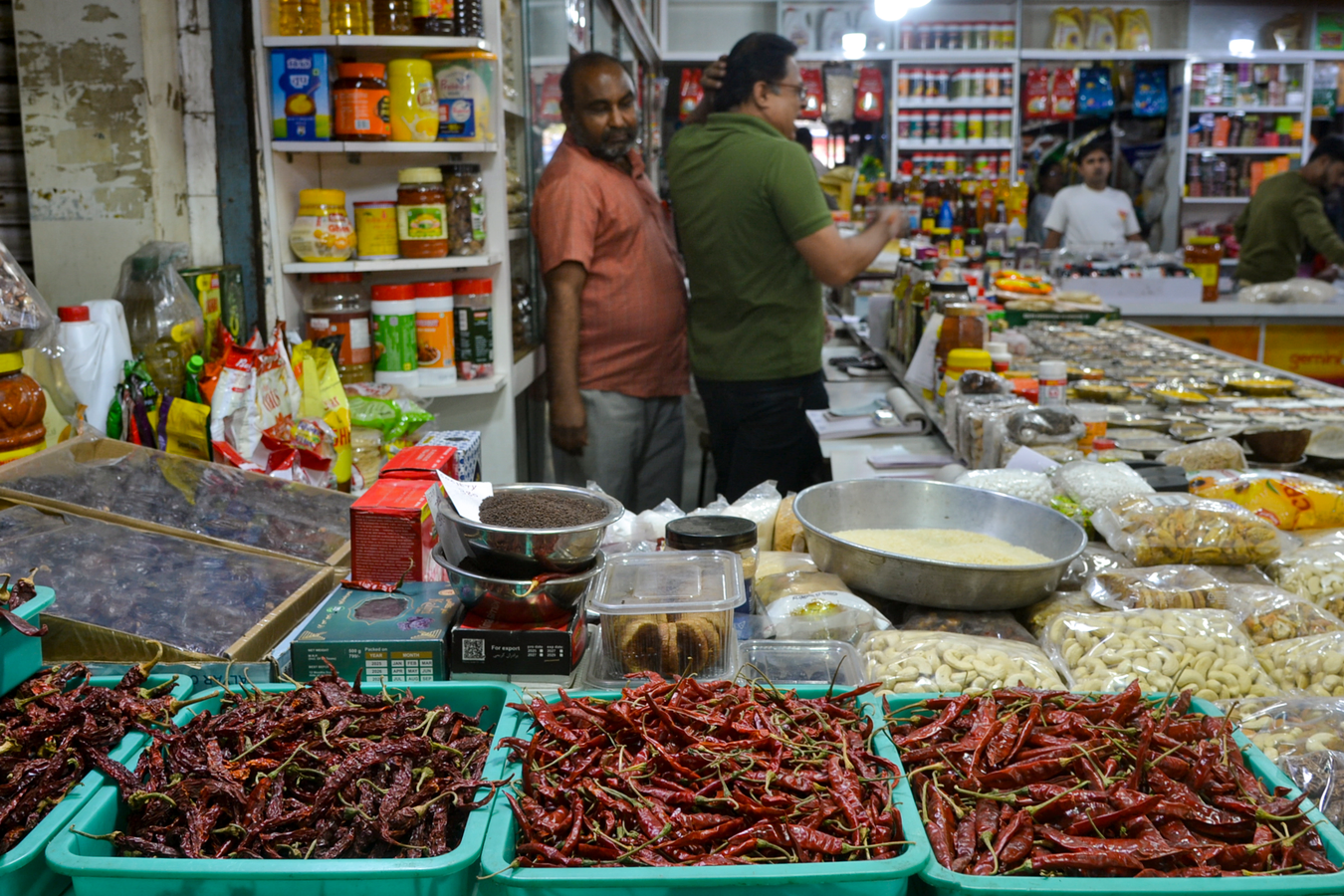
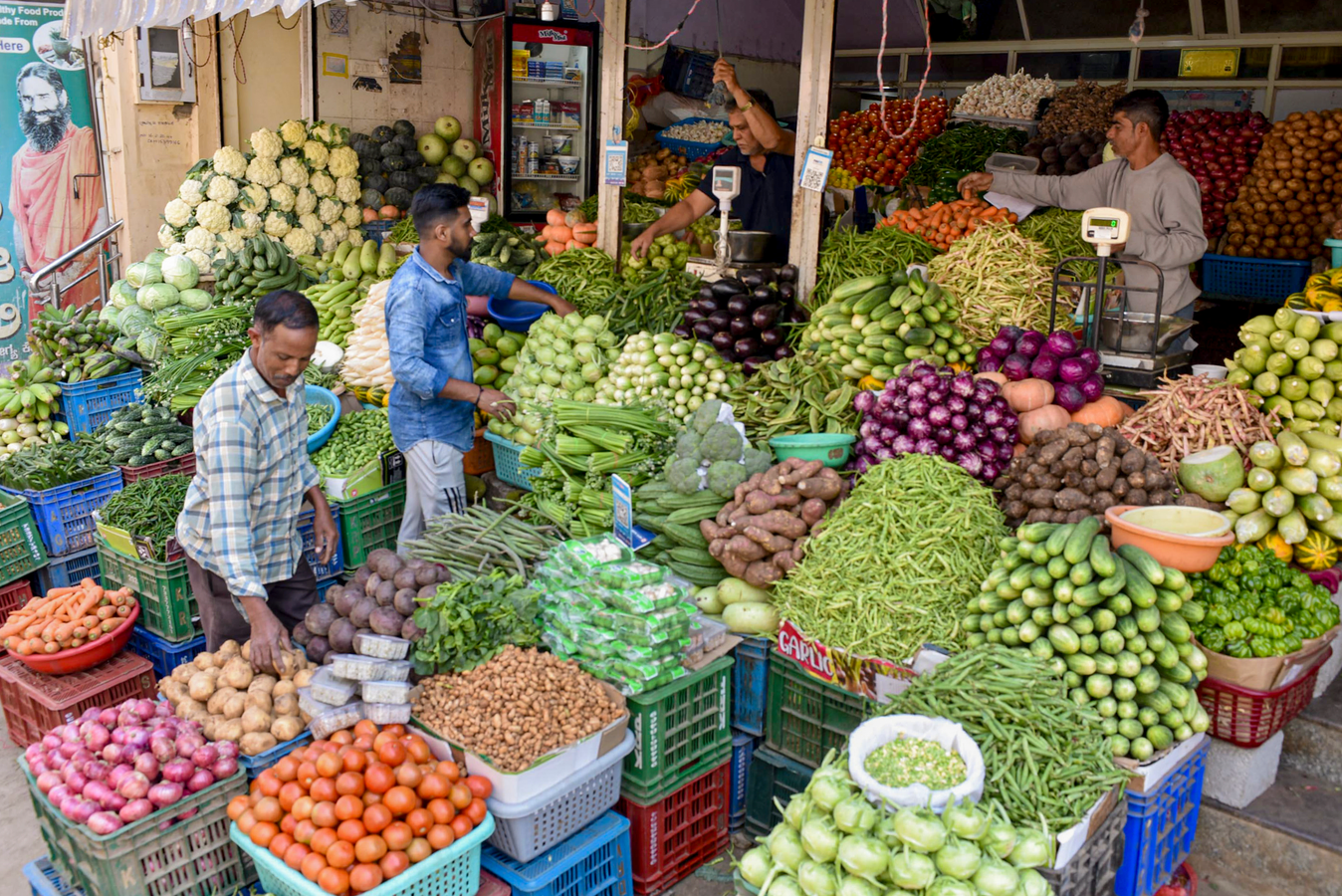
The top 5 items with low inflation in January were garlic, onion, potato, arhar, and tur dal, along with peas.
On the other hand, high inflation was seen in silver jewellery, tomato, coconut-copra, gold, diamond, platinum jewellery, and coconut oil.
The base year has been revised from 2012 to 2024, using the Household Consumption Expenditure Survey (HCES) 2023-24.
The new series covers 358 items, compared to 299, including 308 goods and 50 services, with price data now collected from 1,465 rural and 1,395 urban markets, as well as 12 online marketplaces. The new CPI series expands the classification from six to 12 groups, adding several standalone categories to provide greater granularity.
The weight of food and beverages has been reduced to 36.75 per cent from 45.86 per cent, potentially lowering headline volatility. Housing, now expanded to include utilities, has a 17.67 per cent weight. Pan, tobacco, and intoxicants have risen to 2.99 per cent, while clothing and footwear have fallen to 2.38 per cent.
Index values under the new series are available from January 2025, making year-on-year inflation comparable only from January 2026. A linking factor allows back-calculation to 2013.
Newly delineated groups include furnishings, household equipment, and routine household maintenance (4.47 per cent weight), health (6.1 per cent), transport (8.8 per cent), information and communication (3.61 per cent), recreation, sports, and culture (1.52 per cent), education services (3.33 per cent), restaurants and accommodation services (3.35 per cent), and personal care, social protection, and miscellaneous goods and services (5.04 per cent).
At the item level, obsolete products have been dropped from the basket, while categories have been rationalized and reclassified to align with current consumption patterns under the 2024 base and COICOP framework, improving comparability and relevance.
"Since the CPI basket is now aligned with recent expenditure data, the inflation signals derived from this will be more closely matched with the economic conditions. This improves the information basis for calibrating monetary and fiscal policy," Nageswaran said.
He said that the new series, with wider coverage of services and digital markets, provides policymakers with a more up-to-date basis for assessing real incomes, consumption trends, and purchasing power.
Aditi Nayar, Chief Economist, Icra, said the headline CPI inflation printed at 2.75 per cent in January is well below the mid-point of the Reserve Bank's target range of 2 per cent - 6 per cent.
"The new CPI series is not comparable to the old series, owing to the change in composition, weights and calculation methodology. Nevertheless, with a dip in the weight of the food and beverages (F&B) segment, we had expected the headline print to be slightly higher than our estimate of 2.5 per cent for January 2026 as per the old series, which has been the case," she said.
Madhavi Arora, Chief Economist, Emkay Global Financial, does not expect the new inflation series to materially influence policy in the near term.
"An extended rate pause looks likely, underpinned by a cyclical upturn in both growth and inflation and improving confidence following the conclusion of the US-India trade negotiations," Arora said.
Commenting on the new series, Rajeev Sharan, Head – Criteria, Model Development & Research, Brickwork Ratings, said the January 2026 CPI inflation on the new 2024 base underscores a still-comfortable price environment. Core inflation, near 3.1 per cent, reflects firm momentum in services and personal care.
"The base revision, with reduced food weight and expanded services coverage, implies structurally softer headline prints, but sharper visibility on demand-side pressures. This should allow the RBI to remain accommodative in the near term, supporting growth, while pivoting toward neutrality if core remains sticky above headline," Sharan added.
Upasna Bhardwaj, Chief Economist, Kotak Mahindra Bank, said the CPI inflation came in line with expectations.
"While inflation trajectory remains fairly benign, we believe RBI’s rate-cutting cycle has come to an end, with the RBI likely to continue to hold rates on pause for an extended period through CY26 at least," Bhardwaj said.