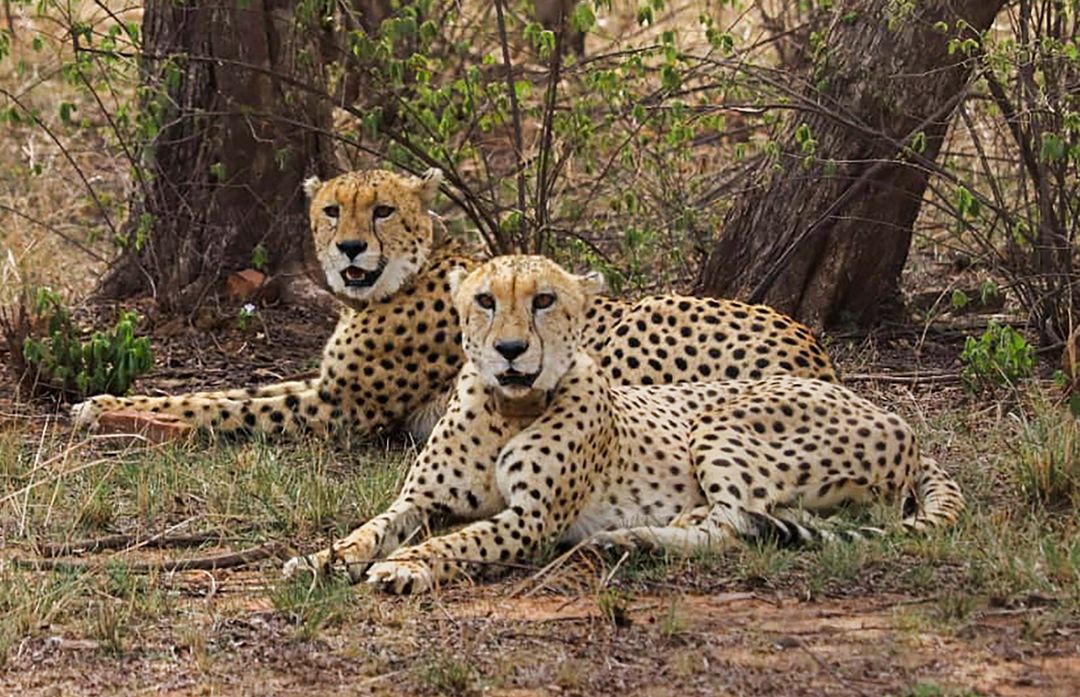
India’s Cheetah Management Model Gains Global Attention
New Delhi, May 15 — As Iran grapples with a steep decline in its critically endangered Asiatic cheetah population, the country has expressed interest in learning cheetah management practices from India, according to revelations made through a Right to Information (RTI) application.Rajesh Gopal, Chairman of the Cheetah Project Steering Committee, disclosed this development during a meeting held in February. “In a recent meeting, Iranian officials have expressed their interest in learning cheetah management in India,” read the official minutes of the committee’s meeting.
Gopal also proposed that the International Big Cat Alliance (IBCA), a global initiative spearheaded by India, could extend outreach to other cheetah range nations interested in conservation and management strategies.
No Formal Proposal Yet, Says Indian Authority
Despite Iran’s reported interest, a senior official from the National Tiger Conservation Authority clarified that there has been no formal approach from Iran as of now. "There is no such proposal at this juncture," the official stated.India’s official "Action Plan for Introduction of Cheetahs in India" already includes a provision that the country would support Iran and other global conservation partners in efforts to save the endangered cheetah species.
A Shared History of Cheetah Conservation Efforts
The cheetah, once native to India, was declared extinct in the country after the last known specimen died in 1948 in the Sal forests of Koriya district, Chhattisgarh. Initial discussions with the Shah of Iran in the 1970s considered an exchange program involving Asiatic cheetahs and Asiatic lions. However, due to the critically low cheetah population in Iran and their genetic closeness to African cheetahs, India ultimately opted to reintroduce the African subspecies.Since September 2022, India has translocated 20 African cheetahs — eight from Namibia and twelve from South Africa — as part of a highly watched reintroduction initiative. The country is now set to receive an additional eight cheetahs from Botswana in two phases, with the first batch of four expected to arrive by May.
Iran’s Cheetah Crisis: A Bleak Outlook
Once roaming across Central and Southwest Asia, the Asiatic cheetah is now confined to Iran, with experts estimating fewer than 30 individuals left in the wild. In January 2022, an Iranian minister reported the population had dropped to just 12, a stark contrast to the estimated 100 in 2010 and up to 400 in the mid-1970s.Despite gaining legal protection in the 1960s, Iran's cheetah population has suffered due to the decline in prey species, habitat destruction, and human-wildlife conflict. These issues intensified post-1979 following the Iranian revolution and the Iran-Iraq war. Additionally, economic sanctions have strained conservation efforts and fueled unregulated hunting, further jeopardizing the species.
Most of the remaining cheetah habitats are located in mineral-rich regions, which adds another layer of threat due to industrial activity and resource exploitation.