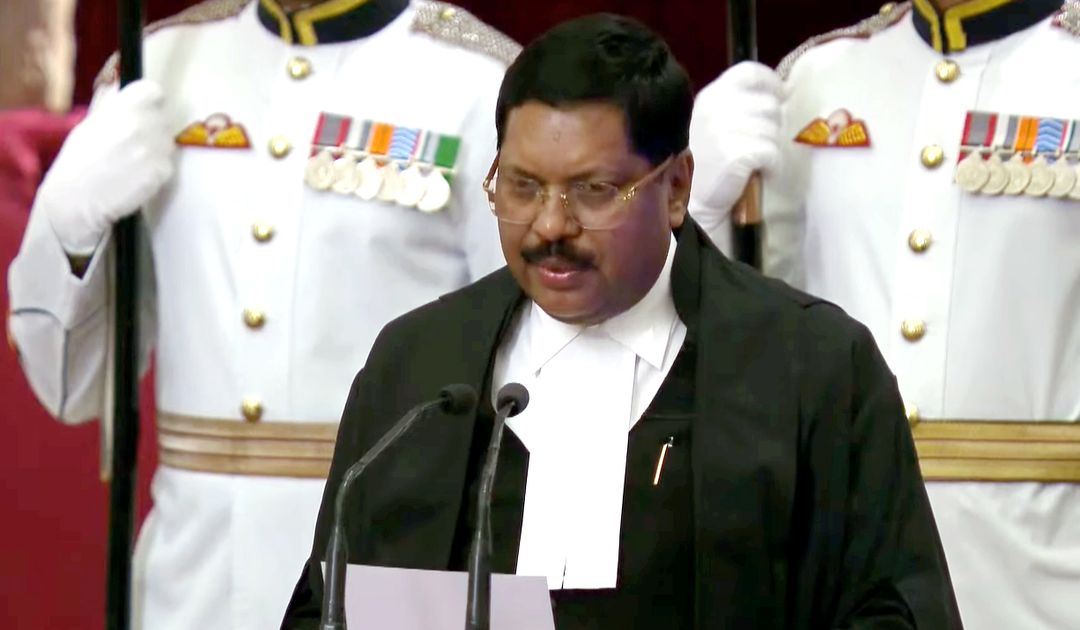
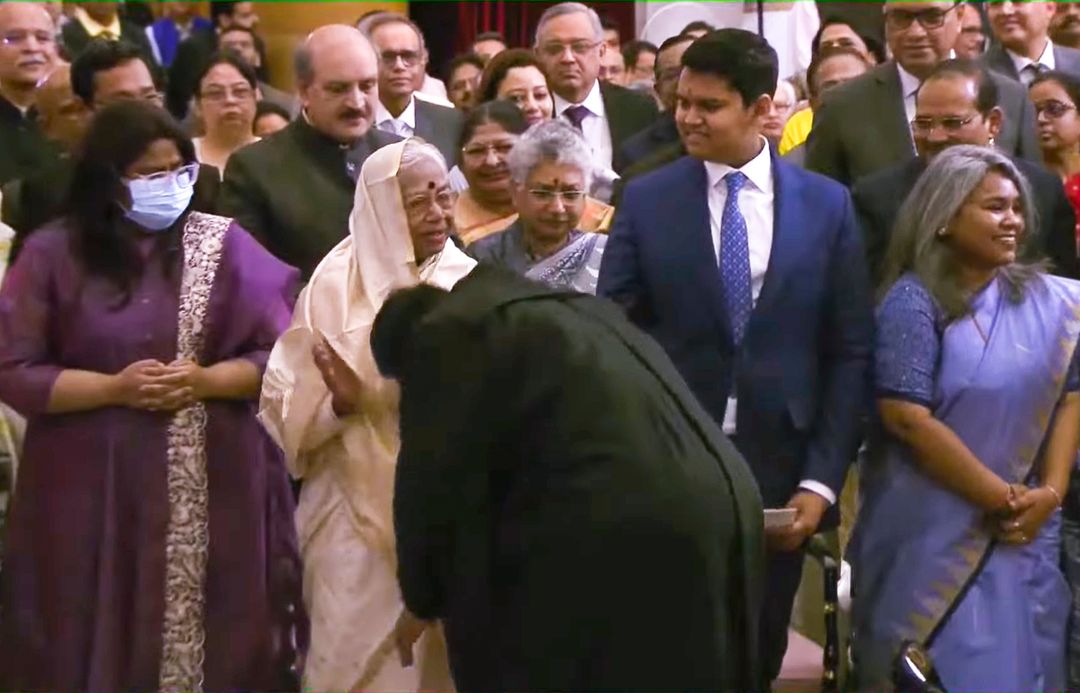
New Delhi, May 11 — Justice Bhushan Ramkrishna Gavai, who will take over as the 52nd Chief Justice of India on May 14, has categorically ruled out accepting any post-retirement assignment and firmly asserted that the Constitution, not Parliament or judiciary, holds ultimate supremacy.
In an informal interaction with journalists at his residence, Justice Gavai addressed a wide range of issues, from judicial independence to recent terror incidents, as well as his personal philosophy shaped by his humble background.
"The Constitution is Supreme"
When asked about political remarks suggesting parliamentary supremacy, Justice Gavai cited the landmark Kesavananda Bharati case, stating, “The Constitution is supreme. This has been held in the 13-judge bench judgement.”His remarks come amid recent comments by political leaders, including Vice President Jagdeep Dhankhar, claiming Parliament’s primacy over other institutions.
No Political Aspirations Post-Retirement
Clarifying his stance on the controversial subject of judges taking political or constitutional posts after retirement, Justice Gavai said, “I do not have any political ambition… I will not take any post-retirement assignments.”When asked about a former CJI accepting a gubernatorial post, he remarked, “I cannot speak on behalf of others,” but noted that the position of Governor is protocol-wise lower than that of the Chief Justice of India.
Judiciary’s Role in National Crises
Referring to the recent Pahalgam terror attack, Justice Gavai revealed that the Supreme Court held a full court meeting under his convening in the absence of current CJI Sanjiv Khanna. “When the country is in crisis, the Supreme Court cannot remain aloof,” he said.He emphasised that judges are part of society and feel deeply affected by such national tragedies, adding, “When the whole country is mourning, the Supreme Court cannot remain aloof.”
On War, Social Equity, and Judicial Appointments
Commenting on armed conflicts, Justice Gavai called war "futile," drawing parallels with the ongoing Russia-Ukraine war and noting the absence of any tangible outcomes.Touching on social representation in the judiciary, he acknowledged the lack of Scheduled Castes, Scheduled Tribes, and Backward Class judges but clarified that constitutional posts cannot have reservations. “However, people should be alive to the issue of adequate representation,” he added.
Regarding women in the judiciary, he admitted that finding suitable candidates at times poses a challenge.
Transparency and Accountability
Justice Gavai confirmed that 21 out of 33 Supreme Court judges have publicly declared their assets, with others expected to follow soon. He urged high court judges to do the same.On the controversy surrounding Justice Yashwant Varma of the Allahabad High Court, Justice Gavai noted that a Supreme Court-appointed committee had indicted him, and the matter is now with President Droupadi Murmu and Prime Minister Narendra Modi.
Humble Roots and Lifelong Commitment
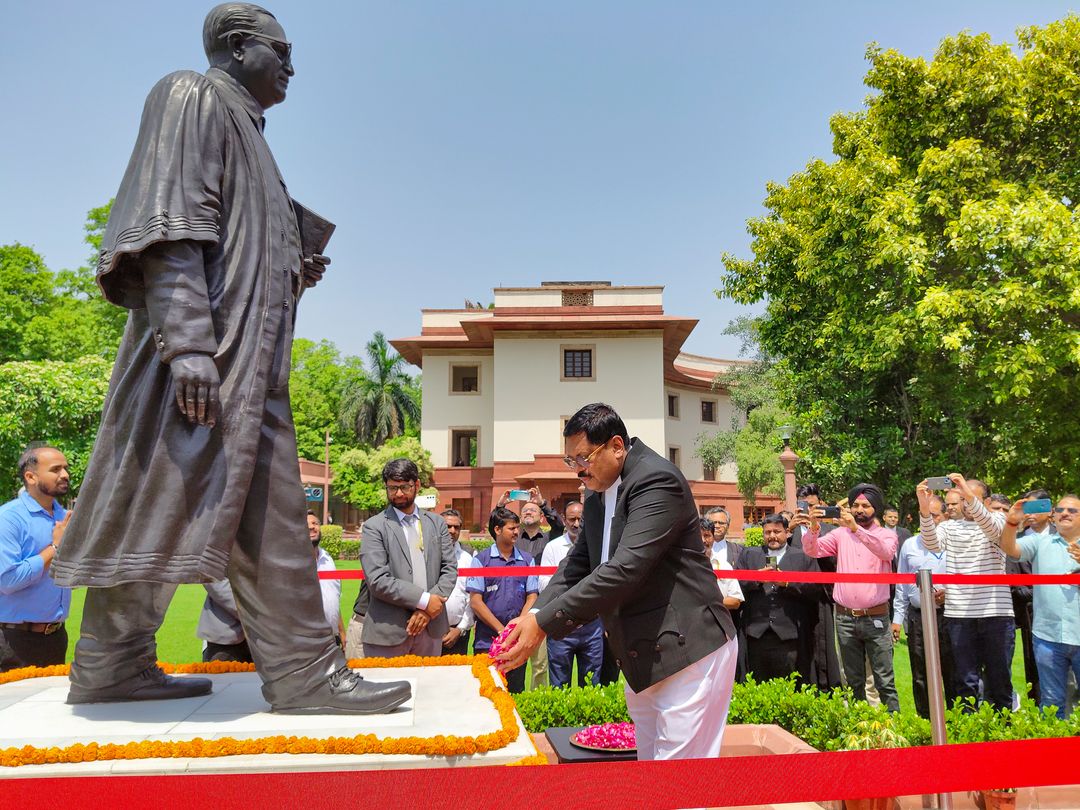
Justice Gavai spoke warmly of his modest beginnings in Maharashtra’s Amravati district. “I will be perhaps the first Buddhist CJI,” he said, crediting his belief in socio-economic justice to his family’s conversion to Buddhism under the influence of Dr B R Ambedkar.He continues to visit his native village to observe personal milestones and local traditions, including village fairs and his father’s anniversaries.
Journey to the Apex Court
Born on November 24, 1960, Justice Gavai enrolled with the Bar in 1985 and served as standing counsel for civic bodies including the Nagpur and Amravati municipal corporations. He was appointed an additional judge of the Bombay High Court in 2003 and became permanent in 2005.He was elevated to the Supreme Court in 2019 and will serve as Chief Justice of India until his retirement on November 23, 2025. His appointment as CJI was officially notified by President Droupadi Murmu on April 29 following a recommendation made by CJI Khanna on April 16.
With a tenure of over six months, Justice Gavai is poised to bring a unique perspective to the judiciary, rooted in empathy, constitutional fidelity, and a commitment to transparency.