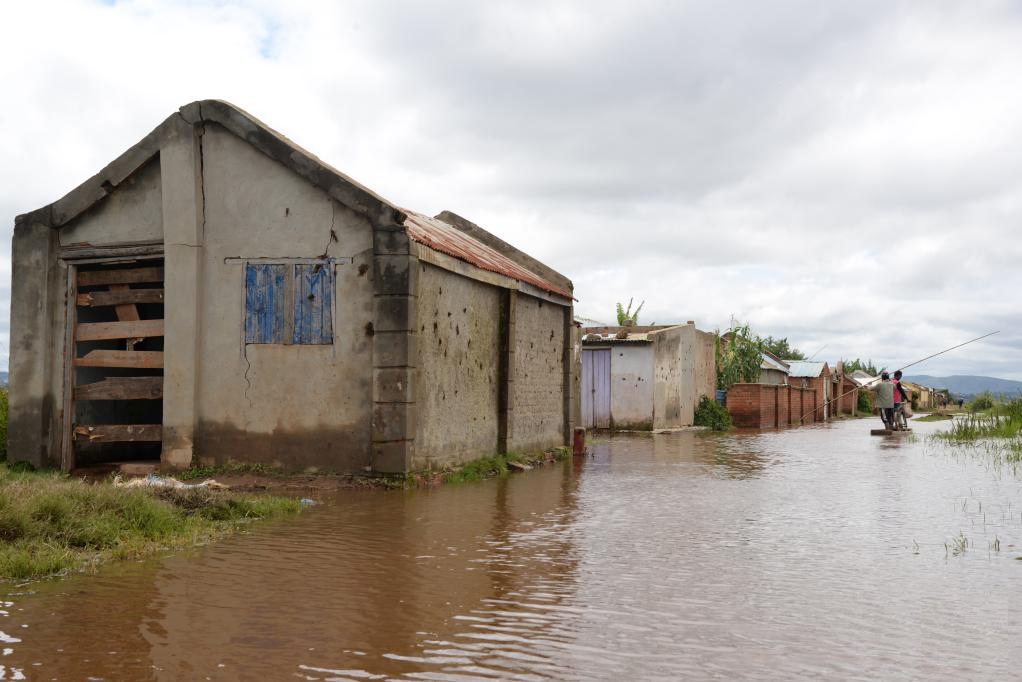
Antananarivo, February 16 – The death toll from Cyclone Gezani in Madagascar has risen to 59, with 804 people injured, according to an update released on Monday by the National Office for Risk and Disaster Management (BNGRC).
The BNGRC said that more than 420,000 people were affected across 25 districts in five regions in eastern and central Madagascar. The cyclone also damaged over 49,000 houses and destroyed over 25,000 houses.
Authorities are continuing to assess the damage and carry out relief operations in the affected areas, while assistance to affected populations is underway.
The Malagasy government declared a "state of national disaster" on February 11 in response to the widespread devastation caused by Cyclone Gezani.
The storm caused extensive damage to infrastructure, homes, and livelihoods, along with severe flooding and significant economic losses.
The decree cited the tragic loss of life and disruption of communities as key factors. It also said that Cyclone Gezani severely affected several regions of Madagascar, exacerbating an already dire situation following Cyclone Fytia and ongoing heavy rainfall.
Last Thursday, the United Nations (UN) announced that it has allocated three million US dollars for emergency aid to Madagascar following the devastating Tropical Cyclone Gezani.
The UN Office for the Coordination of Humanitarian Affairs (OCHA) said that the allocation from the Central Emergency Response Fund will help more than 90,000 people. Additional funds from other donors are helping to kick-start response efforts.
With the storm raging across eastern and central Madagascar, preliminary reports indicated that more than 250,000 people have been affected, with nearly 7,000 people displaced.
The office said last week that more than 65,000 homes were flooded, damaged, or destroyed, and about 600 classrooms were rendered partially or completely unusable.
OCHA said that the government has called for international support and is leading search-and-rescue, evacuation, shelter, and food assistance efforts, including the distribution of some 800 metric tonnes of rice, with support from the world body and partners.