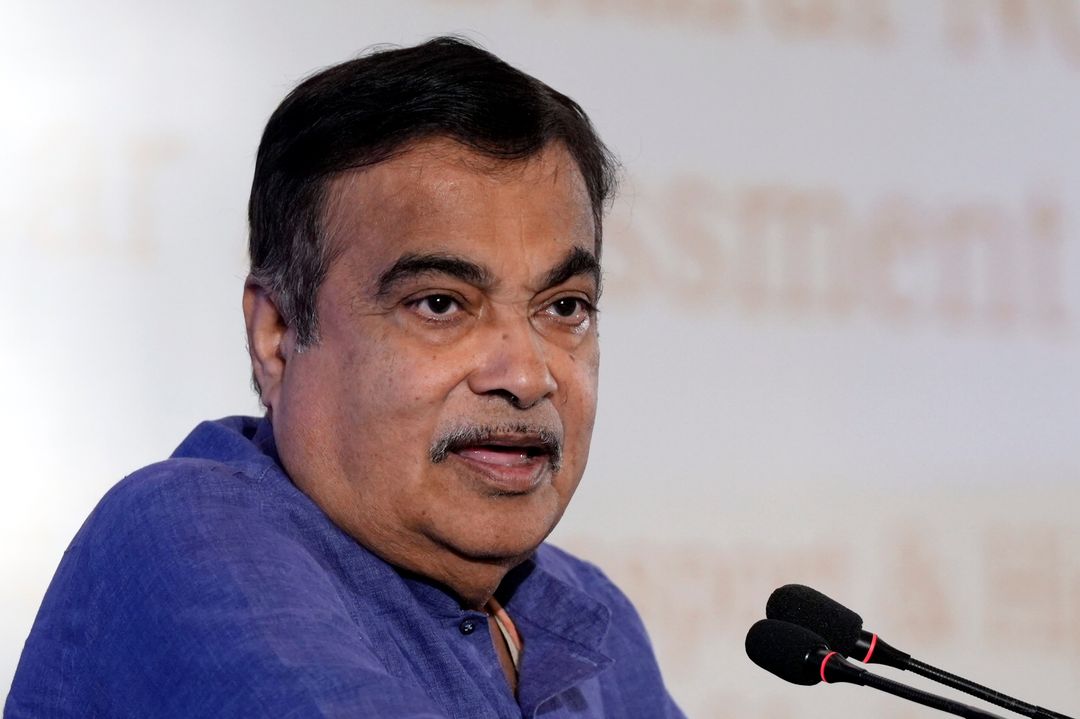
Mumbai, May 12 — Union Minister Nitin Gadkari on Monday called on the Maharashtra government to enact a revised law for the cooperative sector, aligning it with the state’s changing economic dynamics. Emphasizing the sector’s pivotal role in transforming rural livelihoods, Gadkari said the time has come to strike a balance between the Cooperative Act and the Companies Act to enable holistic growth.
Call for Legislative Reform in the Cooperative Sector
Speaking at a public function in Mumbai, Gadkari appealed to the Chief Minister and Deputy Chief Minister of Maharashtra to take proactive steps toward formulating a new cooperative law.He stressed that the existing legal framework governing cooperative establishments needs amendments to reflect the current economic environment."It is my request to Maharashtra chief minister and deputy chief minister to come up with a revised act for the cooperative sector. We must find a golden mean between the Cooperative Act and the Companies Act," Gadkari said.
Cooperative Sector's Socio-Economic Impact Must Be Studied
Gadkari urged the Maharashtra State Cooperative Bank to conduct a comprehensive study to evaluate the cooperative movement’s socio-economic impact across the tehsil and district levels. He proposed measuring critical indicators such as employment, per capita income, and growth rate.Highlighting Rural-Urban Economic Imbalance
The Minister pointed out a glaring economic disparity, noting that while 60 per cent of India's population is engaged in agriculture and rural development, the sector contributes only 12 per cent to the GDP. In contrast, the manufacturing and services sectors contribute 22-24 per cent and 52-54 per cent, respectively, with the latter also driving most of the Goods and Services Tax (GST) revenue."Nearly 30 per cent of people have migrated to cities out of compulsion due to lack of education, jobs and facilities in rural areas," he added.
Dairy Sector as a Model for Rural Prosperity
Gadkari cited the dairy sector as a potential driver of rural income. He highlighted disparities in milk production, comparing Kolhapur’s 70-80 lakh litres and Ahilyanagar’s 50 lakh litres per day to the underperforming Vidarbha region.He noted the establishment of a Rs 750 crore Mother Dairy plant in Vidarbha, which he believes could significantly increase production.
"If we can reach 50 lakh litres in the next three years, farmers' suicides will stop. The cooperative sector will play a huge role in uplifting rural areas and improving their financial condition," he said.
Farmer-Producer Companies and Food Processing
Praising the rise of farmer-producer companies, Gadkari said these entities are now venturing into food processing, thereby adding value and generating rural employment.Economic Evolution and Political Ideologies
Reflecting on his political journey, Gadkari spoke about the decline of ideologies such as socialism and the Left, asserting that capitalism has become the default system in a globalized economy.He also shared insights from his visit to Shanghai, noting how China transformed its economic policies despite its symbolic adherence to socialism."There is no alternative to capitalism. We must adapt with changing times," he stated.
Adapting to Global Economic Trends
Concluding his address, Gadkari emphasized the need for adaptability in a rapidly evolving global economy.The minister’s remarks underline a growing urgency to modernize cooperative frameworks to sustain rural development and economic equity in Maharashtra."In the global economy, the government no longer decides prices. If we do not adapt to the changing times, there is a risk of us being left behind," he warned.