Singapore, February 14. Under the leadership of Prime Minister Narendra Modi, India has evolved into an ambitious global player, supported by the world's largest population – young, technologically savvy, and predominantly middle-class – giving it a strong advantage for the future, according to a report released on Saturday.
According to an opinion piece in Singapore's leading multinational news channel, Channel News Asia (CNA), the International Monetary Fund (IMF) identified India as the fastest-growing major economy in recent years, achieving real Gross Domestic Product (GDP) growth of 6.4 per cent. With its nominal GDP exceeding US$4 trillion, India is expected to surpass Japan and Germany by 2030 and could emerge as the world's largest economy in another decade.
To achieve this objective, Prime Minister Modi introduced the Act East Policy in 2014 to establish India as a major influence in the Indo-Pacific region, a vision that requires strong engagement with Southeast Asia.
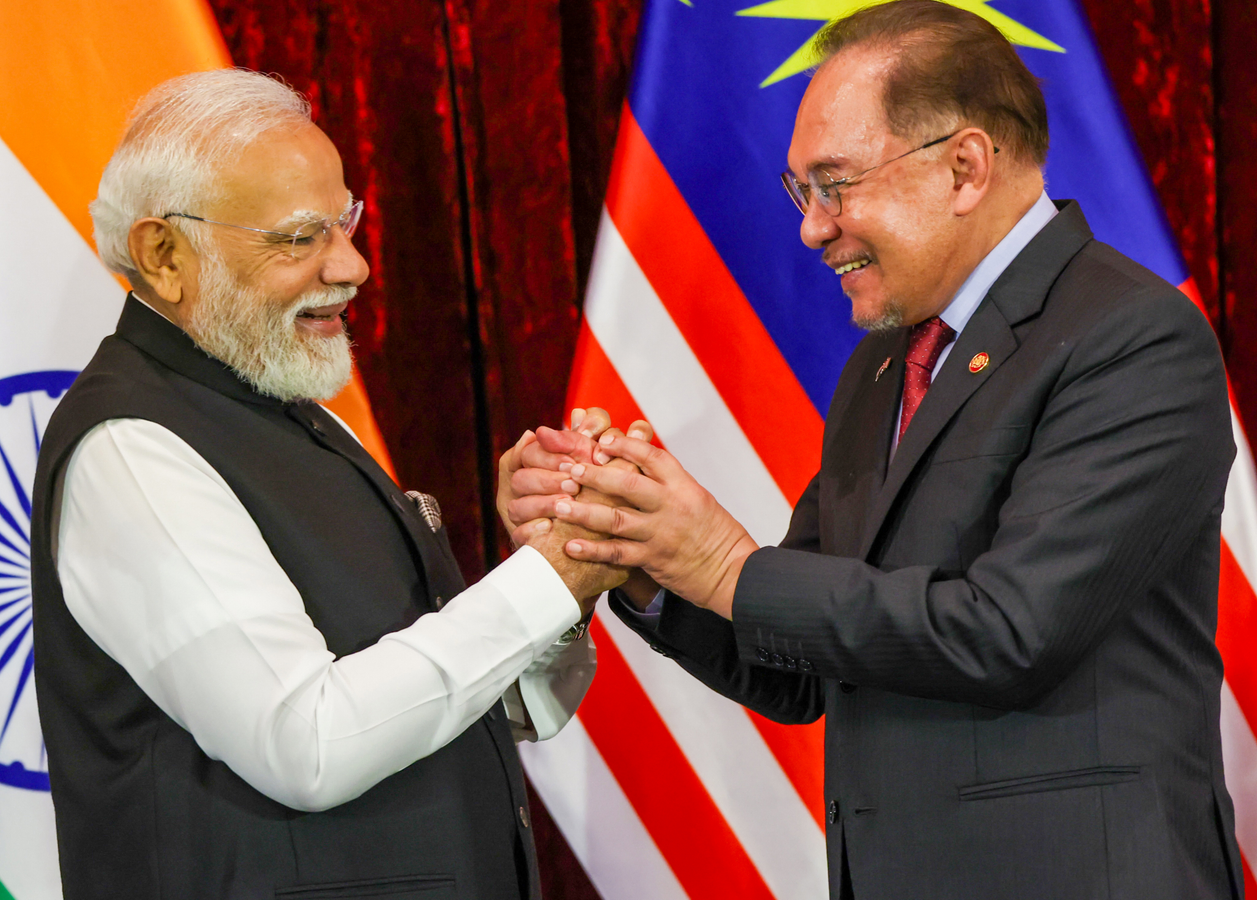
"The chemistry between leaders is very important in bilateral relations. So it is helpful that Indian Prime Minister Narendra Modi was friends with Anwar Ibrahim before the latter became the Prime Minister of Malaysia. Modi had promised his 'dear friend' that he would visit Malaysia after missing the star-studded ASEAN summit in Kuala Lumpur in October 2025. And he made it his first foreign visit in 2026," political analyst James Chai stated in CNA.
"Anwar made sure Modi felt welcome by preparing a ceremonial welcome and send-off, complete with a guard of honour from the First Battalion of the Royal Malay Regiment, students waving Indian flags, and cultural performances. It also helped that both leaders shared their love for the Tamil language and actor MG Ramachandran. At home, Anwar always talked about his love for Indian culture and literature, including how much the Sanskrit epics Mahabharata and Ramayana influenced him during his time in prison," he added.
According to the commentary, Malaysia is home to nearly 3 million Indians, making it the third-largest Indian overseas community. The robust people-to-people linkages through tourism, education, and cultural exchanges contributed to bilateral trade reaching nearly US$18.6 billion in 2025.
"Malaysia certainly has value to offer. In recent years, India was the largest market for Malaysian palm oil exports, a crucial item that affects the cost of food. At the same time, India's recent semiconductor mission could benefit from Malaysia's partnership as it had a 50-year head start in backend manufacturing with the support of multinationals, the pioneering companies that established operations in the early 1970s (locally known as the 'Eight Samurai')," Chai mentioned.
"That is why these were the standout items in the memorandums of understanding signed, besides reaffirming their comprehensive strategic partnership since 2024, that also covers defence, education, trade, and culture," he wrote.