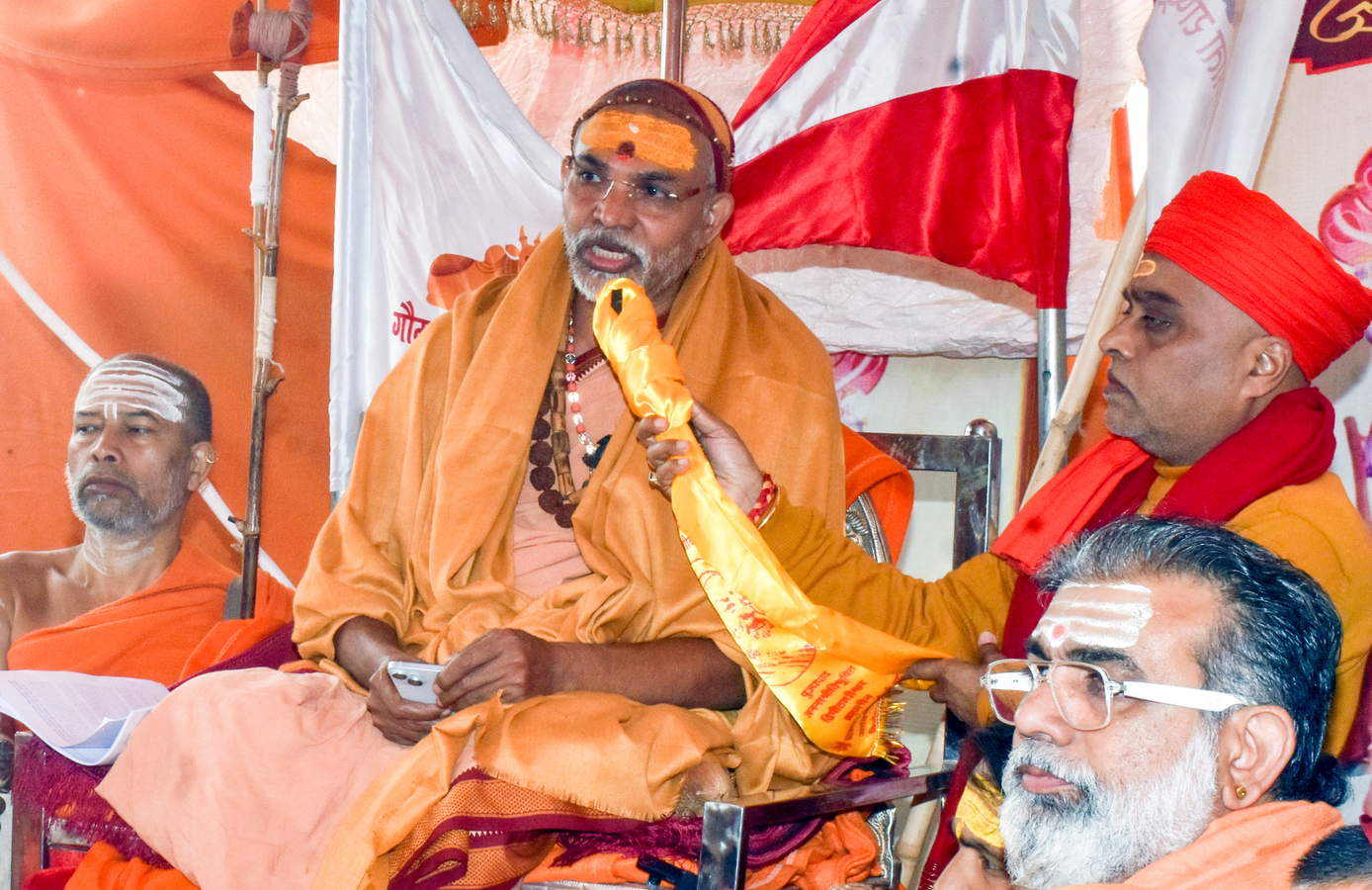
New Delhi, February 16 – The Supreme Court on Monday dismissed a Public Interest Litigation (PIL) alleging police misconduct against followers of Swami Avimukteshwaranand during the Magh Mela in Prayagraj, Uttar Pradesh.
The Bench, comprising Chief Justice Surya Kant and Justices Joymalya Bagchi and Vipul Pancholi, observed that issues related to law and order fall within the jurisdiction of the state government. They stated that the petitioner was free to approach the relevant authorities with a representation and seek appropriate action in accordance with the law.
The PIL, filed under Article 32 by advocate Ujjawal Gaur, alleged "arbitrary, violent, and unconstitutional state action" during the Magh Mela in Prayagraj, particularly on the occasion of Mauni Amavasya.
The petition claimed that minor religious students accompanying Swami Avimukteshwaranand Saraswati, the Shankaracharya of Jyotish Peeth (Jyotirmath), were "forcibly dragged, assaulted, and brutally beaten" by police personnel when they attempted to take the customary holy dip at the Sangam on January 18.
Referring to videos and images of the incident, the petition alleged that the minors were "pulled by their hair" and subjected to physical force, arguing that such acts constituted "cruel, inhumane, and degrading treatment" that violated Articles 14, 21, and 25 of the Constitution.
The petition also questioned notices issued by the Prayagraj Mela administration, alleging the misuse of the religious title "Shankaracharya" and warning of possible cancellation of land allocation and facilities.
Seeking the Supreme Court's intervention, the petitioner urged the framing of uniform Standard Operating Procedures (SOPs) governing the engagement of state authorities with religious leaders during large congregations such as the Magh Mela, and the protection of the dignity and rights of ascetics and minor students.
The Magh Mela, which commenced on January 3 and continued until Mahashivratri on February 15, was being organized under the supervision of the Uttar Pradesh government.
The controversy erupted during the auspicious Mauni Amavasya bathing festival at the Magh Mela in Prayagraj, when Swami Avimukteshwaranand attempted to proceed to the Sangam in a traditional palanquin procession.
The Prayagraj administration stopped the procession, citing safety concerns and the enforcement of a "no-vehicle zone" policy due to heavy footfall.
The ensuing scuffle between the Swami's disciples and police personnel led to allegations of manhandling.
In protest, Swami Avimukteshwaranand staged a dharna and reportedly refused food and water, demanding an apology from the administration. The standoff further escalated after the Magh Mela Authority issued a formal notice questioning his entitlement to use the title "Shankaracharya".