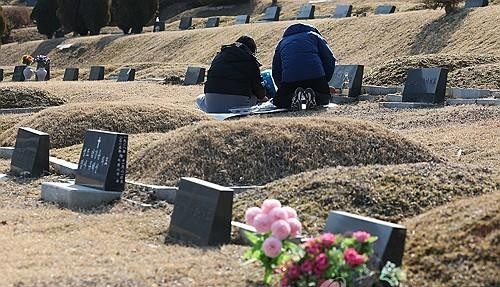
Seoul, February 15 – Data released on Sunday showed that the cremation rate in South Korea continues to rise steadily, raising concerns about potential shortages of cremation facilities, particularly in densely populated major cities like Seoul, amid the rapid aging of the population.
The national cremation rate reached 94% in 2024, up from 92.9% a year earlier, according to data from the Bank of Korea (BOK) and the Ministry of Welfare.
The figure has been steadily increasing over the past decades, rising from 33.5% in 2000 to 67.5% in 2010 and further to 89.9% in 2020, according to reports from Yonhap news agency.
However, the supply of cremation facilities has not kept pace with growing demand, with shortages particularly severe in Seoul and other major cities.
The proportion of cremations conducted within three days of death fell from 86.2% in 2019 to 73.6% in 2022 during the COVID-19 pandemic, and has yet to return to pre-pandemic levels, standing at 75.5% in 2025.
The rates in Seoul and Busan were 69.6% and 67.1%, respectively, both below the national average.
Experts say that additional cremation facilities are needed, given the rapid aging of the population and prevailing funeral practices.
South Korea officially became a super-aged society last year, with more than 20% of its population aged 65 and older. The government projects that the number of deaths will rise from 310,000 in 2020 to 700,000 in 2070.
"Small-scale, privately-led cremation facilities could be a solution, particularly the introduction of small cremation units in hospital funeral halls," the BOK said in a recent report, noting that hospital infrastructure is already widely distributed across regions.
"Modern technology allows cremation facilities to operate in an environmentally friendly manner," it added. "There is a need to boldly overhaul relevant laws and regulations."