New Delhi, February 13 Seva Teerth, the new Prime Minister's Office (PMO), draws architectural influences from the temples of Karnataka dating back to the reign of the Chalukyas, and Buddhist stupas.
The Seva Teerth complex, inaugurated by Prime Minister Narendra Modi on Friday, will also house the Cabinet Secretariat and the National Security Council Secretariat, besides the PMO.
Clad in white and red sandstone, the buildings trace their referencing material traditions to historic Indian civic and institutional architecture, officials said.
This palette lends the structure a dignified, durable, and timeless quality while anchoring it within a recognisable cultural context.
Metal-clad domes, inspired by Buddha stupas, are introduced as contemporary accent elements, providing visual prominence while ensuring durability and ease of maintenance.
The entrance portal draws inspiration from the stone screen-work of Chalukyan temples dating back to the 11th-13th centuries, while the floral stone motif is derived from square-based geometric patterns traditionally found in temple panels.
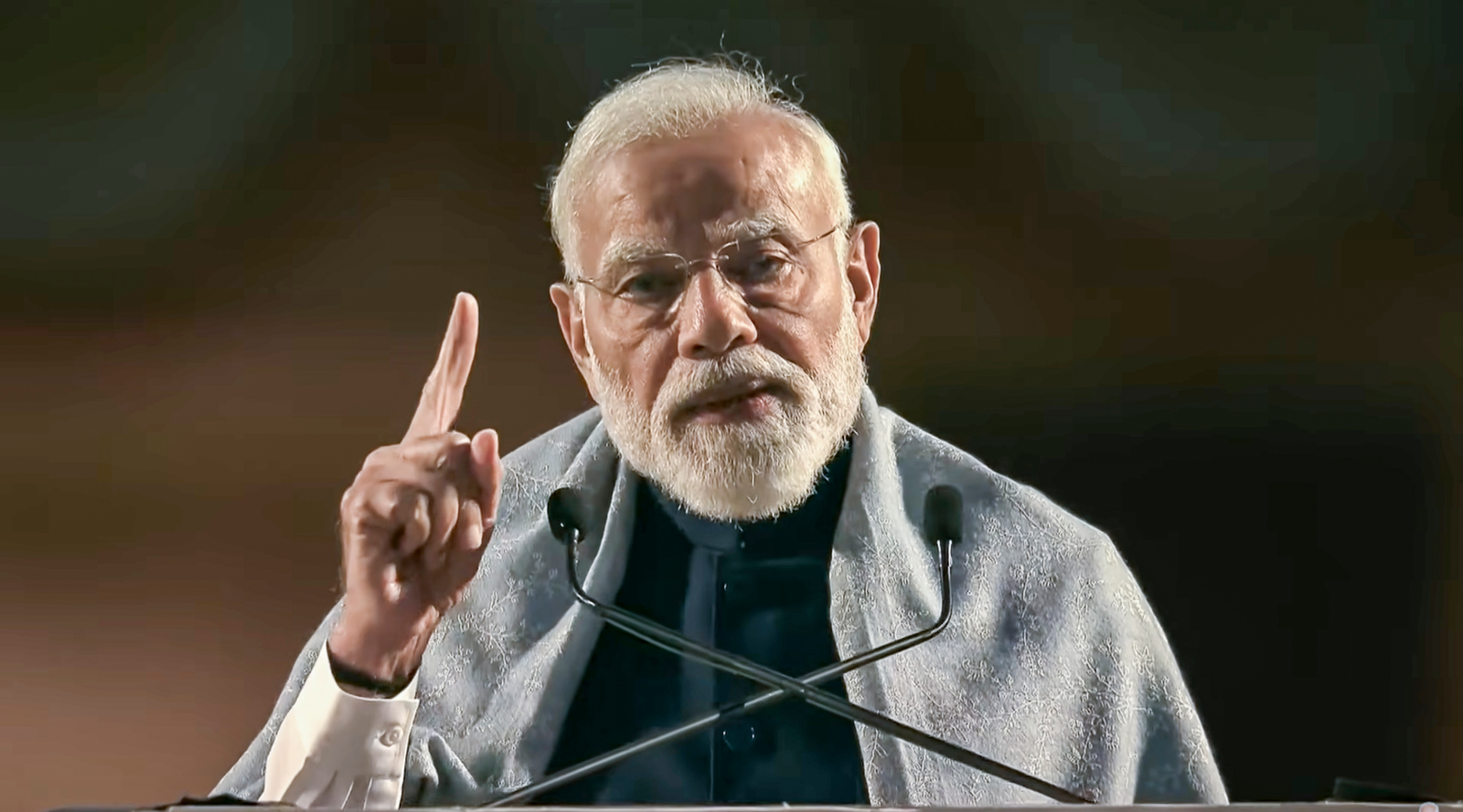
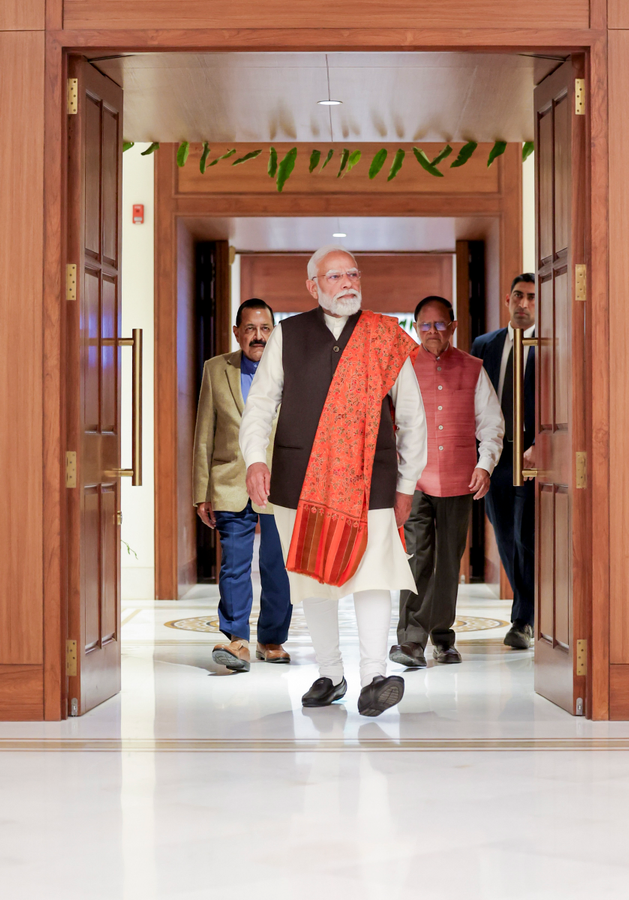
After inaugurating Seva Teerth, Modi garlanded a statue of Lord Ganesha in the PMO and signed files to approve important proposals targeted at the welfare of women, farmers, youth, and vulnerable citizens.
The shift came on February 13, a day that marked 95 years since the formal inauguration of New Delhi as India's modern capital in 1931.
PM Modi mentioned another significance of the day. He said everyone is witnessing the creation of a new history and February 13 is becoming a witness to a new beginning in India's journey of development.
"The scriptures have accorded great importance to Vijaya Ekadashi. On this day, any resolve with which one moves forward is sure to bring victory.
"Today, we are all entering the Seva Teerth and Kartavya Bhawan with the resolve to build a developed India. The divine blessing to be victorious in our goal is with us," he said.
Jali screens are integrated along the facade to filter natural daylight into office spaces throughout the day.
Beyond their environmental function, these screens reinterpret a traditional Indian architectural device that balances light, ventilation, and privacy, contributing both climatic performance and cultural continuity to the design.
The carved stone plinth band is inspired by the base mouldings of the 12th-century Chennakeshava temple at Belur in Karnataka's Hassan district.
The design features a continuous horizontal band of repetitive floral and geometric motifs, simplified and proportioned for contemporary application while retaining the essence of traditional stone craftsmanship.
The prime minister also inaugurated Kartavya Bhavan 1 and 2, which accommodate several ministries, including finance, defence, health and family welfare, corporate affairs, education, culture, law and justice, information and broadcasting, agriculture and farmers' welfare, chemicals and fertilisers, and tribal affairs.