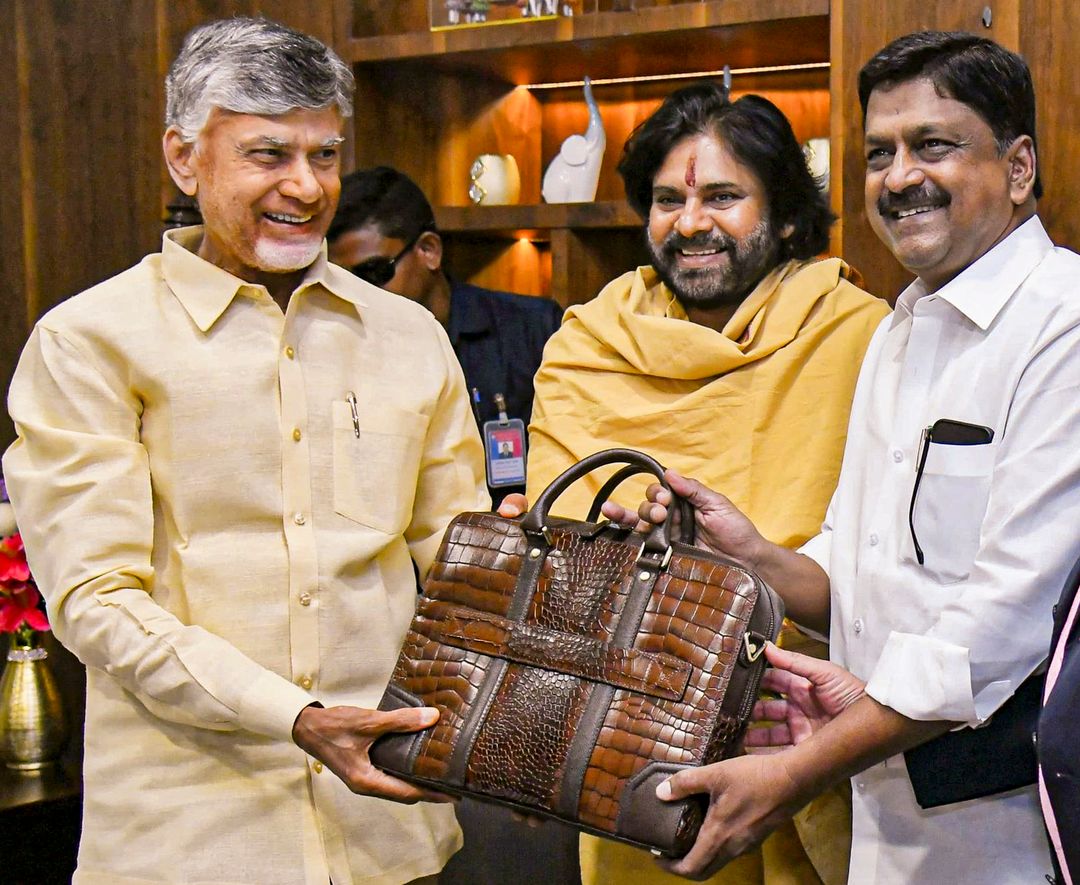
In Amaravati, Andhra Pradesh, Finance Minister Payyavula Keshav presented the state budget for 2026-27, totaling over Rs 3.32 lakh crore. This is an increase of Rs 10,000 crore from the previous fiscal year. The budget includes an estimated revenue expenditure of Rs 2.56 lakh crore and a capital expenditure of nearly Rs 54,000 crore.
Keshav stated that the estimated revenue deficit is around Rs 22,000 crore, which is 1.11% of the state's gross state domestic product (GSDP), and the fiscal deficit is pegged at nearly Rs 76,000 crore, or 3.84% of the GSDP.
He emphasized that the state's financial situation requires careful management. He acknowledged the challenges of addressing the financial issues left by the previous administration. However, he expressed confidence in the state's ability to achieve its goals.
The budget includes the launch of the "AP Wealth Fund," which is expected to generate Rs 76,000 crore through open market loans and Rs 19,000 crore from the central government. The state's GSDP is projected at Rs 19.75 lakh crore for 2026-27.
Public debt is estimated to reach Rs 7.11 lakh crore in 2026-27, up from Rs 6.35 lakh crore in FY26, Rs 5.68 lakh crore (FY25), and Rs 4.91 lakh crore (FY24). Public debt as a percentage of GSDP is expected to remain around 36% in 2026-27.
The budget allocates Rs 51,021 crore to the BC component, and Rs 32,308 crore to School Education. It also allocates Rs 19,306 crore to the Health, Medical & Family Welfare Department, and Rs 23,000 crore to the Panchayati Raj & Rural Development Department.
Other major allocations include Rs 27,719 crore for the NTR Bharosa scheme, which provides a monthly welfare pension of Rs 4,000 to eligible beneficiaries, and Rs 2,601 crore to the Deepam 2.0 scheme, which provides free cooking gas cylinders and economic support.
Other allocations include Rs 1,420 crore for Stree Shakti, a free bus journey scheme for women, and Rs 9,668 crore for Thalliki Vandanam, which provides Rs 15,000 per annum per schooling-going child.
The budget also includes allocations for Annadata Sukhibhava, which provides Rs 20,000 per annum to farmers, and Higher Education, PM Schools for Rising India, and Youth Advancement and Sports.
The budget also includes allocations for major irrigation projects, the Polavaram Project, and the Rashtriya Krishi Vikas Yojana.
Keshav concluded by stating that rebuilding the state requires a long-term effort, given the challenges it has faced since its inception. He acknowledged the impact of the 2014 bifurcation and the subsequent period of "misrule" from 2019-24. He emphasized that the budget is a roadmap for achieving the state's goals.